
Breaking news, rumours, and stories about Paulo Ferreira.
Injury updates and fitness status for Paulo Ferreira
Highlights and video coverage
Head-to-head player statistics

Real Sociedad suffer hangover from hell but it still can’t dim the joy of cup glory
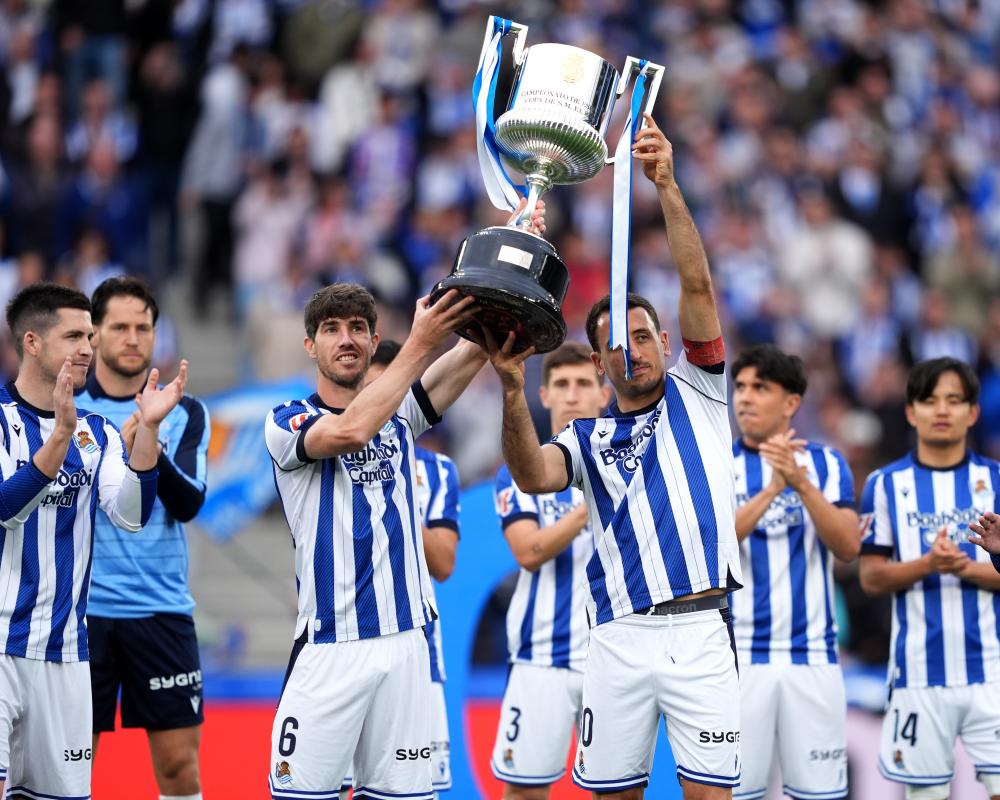
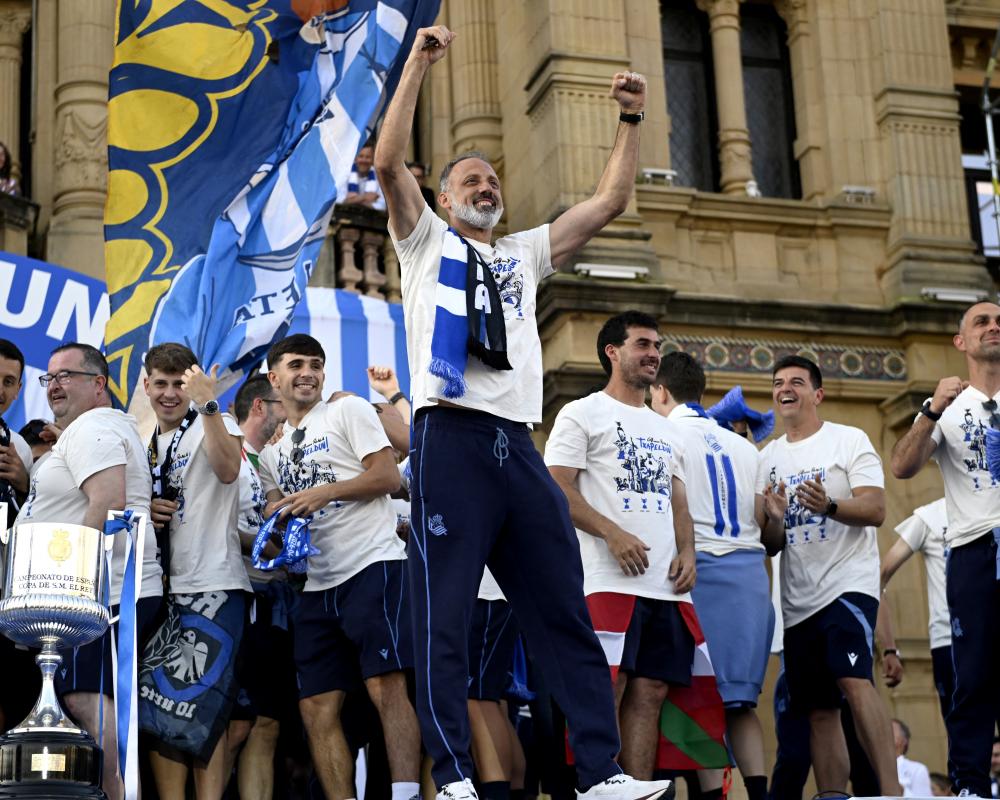
Imagine you win the Copa del Rey. It is the fourth time in history, the biggest explosion of joy in 40 years, maybe more, maybe ever. It needs 120 exhausting minutes and a nerve-shredding penalty shootout, so it’s nearly midnight Saturday when Pablo Marín – a ballboy the last time you reached the final – takes you over the line and after 2am Sunday before you leave the stadium. You get back to the hotel at 2.39am, a disco set up on the second floor. Taxis come at 4.45am, the celebrations going on someplace else, and the bus is waiting to depart at 10.15am, the partying guests at the NH Collection up again already. Or just not going down at all. En route to the airport someone realises one of you did not make it, another cab hurriedly called. You fly 1,000km north, drinks trolley emptied, touch down about two, carry the trophy across the runway in Hondarribia, and do it all over again. The song that accompanied you on your most joyous journey, the soundtrack to the best days of your lives borrowed from Bad Bunny, demands coffee in the morning, rum in the evening, and so it goes, although the manager prefers gin and tonic and admits that “maybe there was an extra beer or two”. A crowd waits at Zubieta – not so much a training ground as a concept – to welcome you home and that’s nothing compared to what awaits beyond. More beers, another bus. From behind dark glasses, shielded from the glare, you climb aboard at six o’clock the following evening, on to the top deck and around Donosti: from Anoeta, to the tune of Daddy Yankee’s Limbo, along Avenida Madrid and past Plaza Pio XII, Calle Urbieta, Avenida Libertad and the Boulevard to Alderdi Eder and the town hall, people along the route and up traffic lights, any perch will do. More than 100,000 people are there; the city has a population of 190,000 and has never seen a celebration like it. On to the balcony, into the songs. “This is the best day of my life and we’re going to have a fucking great time,” Take Kubo says, speaking for everyone, so you do. Nothing else can match this, nothing else matters. On it goes, people to see, people to hug. Even the media too, stories to tell. By the time Carlos Soler and Marín are welcomed on to the radio show broadcasting from the Hotel Londres, on the edge of the most beautiful bay there is, it’s almost midnight again, a wonder they can even walk in let alone walk out again. Please don’t keep them long, the press officer says: they’re back at work in the morning. But, yeah, good luck with that. At last you stumble in for the session you could really do without, mercifully switched to midday Tuesday, still in a bit of a state. Which is when someone says: lads, we’ve got a game tomorrow. It’s Getafe. Getafe are the hangover from hell, the team that gives you a headache even when you haven’t been drinking. Caricatured more than any other team, made into a meme, victimised by their many victims, whined about like no one else, some of it is unfair – and what they are doing is absolutely extraordinary, sitting in sixth for goodness sake – but some of it is true too. Built by José Bordalás, Getafe are the team likeliest to break the game and their opponents, the opponents everyone looks forward to least. They are the side who commit the most fouls (and suffer the second most), have the most cards, aerial duels, and long balls, the team that launch it most and keep it least. Hard as nails, not here to play, they are the last team you want to face after a three-day fiesta, something in the way Pellegrino Matarazzo had said, deadpan on Saturday night: “We have Getafe on Wednesday.” “More than a game, it’s a chore; Bordalás’s fang is twinkling,” El Diario Vasco declared. “The dentist is paying a visit to Anoeta.” It wasn’t as if Real Sociedad could bin it off either, however much they felt like it, however much they would rightly end saying just that. “We want more,” the manager insisted. When Matarazzo took over, la Real had been just two points from relegation; the president admitted to asking AI if he was a good fit and it said no but, beaten only three times in the four months since, by the teams in second, third and fourth, they came into this rearranged round of midweek fixtures as cup winners and just four points behind Betis in the fifth and (probable) final Champions League slot with seven games to go. This was an opportunity, even if the timing and the team they were up against couldn’t be less opportune, no one better at breaking up a party. “It’s a challenge,” Matarazzo said on Tuesday morning. “Yes, we had a long week preparing the final. We played 120 minutes. We have had one, two, three days of celebration but last night the boys got to bed at a good time. Maybe we had an extra beer or two and there was the release of all the tension too. But I am optimistic we will be ready to go. We need to be aware of how Getafe play: you have to be ready to fight in order to play football.” Getafe gonna Getafe. Before kick-off on Wednesday night, they lined up by the halfway line and gave Real Sociedad a guard of honour, applauding them as they went past, carrying the cup; after it, they lined up on the edge of their area, didn’t let them past again, and won 1-0 – without a shot on target. “That’s football, papa,” as Bordalás is fond of saying. Starting with only three of those who had begun the final on Saturday, Real Sociedad won an early penalty, but Brais Méndez hit the post. Orri Oskarsson, star of la Real’s version of Café con Ron, missed a great chance. Jon Aramburu hit the post. Ander Barrenetxea saw one shot go over and another cleared off the line. And Duje Caleta-Car couldn’t reach the ball, blocked a yard from goal; 13 shots, four of them on target, but the only one that went in was a Jon Gorrotxategi header, into his own net. At the end it kicked off a bit: Juan Iglesias accused Mikel Oyarzabal of covering his mouth and saying something about his wife, while the Donosti media denounced the visitors as an “insult to football”, a team of “cheats”, playing a totally “different sport”. La Real had been beaten for only the fourth time in 2026, fifth place slipping from them: now they are seven points and three places away, brought back to earth by Bordalás’s team, which is the way it tends to be. Only … they weren’t, not really. “We lacked energy in the first half,” Matarazzo said after. Well, yeah. But there were no complaints and no regrets, and nor should there be. No game could eclipse something generational; as the phrase goes, no one can ever take this dance from them. Not just winger Wesley’s mum and Bixio Gorriz, Copa del Rey winner in 1987, salsaing into the small hours, but the whole thing: the cup that injured full-back Álvaro Odriozola, who didn’t even play, said he wouldn’t swap for “anything in humanity”, insisting: “I’ve never walked on water but this must be how it feels; I can die happy now”; the cup that was only the fourth in their history and was worth at least two, at last played out before fans unlike 2021, Oyarzabal calling these “double celebrations”, a reminder now of what they had missed then; the cup that they took around Anoeta again on Wednesday night, applauded round the pitch after Getafe had gone. The loss didn’t last long but this, this would last for ever. Nothing could take that away, the extraordinary revival this season and something deeper happening beyond it, Real Sociedad’s second cup in five years as good a record over the last decade as anyone bar Barcelona and a success secured with 10 players – 10 – who had come through the academy. Eight of them are from Gipuzkoa, the smallest province in Spain. Nothing could take it from Oyarzabal, captain, academy product and a goalscorer in all six finals he has ever played; from Unai Marrero, the backup goalkeeper and Real fan who became the hero just as he was against Osasuna in the last 16; from Marín, who Marrero kissed on the cheek and wished luck; from all of them. From Matarazzo’s astonishing journey from New Jersey, refusing to ever turn back when most would have done: “but then,” he said, “I wouldn’t be in a Copa del Rey final.” And that, these last four days showed, was everything. The celebrations were a moment to share, to live: from Elustondo emulating Imanol Alguacil’s celebration from 2021 and introducing his teammates one by one, warmth in every word to the American coach with Italian roots and a German footballing education, addressing them in Basque. Every man who had played since the first round was invited to be on the balcony, Mikel Goti coming home from Córdoba, where he’s now on loan, to join them, and an entire community was spread out before them, the essence of who they are. It was right to wait a day for the fans to get back from Seville too, right to let loose like never before, whatever waited on Wednesday. Imagine you win the Copa del Rey. Forget objectives, targets, it’s about moments like this, always. “It’s the history we made,” Matarazzo said.

Pitch Points: the pioneering Pellegrino Matarazzo, a dramatic title race and Newcastle’s future
Is Pellegrino Matarazzo the trailblazer American soccer has been waiting for? With his Copa del Rey winners medal around his neck, Pellegrino Matarazzo struggled to find the words to sum up his remarkable journey from Fair Lawn, New Jersey, via Italy and Germany to a historic triumph as Real Sociedad manager. A lot of former players fall into the profession after retiring, but not Matarazzo. The Ivy League graduate could have entered the world of finance. He probably would have made more money that way, certainly in the early part of his career when he bounced around the German lower leagues. From there, though, Matarazzo worked his way up the ladder, from his first coaching role at FC Nurnberg’s academy to his first top job in the Bundesliga to making history as the first US-born manager to win a major trophy in one of Europe’s “big five” leagues. Is Matarazzo the managerial trailblazer American soccer has been waiting for? Where Bob Bradley and Jesse Marsch failed, the 48-year-old is succeeding, shaping Real Sociedad in his own image, guiding them to cup glory, pushing them up the La Liga table and shaking the Ted Lasso stereotype that dragged down many of his compatriots. This could be a future US men’s national team head coach in the making, although Matarazzo may feel he has even more to achieve as a club manager before moving into the international game. Real Sociedad have already qualified for next season’s Europa League and could even be in the Champions League should La Liga receive a fifth spot. Real Sociedad is a special club. Matarazzo coached at a high level in the Bundesliga at Stuttgart and Hoffenheim, but there’s something distinctive about La Real, a club that prides itself on bringing through some of the best Basque talent. A club that is thoroughly in thrall to its math-genius manager from New Jersey. Was Sunday the start of the best Premier League finale in years? A Premier League title race has broken out. What once looked like Arsenal’s trophy slipped from the grasp of Mikel Arteta and his players in a potentially season-defining defeat to Manchester City on Sunday. A City win over Burnley on Wednesday would see the top spot in the table change hands. As recently as 14 March, Arsenal were 10 points clear. There was talk of a quadruple as City struggled to match the consistency of their north London rivals. Since then, however, the Gunners have stalled, and Pep Guardiola’s side have peaked at the right time. They have evolved into title contenders. Nothing has been decided, though. As damaging as defeat at the Etihad was, the nature of Arsenal’s performance suggested the race is far from over. Indeed, the visitors played with intent, demonstrating the sort of attacking ambition that had been missing from their game for weeks. On another day, Eberechi Eze’s strike from the edge of the box would have gone in off the post. Or Kai Havertz would have finished his one-on-one opportunity against Gianluigi Donnarumma. Or Gabriel Magalhaes’s deflected header would have found the back of the net. This wasn’t a concession of the title race. Not yet, anyway. Opta’s so-called supercomputer still favors Arsenal to win their first Premier League title since the Arsène Wenger era. City may also have a slightly trickier run of fixtures to finish the season. This isn’t to deny the momentum shift, but it’s far from being conclusive. Sunday’s match may have been the start of the best finale to a Premier League title race in years. Could Saudi Arabia’s pullback on sport have implications for Newcastle United? The LIV Golf lights are still on, but possibly not for much longer. Saudi Arabia’s Public Investment Fund (PIF) is apparently shifting focus away from sport and LIV is in line to have the pipeline of money turned off after burning through $5bn since it was established in 2021. One wonders how the leadership at Newcastle United reacted to the news. Sitting slumped 14th in the Premier League table after a run of eight defeats in 11 games, the Magpies clearly need a lot more investment to reach the top of English soccer and it sounds like that investment may not be so forthcoming. Profit and sustainability rules (PSR) have already curbed the scale of Saudi Arabia’s investment at St James’ Park. “We’re controlled by PSR,” Eddie Howe said after a summer transfer window that saw Newcastle miss out on several top targets and sell Alexander Isak to Liverpool. “That’s still limiting what we can do and that’s the reality.” Even still, Newcastle’s net spend since the PIF takeover in October 2021 amounts to roughly €480m ($649m). They wouldn’t have played Champions League soccer in two of the last three seasons without Saudi involvement, so even the slightest pullback from PIF could have big implications for the club. At the time of the takeover, it seemed inevitable Newcastle would become the next Manchester City or Paris Saint-Germain. Last season’s Carabao Cup triumph was meant to signify the rise of an English soccer superpower. Now, it’s unclear what the future holds.

Real Sociedad lift Copa del Rey after Marrero shootout heroics sink Atlético
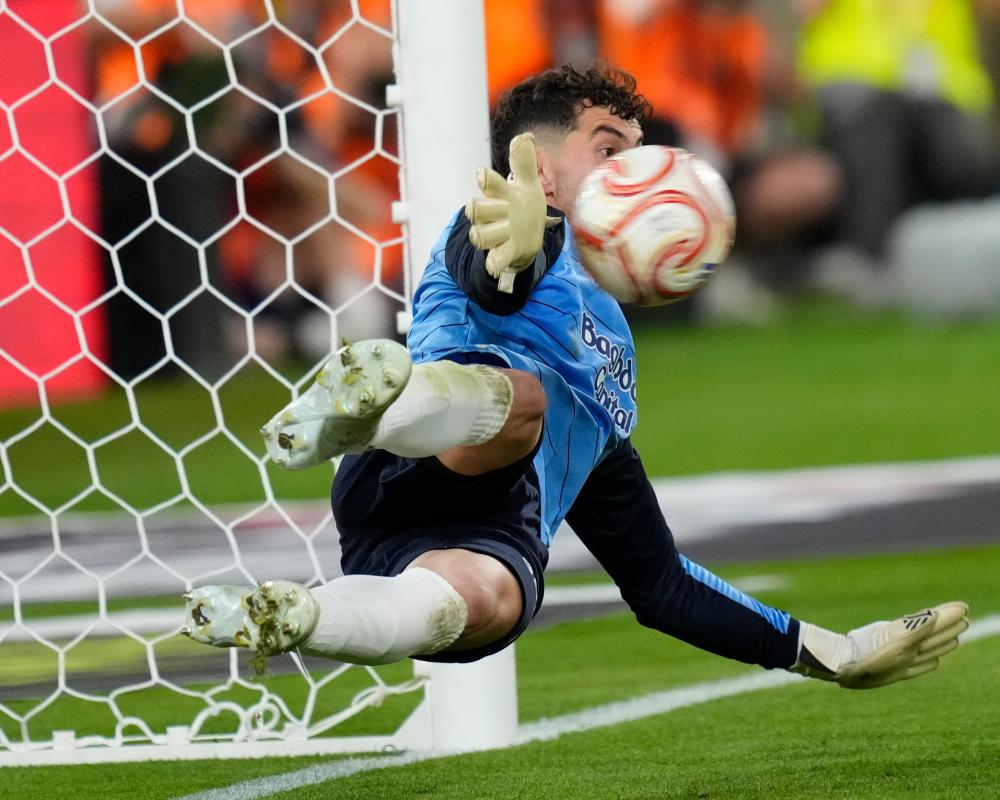
History has a pair unexpected heroes. Unai Marrero, a 24-year-old backup goalkeeper, born in San Sebastián and raised at Real Sociedad, saved two penalties in the shootout to put his boyhood club within a single shot of victory on the what his captain had called the night of their lives. Then he embraced Pablo Marin, the former ballboy who now walked towards him carrying all of their hopes on his shoulders, kissed him on the cheek and asked his teammate to take them over the line. So Marin, 22, and on as a substitute, did just that, stepping up and securing only the fourth Copa del Rey in la Real’s history, defeating Atlético Madrid from the spot. Last time they had won it, in 2021, it took a penalty. This time it took six of them; Mikel Oyarzabal, as he had done then, scored one during the 90 minutes on the way to a 2-2 draw and three more men did in the shootout. Back then, Real Sociedad had won the trophy it in an empty stadium, unable to avoid the feeling that something was missing. Now at last they had done it in front of thousands of fans in Seville – there to see a trophy lifted for the first time in 38 years. What a moment this was for Marin, for Marrero – already the shootout hero after another 2-2 draw in the last 16 and leaping about before all the kicks here – and for all of them, not least for their coach, Pellegrino Matarazzo. The man from Bergen County, New Jersey, with the degree in applied mathematics from Columbia University took over at La Real four months ago, revived a side that was threatened with relegation and now stood here in Sevilla at midnight holding the cup to the sky. Unknown back then, he could not be more loved in San Sebastián now. ‘It’s a joy to be able to bring joy to so many people,” he said. It had all happened on a long night with four goals, including the fastest in the competition’s history, and it had been done the hard way. But for Real Sociedad had the perfect ending, a cup run that included three derbies and two penalty shoots had concluded the way they wished it. “I was in my element,” Marrero said. “I’m still not conscious of what’s happened here.” Let’s begin at the beginning. The very beginning. It was 13 years since Atlético had been in a cup final and 13 seconds before they were behind. From the kick-off Real Sociedad went back to Marrero who hit it long up the pitch, multiple failures leading to a moment no one could have imagined. Nahuel Molina watched it sail over his head without moving. Giuliano Simeone was beaten by the bounce. Marc Pubill didn’t react. Matteo Ruggeri was beaten in the air. And when Gonçalo Guedes’ cross was met by Ander Barrenetxea’s head, Juan Musso was a little slow to react, the ball dropping in. Atlético equalised early when Antoine Griezmann slipped inside and Julián Alvarez let it run to Ademola Lookman. But Atlético were struggling and la Real took the lead again before half-time when Musso arrived too late for a free kick and, instead of the ball, caught Guedes with his fist. From the penalty spot, Oyarzabal – the Real Sociedad captain who scored the game’s only goal when they won the cup in this same but empty stadium five years ago – was the calmest man at La Cartuja scoring from the spot. This was his sixth final; he has scored in all of them. Atlético dominated possession thereafter but produced little until Julian Alvarez finally broke their resistance with six minutes to go. Letting the ball move across the front of his body, taking the defenders out of the game as it went, he hit a superb finish past Marrero. The pitch tilted, the momentum built, everything accelerating now, but somehow Atlético didn’t win it. Alex Baena put Marcos Llorente’s ball over the bar from four yards, Sorloth headed just wide, and then Johnny Cardoso was in, Marrero flashing out a palm to push past the post. And there was still time for Alvarez to win a free-kick deep into added time. He, though, hit the wall and Llorente struck the rebound wide taking it to extra time. Real were resurrected somehow, finding some strength that had seemed to have deserted them, belying the blow of having seen victory slip from their grasp. Llorente had to sprint back to stop Orri Oskarsson running through. Marc Pubill dived block with his chest, Atlético just about scrambling clear. Then Musso made a double save, first from Luka Sucic and second, even more remarkably, from Oskarsson. At the other end, Alvarez rattled the bar. All that in nine minutes. Time though was slipping away, chances drying up, exhaustion and nerves taking over as penalties and Marrero’s moment came ever closer, Marin’s too. History was sealed with a save, one last shot and a kiss.

Real Sociedad lift Copa del Rey after Marrero shootout heroics sink Atlético
History has a pair unexpected heroes. Unai Marrero, a 24-year-old backup goalkeeper, born in San Sebastián and raised at Real Sociedad, saved two penalties in the shootout to put his boyhood club within a single shot of victory on the what his captain had called the night of their lives. Then he embraced Pablo Marin, the former ballboy who now walked towards him carrying all of their hopes on his shoulders, kissed him on the cheek and asked his teammate to take them over the line. So Marin, 22, and on as a substitute, did just that, stepping up and securing only the fourth Copa del Rey in la Real’s history, defeating Atlético Madrid from the spot. Last time they had won it, in 2021, it took a penalty. This time it took six of them; Mikel Oyarzabal, as he had done then, scored one during the 90 minutes on the way to a 2-2 draw and three more men did in the shootout. Back then, Real Sociedad had won the trophy it in an empty stadium, unable to avoid the feeling that something was missing. Now at last they had done it in front of thousands of fans in Seville – there to see a trophy lifted for the first time in 38 years. What a moment this was for Marin, for Marrero – already the shootout hero after another 2-2 draw in the last 16 and leaping about before all the kicks here – and for all of them, not least for their coach, Pellegrino Matarazzo. The man from Bergen County, New Jersey, with the degree in applied mathematics from Columbia University took over at La Real four months ago, revived a side that was threatened with relegation and now stood here in Sevilla at midnight holding the cup to the sky. Unknown back then, he could not be more loved in San Sebastián now. ‘It’s a joy to be able to bring joy to so many people,” he said. It had all happened on a long night with four goals, including the fastest in the competition’s history, and it had been done the hard way. But for Real Sociedad had the perfect ending, a cup run that included three derbies and two penalty shoots had concluded the way they wished it. “I was in my element,” Marrero said. “I’m still not conscious of what’s happened here.” Let’s begin at the beginning. The very beginning. It was 13 years since Atlético had been in a cup final and 13 seconds before they were behind. From the kick-off Real Sociedad went back to Marrero who hit it long up the pitch, multiple failures leading to a moment no one could have imagined. Nahuel Molina watched it sail over his head without moving. Giuliano Simeone was beaten by the bounce. Marc Pubill didn’t react. Matteo Ruggeri was beaten in the air. And when Gonçalo Guedes’ cross was met by Ander Barrenetxea’s head, Juan Musso was a little slow to react, the ball dropping in. Atlético equalised early when Antoine Griezmann slipped inside and Julián Alvarez let it run to Ademola Lookman. But Atlético were struggling and la Real took the lead again before half-time when Musso arrived too late for a free kick and, instead of the ball, caught Guedes with his fist. From the penalty spot, Oyarzabal – the Real Sociedad captain who scored the game’s only goal when they won the cup in this same but empty stadium five years ago – was the calmest man at La Cartuja scoring from the spot. This was his sixth final; he has scored in all of them. Atlético dominated possession thereafter but produced little until Julian Alvarez finally broke their resistance with six minutes to go. Letting the ball move across the front of his body, taking the defenders out of the game as it went, he hit a superb finish past Marrero. The pitch tilted, the momentum built, everything accelerating now, but somehow Atlético didn’t win it. Alex Baena put Marcos Llorente’s ball over the bar from four yards, Sorloth headed just wide, and then Johnny Cardoso was in, Marrero flashing out a palm to push past the post. And there was still time for Alvarez to win a free-kick deep into added time. He, though, hit the wall and Llorente struck the rebound wide taking it to extra time. Real were resurrected somehow, finding some strength that had seemed to have deserted them, belying the blow of having seen victory slip from their grasp. Llorente had to sprint back to stop Orri Oskarsson running through. Marc Pubill dived block with his chest, Atlético just about scrambling clear. Then Musso made a double save, first from Luka Sucic and second, even more remarkably, from Oskarsson. At the other end, Alvarez rattled the bar. All that in nine minutes. Time though was slipping away, chances drying up, exhaustion and nerves taking over as penalties and Marrero’s moment came ever closer, Marin’s too. History was sealed with a save, one last shot and a kiss.

‘Hyperactive’ Marcus Rashford showing his class, but could Barça be getting even more?
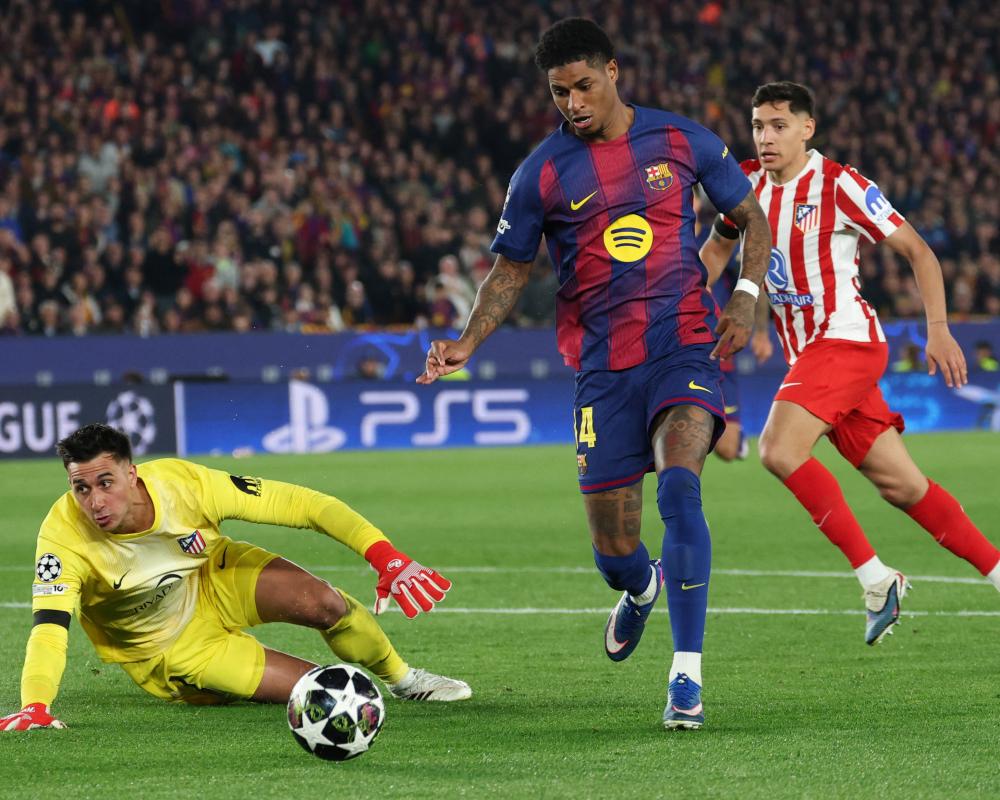
At the end of Barcelona’s 2-1 win at Atlético Madrid on Saturday night, as the players stood celebrating before the small pocket of supporters applauding them from high in the north-west corner of the Metropolitano, Diego Simeone approached Hansi Flick, shook his hand and reminded him of something: “You’ve got to come back.” It came as an invitation, born of admiration, and also a warning. This was only the start of a trilogy in which they face each other three times in 10 days, and the concluding chapter there would be different. A different competition, for a start. Goals from Marcus Rashford and Robert Lewandowski, the latter on 89 minutes, had virtually secured Barcelona the league title but it was going to get bigger and mean more. Atlético, already adrift, had rested players; the last time Barcelona had been there – in the Copa del Rey semi-final first leg – they had beaten them 4-0; and the next time the Catalan club came it would be the Champions League quarter-final, second leg. And, back in the Metropolitano, that really would be a battle: tougher than this and, it turns out, tougher than anyone had imagined. At full time on Wednesday night, Simeone didn’t make for Flick. Instead, he headed straight up the tunnel, leaving his players out there at the Camp Nou, where he had seen his team beat Barcelona for the first time. (Last year’s 2-1 away win was at Montjuic). Atlético’s coach had hoped that Part II would do what the second instalment of a trilogy is supposed to do: set up the third. He couldn’t have expected it to be as well set as this. It was enough to be in it, for Barcelona to know they would have come back to a place where Atlético had put four past them and five past Real Madrid. Now on top of that they have a 2-0 lead. “It’s not over,” Flick said, and Simeone agreed, or said he did. “We can take the game away from anybody,” Rashford said. After all, that 4-0 Copa del Rey loss had been followed by a 3-0 win, Barcelona coming so close to an astonishing second leg comeback. But that was at the Camp Nou; this time they would have to do it away, and with lessons learned by both sides. Simeone, asked whether he would rather have to prepare a team mentally for a comeback or to protect an advantage, said the advantage of course: “It’s just common sense.” In the history of the Champions League only once has a team overturned a 2-0 home defeat from the first leg. That’s the bad news for Barcelona; the good news is that one of them has been here before. In 2019, Rashford’s late penalty knocked out Paris Saint-Germain, seeing Manchester United through. Seven years on, he said they had done enough to have secured a better result in the first leg and they needed to replicate parts of the performance, if not the score, in the second. “The mindset and intent of this team are unbelievable and we’re going to need all of that in the next game in order to come back,” Rashford said. “This team is always going to create chances because we have so much quality. Today the goals did not go in but we cannot shy away from the responsibility.” Rashford had felt that more clearly than anyone. Barcelona had 18 shots to Atlético’s five, and Rashford had been the dominant attacking figure from the start. Minute two, he cut inside and had his shot saved by Juan Musso. Minute four, again he was denied by Musso, one on one. Minute 14, he volleyed wide. Minute 17, he scored … but the flag went up. Minute 30, he was denied by Musso again. Minute 50, played in by Lamine Yamal, his shot missed the near post. Minute 52, he smashed a free-kick off the bar. And that was just the shots, seven inside an hour. He had flown up the left, Barcelona’s play turned his way. He had been “hyperactive”, AS wrote. “Tireless on the wing, generating danger,” Sport said. Mundo Deportivo called this an “exhibition of speed”, giving him full marks. This was his best performance of the season, yet there was regret. “We have to be more clinical,” he said. “In essence, this can be explained by saying that Rashford is not Luis Suárez,” judged El Periódico. When Rashford arrived in the summer he was a back-up option. Barcelona had long liked the look of him but they had also pursued Nico Williams and Luis Díaz before him. His arrival on loan from Manchester United was explained, in large part, by the comparative ease and economy with which a deal could be done, although there was a struggle to register him in compliance with La Liga’s salary limits. He also came to add versatility and depth to a forward line that had finished last season looking overstretched. With Robert Lewandowski, Lamine Yamal and Raphinha in place, there was little anticipation that he would be a starter. But there was also the opportunity for things to change. He was theoretically an alternative to all three forwards, able to play left, right and centre, and injury and rotation would offer the chance to change his status, to get regular playing time. Meanwhile a €30m (£26m) buy clause meant the deal could be made permanent. Asked in the autumn whether he would like that to happen, Rashford replied: “Yeah, for sure.” He talked about needing a change and seemed to have found a place in Catalonia: “I don’t think there’s much change in me; it’s just a new environment, a new culture; I’m enjoying it here,” he said. His first three Champions League games brought four goals and two assists, the promise of more. Making his move permanent appeared to be a no brainer; on some levels, it still does. He has five goals and four assists in 10 Champions League games, and is on double figures for both across all competitions, the first player to cross that threshold in Spain this season. His had been the perfect loan signing. Barcelona could not have asked for more. And yet, there is an ‘and yet’, absurd though that can seem. And yet, does being a back-up satisfy? And yet, Barcelona could ask for more. There has been a strange sense that if statistics have been incontestable; that if he has pace, directness and delivery few others do, his contribution can be contested; that his decisive moments are also sometimes isolated ones. Flick decided Rashford has one role, on the left. When he was moved inside on Wednesday night, it was to a centre-forward position he has occupied six times in 41 games, and he has played on the right twice. Even with Ferran Torres and Lewandowski struggling badly for form, Flick has appeared reluctant to make him a striker: Dani Olmo started Part I of the Atlético-Barca trilogy at false 9. Rashford’s opportunities had been relatively few lately: eight, zero, 62, 17 and zero minutes played in the five league games before last weekend. Then he started and scored. But it is not just the goals, not just the numbers. The demands of this team are particular too and there was something in the response from Flick before Wednesday’s game: “We know Marcus is fantastic with the ball but defending is also part of the game. He is doing well and adapting.” If Rashford is not Suárez, he is also not Raphinha, the man he must replace. The man who has 19 goals and eight assists this year and racked up 34 goals and 26 assists last year, Simeone’s choice as Ballon d’Or winner, and the man whose intensity is contagious, leading the pressure that makes Flick’s system function. It is not really Rashford’s fault, but the man he replaces is the one Barcelona most miss, and that tends to put the emphasis on the things he is not, as much as the things he is. “He’s not exactly a ferret when it comes to pressing,” Santi Giménez said in AS. Injury to Raphinha during the last international break was met as a disaster, although it was also projected as an opportunity for Rashford: a chance to play, to prove a point and clarify a future that remains undecided, despite the simplicity of securing it. And that fact alone is eloquent. Barcelona are happy with him and would like him to continue. There is an appreciation for what he has done and the qualities he has, a warmth too, but while €30m is not much from a Premier League point of view it is prohibitive to them. Especially as the reluctance to regard him as a striker means that they must spend to sign there, eating into a limited budget. United consider that fee, agreed last summer, as non-negotiable; Barcelona would like to negotiate. The “of course” from the autumn has given way to conversations in the spring, decisions to be made, from both sides. These were the games that could define everything, not only for the team but for him. A moment to take responsibility. At the Camp Nou on Wednesday, the biggest match of Rashford’s first season in Barcelona, he did, tearing into Atlético, imposing himself the way his manager wanted. Relentless, he did everything but score. “On another night those go in,” he said; next Tuesday they will have to, back at the Metropolitano, where on the night that Rashford helped to take Barcelona towards the title, Simeone told Flick they would meet again.

‘Hyperactive’ Marcus Rashford showing his class, but could Barça be getting even more?
At the end of Barcelona’s 2-1 win at Atlético Madrid on Saturday night, as the players stood celebrating before the small pocket of supporters applauding them from high in the north-west corner of the Metropolitano, Diego Simeone approached Hansi Flick, shook his hand and reminded him of something: “You’ve got to come back.” It came as an invitation, born of admiration, and also a warning. This was only the start of a trilogy in which they face each other three times in 10 days, and the concluding chapter there would be different. A different competition, for a start. Goals from Marcus Rashford and Robert Lewandowski, the latter on 89 minutes, had virtually secured Barcelona the league title but it was going to get bigger and mean more. Atlético, already adrift, had rested players; the last time Barcelona had been there – in the Copa del Rey semi-final first leg – they had beaten them 4-0; and the next time the Catalan club came it would be the Champions League quarter-final, second leg. And, back in the Metropolitano, that really would be a battle: tougher than this and, it turns out, tougher than anyone had imagined. At full time on Wednesday night, Simeone didn’t make for Flick. Instead, he headed straight up the tunnel, leaving his players out there at the Camp Nou, where he had seen his team beat Barcelona for the first time. (Last year’s 2-1 away win was at Montjuic). Atlético’s coach had hoped that Part II would do what the second instalment of a trilogy is supposed to do: set up the third. He couldn’t have expected it to be as well set as this. It was enough to be in it, for Barcelona to know they would have come back to a place where Atlético had put four past them and five past Real Madrid. Now on top of that they have a 2-0 lead. “It’s not over,” Flick said, and Simeone agreed, or said he did. “We can take the game away from anybody,” Rashford said. After all, that 4-0 Copa del Rey loss had been followed by a 3-0 win, Barcelona coming so close to an astonishing second leg comeback. But that was at the Camp Nou; this time they would have to do it away, and with lessons learned by both sides. Simeone, asked whether he would rather have to prepare a team mentally for a comeback or to protect an advantage, said the advantage of course: “It’s just common sense.” In the history of the Champions League only once has a team overturned a 2-0 home defeat from the first leg. That’s the bad news for Barcelona; the good news is that one of them has been here before. In 2019, Rashford’s late penalty knocked out Paris Saint-Germain, seeing Manchester United through. Seven years on, he said they had done enough to have secured a better result in the first leg and they needed to replicate parts of the performance, if not the score, in the second. “The mindset and intent of this team are unbelievable and we’re going to need all of that in the next game in order to come back,” Rashford said. “This team is always going to create chances because we have so much quality. Today the goals did not go in but we cannot shy away from the responsibility.” Rashford had felt that more clearly than anyone. Barcelona had 18 shots to Atlético’s five, and Rashford had been the dominant attacking figure from the start. Minute two, he cut inside and had his shot saved by Juan Musso. Minute four, again he was denied by Musso, one on one. Minute 14, he volleyed wide. Minute 17, he scored … but the flag went up. Minute 30, he was denied by Musso again. Minute 50, played in by Lamine Yamal, his shot missed the near post. Minute 52, he smashed a free-kick off the bar. And that was just the shots, seven inside an hour. He had flown up the left, Barcelona’s play turned his way. He had been “hyperactive”, AS wrote. “Tireless on the wing, generating danger,” Sport said. Mundo Deportivo called this an “exhibition of speed”, giving him full marks. This was his best performance of the season, yet there was regret. “We have to be more clinical,” he said. “In essence, this can be explained by saying that Rashford is not Luis Suárez,” judged El Periódico. When Rashford arrived in the summer he was a back-up option. Barcelona had long liked the look of him but they had also pursued Nico Williams and Luis Díaz before him. His arrival on loan from Manchester United was explained, in large part, by the comparative ease and economy with which a deal could be done, although there was a struggle to register him in compliance with La Liga’s salary limits. He also came to add versatility and depth to a forward line that had finished last season looking overstretched. With Robert Lewandowski, Lamine Yamal and Raphinha in place, there was little anticipation that he would be a starter. But there was also the opportunity for things to change. He was theoretically an alternative to all three forwards, able to play left, right and centre, and injury and rotation would offer the chance to change his status, to get regular playing time. Meanwhile a €30m (£26m) buy clause meant the deal could be made permanent. Asked in the autumn whether he would like that to happen, Rashford replied: “Yeah, for sure.” He talked about needing a change and seemed to have found a place in Catalonia: “I don’t think there’s much change in me; it’s just a new environment, a new culture; I’m enjoying it here,” he said. His first three Champions League games brought four goals and two assists, the promise of more. Making his move permanent appeared to be a no brainer; on some levels, it still does. He has five goals and four assists in 10 Champions League games, and is on double figures for both across all competitions, the first player to cross that threshold in Spain this season. His had been the perfect loan signing. Barcelona could not have asked for more. And yet, there is an ‘and yet’, absurd though that can seem. And yet, does being a back-up satisfy? And yet, Barcelona could ask for more. There has been a strange sense that if statistics have been incontestable; that if he has pace, directness and delivery few others do, his contribution can be contested; that his decisive moments are also sometimes isolated ones. Flick decided Rashford has one role, on the left. When he was moved inside on Wednesday night, it was to a centre-forward position he has occupied six times in 41 games, and he has played on the right twice. Even with Ferran Torres and Lewandowski struggling badly for form, Flick has appeared reluctant to make him a striker: Dani Olmo started Part I of the Atlético-Barca trilogy at false 9. Rashford’s opportunities had been relatively few lately: eight, zero, 62, 17 and zero minutes played in the five league games before last weekend. Then he started and scored. But it is not just the goals, not just the numbers. The demands of this team are particular too and there was something in the response from Flick before Wednesday’s game: “We know Marcus is fantastic with the ball but defending is also part of the game. He is doing well and adapting.” If Rashford is not Suárez, he is also not Raphinha, the man he must replace. The man who has 19 goals and eight assists this year and racked up 34 goals and 26 assists last year, Simeone’s choice as Ballon d’Or winner, and the man whose intensity is contagious, leading the pressure that makes Flick’s system function. It is not really Rashford’s fault, but the man he replaces is the one Barcelona most miss, and that tends to put the emphasis on the things he is not, as much as the things he is. “He’s not exactly a ferret when it comes to pressing,” Santi Giménez said in AS. Injury to Raphinha during the last international break was met as a disaster, although it was also projected as an opportunity for Rashford: a chance to play, to prove a point and clarify a future that remains undecided, despite the simplicity of securing it. And that fact alone is eloquent. Barcelona are happy with him and would like him to continue. There is an appreciation for what he has done and the qualities he has, a warmth too, but while €30m is not much from a Premier League point of view it is prohibitive to them. Especially as the reluctance to regard him as a striker means that they must spend to sign there, eating into a limited budget. United consider that fee, agreed last summer, as non-negotiable; Barcelona would like to negotiate. The “of course” from the autumn has given way to conversations in the spring, decisions to be made, from both sides. These were the games that could define everything, not only for the team but for him. A moment to take responsibility. At the Camp Nou on Wednesday, the biggest match of Rashford’s first season in Barcelona, he did, tearing into Atlético, imposing himself the way his manager wanted. Relentless, he did everything but score. “On another night those go in,” he said; next Tuesday they will have to, back at the Metropolitano, where on the night that Rashford helped to take Barcelona towards the title, Simeone told Flick they would meet again.

Report: Griezmann traveling to Orlando to finalize MLS transfer
Trending News & Rumors for Football, Basketball, Baseball, Hockey, Soccer & More

Atletico Madrid's Antoine Griezmann On The Brink Of Joining MLS Side Orlando City
French and Atletico Madrid footballer Antoine Griezmann is reportedly likely to sign with Major League Soccer (MLS) club Orlando City, eyeing a move to US this summer, reported Goal.com. As per a report by The Athletic, as quoted by Goal.com, Griezmann, a 2018 FIFA World Cup winner with France, has been officially permitted to travel to the US to seal the deal after being linked to the club for the past few weeks. Reports had earlier emerged that Griezmann would consider leaving the Spanish club for a move to the US at the end of February, but their qualification for the Copa Del Ray final delayed his switch. The final against Real Sociedad is scheduled for April 19, and the veteran wants to leave the club with some silverware to his name. Griezmann wants to seal the deal despite the primary transfer window of MLS being closed officially. He would move to North America at the end of the European football season if everything goes right. The 35-year-old has openly made it clear that he intends to play in MLS, as he is a massive fan of American sports. He has often been pictured attending NBA basketball matches and been linked with other MLS clubs in the past, including LAFC, Chicago Fire, and, briefly, Inter Miami. Griezmann being present would immediately make him amongst the best players as the French captain has scored 44 goals for the national side, won the 2018 World Cup and ended as runners-up in 2022. He is Atletico's all-time top-scorer and made it to La Liga's 'Team of the Season' four times. However, this year, he is facing a form slump, with six goals in La Liga so far and five in the Copa Del Ray this season. But despite that, his experience still remains vital for the club.
Page 1