South Africa
South Africa
FNB Stadium · Johannesburg
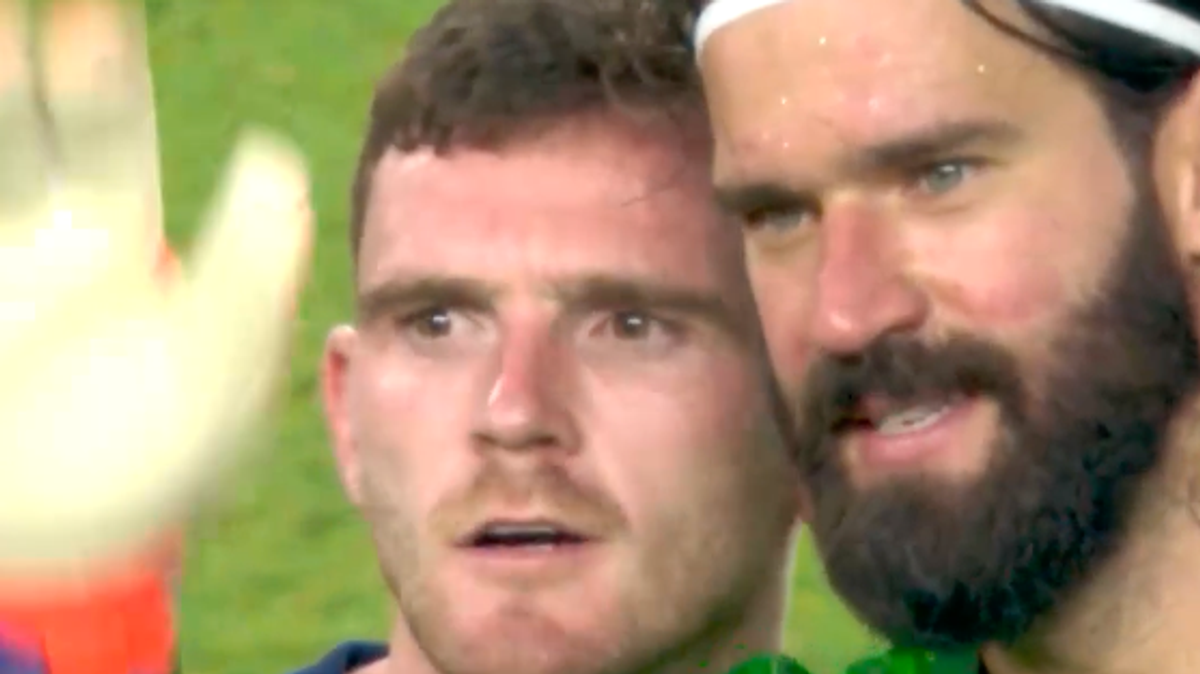
Andy Robertson and Alisson moment spotted right after Brazil beat Scotland at World Cup
Andy Robertson and Alisson shared a touching moment after Scotland's 3-0 World Cup defeat to Brazil in Miami. It was the first time the pair had been reunited since Robertson left Liverpool at the end of the season to join Tottenham on a free transfer following the expiration of his contract. It was a bruising night for Scotland, who finished third in Group C and now rely on other results to reach the round of 32. Brazil struck early, with Scott McKenna's error gifting Vinicius Junior the opener inside 10 minutes, before the winger added a second on the stroke of half‑time. Manchester United's Matheus Cunha wrapped up the scoring, firing in Brazil's third as they claimed top spot on goal difference despite finishing level on seven points with Morocco. Later, Group A results only deepened Scotland's troubles, with South Africa's surprise 1-0 win over South Korea worsening their position in the third‑place rankings. The African nation began the evening bottom of the group, but their victory secured a place in the next round for the first time in their history. The result pushed Scotland down to seventh in the third‑place teams. Robertson approached Alisson at full‑time, and the pair shared a warm embrace. They chatted briefly before Alisson appeared to wave up toward a member of Robertson's family in the stands. While it may have been Robertson and Alisson's first outing on different sides of the pitch, that will now become a regular occurrence in the Premier League . FOLLOW OUR LIVERPOOL FC FACEBOOK PAGE! All the latest news and analysis from Anfield on the Liverpool Echo's dedicated LFC Facebook page Robertson spent nine years at Anfield , making 378 appearances and scoring 14 goals while providing 69 assists from left‑back. The Scotland captain was a central figure in a side that collected a haul of major honours, including two Premier League titles and the Champions League . Get the latest World Cup news straight to your inbox by signing up to our Make Football Great Again newsletter now!
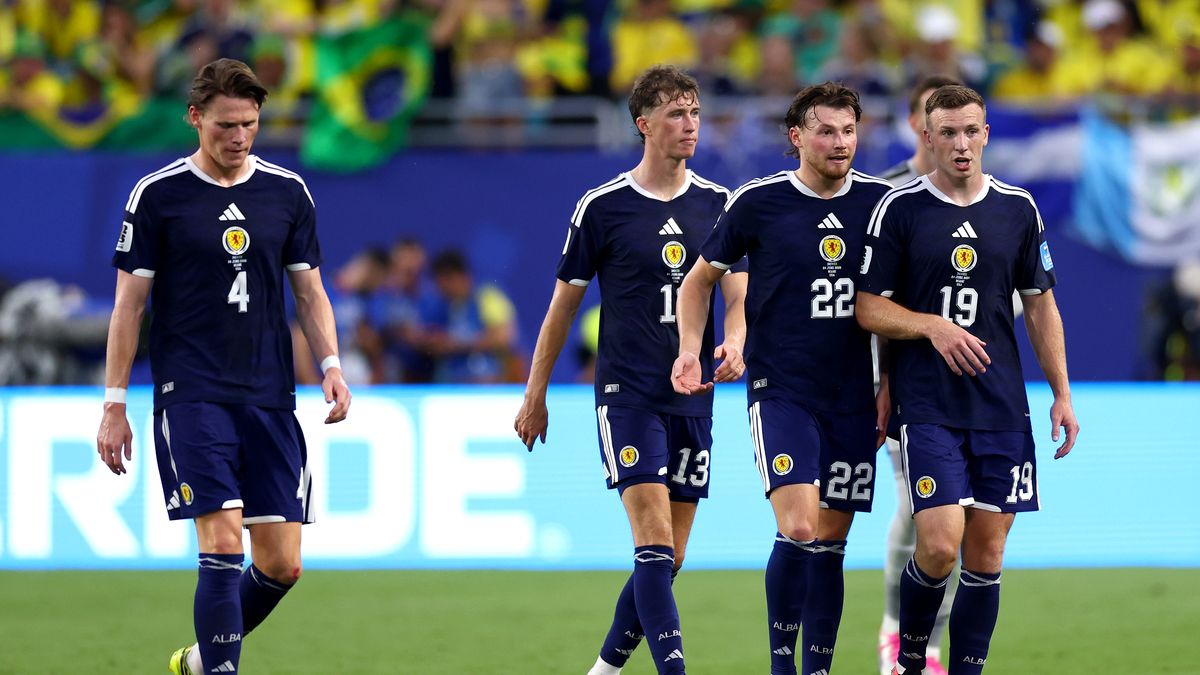
England and Scotland World Cup round of 32 opponents as it stands
England and Scotland’s opponents in the first knockout round of the World Cup have become much clearer after Steve Clarke's side lost 3-0 to Brazil on Thursday morning. As things stands, the Three Lions would face Algeria on July 1 at 5pm, while the Tartan Army would take on co-hosts Mexico on the same day at 2am. Thomas Tuchel's were forced to settle for a point in a goalless draw with Ghana in Boston on Tuesday night, a result which leaves them still at the top of the Group L standings. For Scotland , their chances of qualifying were handed a major blow after their 3-0 defeat to Brazil in their Group C clash in Miami on Wednesday night. Real Madrid forward Vinicius Jr. scored a brace in Florida, while Manchester United star Matheus Cunha also found the back of the net. The defeat leaves Scotland in third place in their group and currently ranked as the sixth-best third-placed team in the World Cup groups so far, but that is likely to change with several more final group games left to play. As it stands, England would be set to face Algeria in the round of 32 at the World Cup. This game would take place on Wednesday, July 1 in Atlanta with a 5pm kick-off UK time. There is still time for that to change with England set to face Panama in their final Group L fixture on Saturday, while Algeria will take on Austria in the early hours of Sunday morning. Scotland, meanwhile, would still manage to book a spot in the knockout stages and would face co-host Mexico in Mexico City. This game would take place on Wednesday, July 1 with kick-off at 2am UK time. JOIN US ON FACEBOOK! Latest news, analysis and much more on Mirror Football's Facebook page The specific third-place team England eventually draws is decided by a complex FIFA combination matrix. This matrix assigns matchups based on which eight third-placed teams (out of all 12 groups) accumulate enough points to advance. If Scotland do eventually qualify as a third-placed team from Group C into the knockouts, that would shift the sequence of the table and alter England's potential opponents. Even though England won't play the team from Group C, the inclusion (or elimination) of Group C's 3rd-place team changes the math of the matrix, potentially altering which team from Group E, H, I, J, or K gets assigned to England Get the latest World Cup news straight to your inbox by signing up to our Make Football Great Again newsletter now! Join our new WhatsApp community and receive your daily dose of Mirror Football content. We also treat our community members to special offers, promotions, and adverts from us and our partners. If you don't like our community, you can check out any time you like. If you're curious, you can read our Privacy Notice.
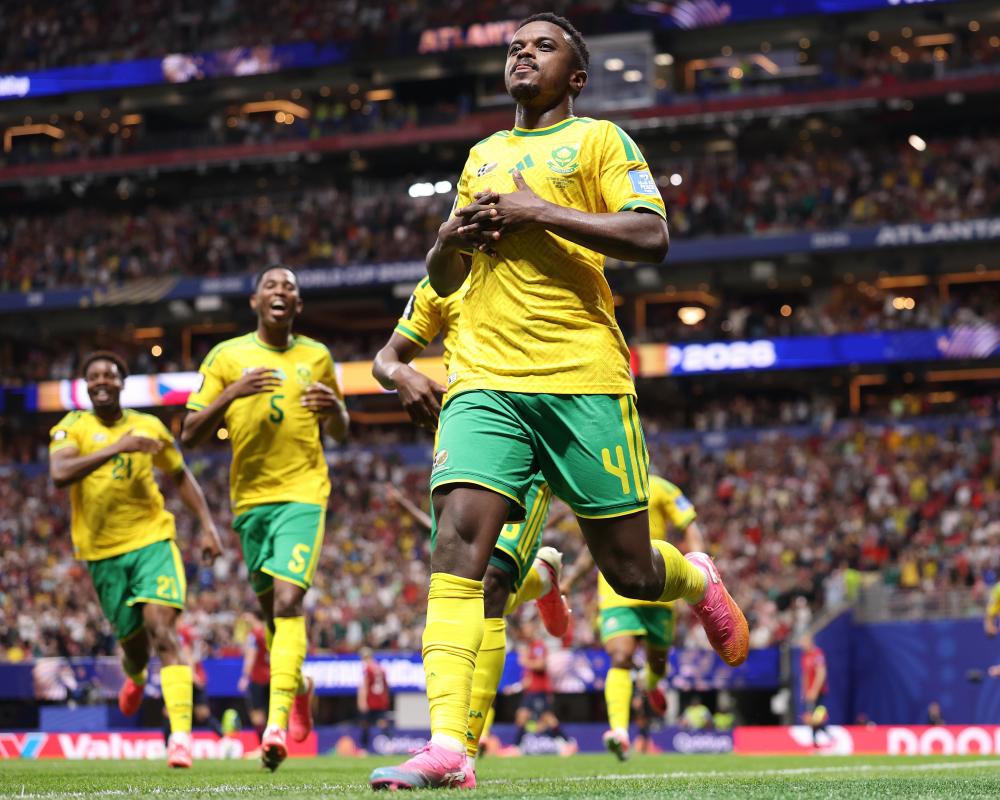
Broos hits out at stadium and ‘tall’ Czechia after South Africa rescue point
They can put the matches away, at least for a while. Before this game, Hugo Broos had responded to fierce criticism over South Africa’s start to the World Cup by revealing that eight months ago after qualification a friend had said they would erect a statue of him and the coach had replied by saying: “Make it out of wood; that way it will burn more easily.” Beaten 2-0 by Mexico, they were seven minutes away from following that with a 1-0 loss to Czechia, left with no points, no goals and not much hope. But from almost nowhere, in an arena that Broos criticised as “not a football stadium”, they got the penalty that allows them to fight another day. Pavel Sulc was the unfortunate man who gave it away, not given time to remove his hand from the path of another long shot. Teboho Mokoena was the man who scored it and what it means could be seen not only in how he celebrated then but in the tears that had rolled during the national anthem before. A 1-1 draw may not be a great result and it wasn’t always a great game but there was a smile from Mokoena at the end, and life too. There was also pride from Broos, who insisted his team had played “good football” and “made chances”, and expressed disappointment at performing under a closed roof in Atlanta. “Only the grass is football, all the rest is not,” he said. “When you compare it to the Azteca for example: that’s a football stadium. I rather like a real football stadium. About the drinks [break]: it’s very, very useful when it’s hot. In other cases, the rhythm is lost.” Broos added: “Czechia don’t like to play football or the passing game. It is very straight: they are all 1m 90cm or taller. If you like football, you like more the game we played today than the day they did.” Miroslav Koubek, the Czechia coach, replied: “That is his opinion; my opinion is different. Looking at the chances, we were closer to victory.” That neither of them got it means both can still go through. A win over South Korea would mean South Africa progress, although a second yellow card means Mokoena will miss the game. A win for Czechia against Mexico would see them through too. Whether either are capable is a different matter. “This will be different,” Koubek had insisted after Czechia’s opening-game defeat by South Korea. But in truth this wasn’t much better: between the first goal on five minutes and the last on 83 there was little to excite, even if a final flurry made for a fun finish. It had not started well. They had been playing 45 seconds when a long, looped cross found Patrik Schick alone. With the ball falling from a height and the contact weak, the attempt on goal dribbled apologetically wide. Czechia, though, were dominating and led after only five minutes, their second World Cup goal beginning the way their first had: from a throw-in. Up the line it went, Adam Hlozek escaping to pull the ball across an almost empty area. Khuliso Mudau watched it pass. Wondering whether to stay or go, by the time he had decided it was too late. With one neat touch, Alexandr Sojka took Mudau out the game and set up Michal Sadilek to finish. South Africa were wobbling, Czechia accumulating four shots inside 10 minutes. A deflected effort from Oswin Appollis that hit the side-netting soon after was South Africa’s first and announced that they had at least turned up. Czechia had invited them in and although there were few chances, Iqraam Rayners almost reached a Mudau cross. A neat set-up then saw Mokoena thump over from 25 yards. And Matej Kovar dropped the ball at the feet of Thapelo Maseko, whose shot was blocked. The second half began with Czechia seeking to reassert themselves, Schick’s header stopped by Ronwen Williams before Zeleny’s clever pass nearly set up Sadilek. Yet this quickly slipped into something more cautious, albeit with South Africa offering a little more, mostly through Appollis. Not much happened in the third quarter before, to more boos, the referee, Tori Penso, sent them to the touchline for more drinks they did not need and a team talk they probably did. South Africa needed something, that was for sure. What they got was a gift. Czechia had let them play, which did not seem the worst plan given how little they created. But coming inside from the right, Maseko’s effort from outside the area hit Sulc’s arm inside it and Penso didn’t hesitate. “We were ot lucky but I think it was OK to call it a handball,” Koubek conceded. From the spot Mokoena scored, joy exploding and ushering in one last push, more happening in the final 10 minutes than the previous 80. Lukas Provod struck wide at one end and suddenly, five minutes into added time, Evidence Makgopa was in, only to hit at the keeper. There was still time for one more chance, David Zima stopping a 96th-minute Aubrey Modiba shot that really would have been a fire starter.
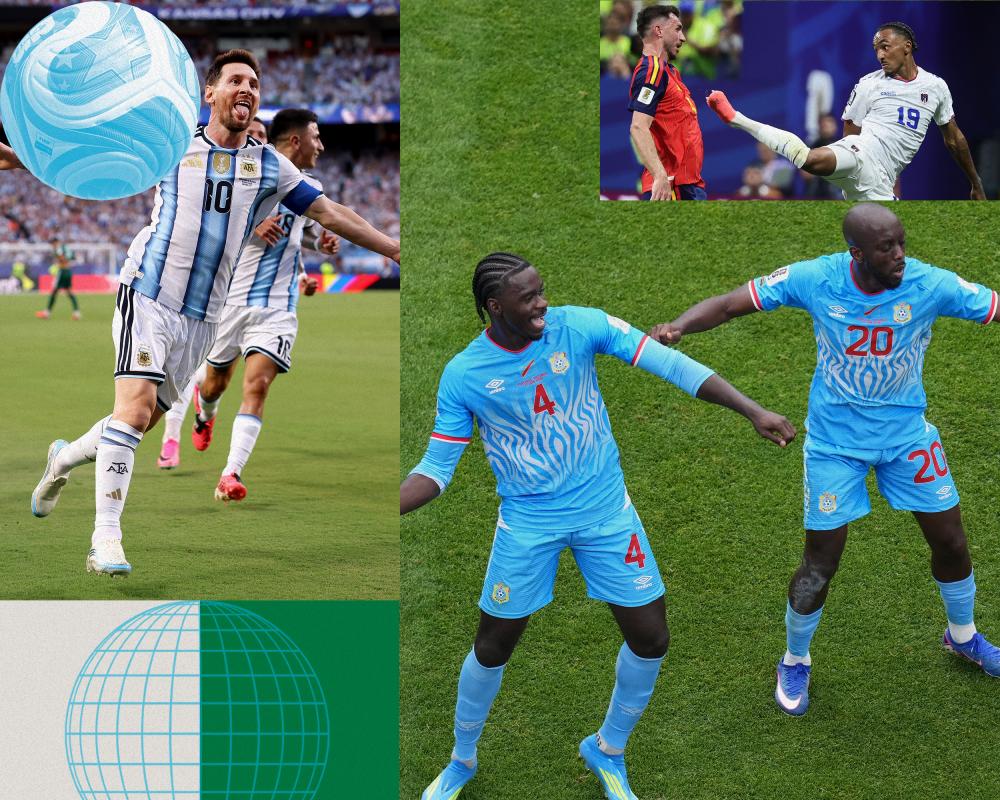
Numbers game: stats that tell stories from the first 24 World Cup matches
The first round of fixtures at the World Cup is in the bank so we’ve finally seen all 48 teams. But what have we learned? Who was good, bad, lucky or fired after one game? A dig into the Opta data has revealed some facts that may not have been immediately apparent from the scorelines. Mexico 2–0 South Africa Mexico moved the ball upfield slower than any other team. They could afford to take their time as South Africa offered next to no threat. It is unlikely to end well when a team receive as many red cards as they have touches in the opposition penalty area, which was the case for the losing side. South Korea 2–1 Czechia This game was the first to feature one of the trademarks of the 2025-26 Premier League season. The former West Ham defender Vladimir Coufal launched a long throw-in, which the Wolves centre-back Ladislav Krejci headed home to give Czechia the lead. South Korea were worthy winners, with the 25-pass buildup to Hwang In-beom’s equaliser the joint-fifth longest passing sequence leading to a goal in the World Cup since records begin in 1966. Canada 1–1 Bosnia and Herzegovina Czechia’s set-play prowess looked weak compared with Bosnia and Herzegovina’s. Seven of their eight shots against Canada were from set pieces. Sergej Barbarez will need his team to generate more than one open play chance per match. Their remaining opponents being as wasteful as the Canadians will help too. United States 4–1 Paraguay Opta Analyst’s pre-match predications rated this as the second-closest of the opening set of fixtures. The USA looked at the supercomputer and laughed. Paraguay conceded the joint second-fewest goals in the South American qualifying group yet allowed their hosts 53 touches in their penalty area, the second-most after Curaçao against Germany. Qatar 1–1 Switzerland Australia 2–0 Turkey Spain 0–0 Cape Verde Saudi Arabia 1–1 Uruguay Portugal 1–1 DR Congo These matches are grouped together because their favourites failed to win for broadly the same reason. Portugal, Spain, Switzerland, Turkey and Uruguay are the top five teams for possession and final-third pass accuracy. They had the ball where a team would want it and, Portugal aside, generated at least 25 shots. The problem was the quality of their chances. A reasonable expected goals tally looks far less impressive when divided among numerous low probability efforts from long range. Spain averaged 0.08 xG per shot, with Uruguay (0.06) and Turkey (0.04) among the teams below them. That is worse than Burnley and Wolves averaged in the Premier League this season (0.09), two teams nobody is looking to emulate. The so-called minnows have defensive fortitude hey did not always carry in the past. Giants be warned. Brazil 1–1 Morocco This summed up what we can probably expect from Brazil. Their midfield may be porous, as shown by Morocco’s goal, but if they can get the ball to Vinícius Júnior then they’ll probably be fine. We should doff our caps to Carlo Ancelotti, though. His half-time changes helped ensure Morocco did not have a shot between the break and the 98th minute. Haiti 0–1 Scotland There have already been nine draws. Even allowing for the World Cup being bigger than ever, the proportion of draws in this phase of the competition has never been higher. Is this a byproduct of a bloated format with little jeopardy for most teams? We’ll see. This is the one match that should have ended all-square. It was a dead heat on expected goals to two decimal places, at 1.05 apiece. Germany 7–1 Curaçao Transfermarkt’s data suggests the Germany starting XI was worth €559.4m (£485m) more than the 11 men that lined up for Curaçao. Opta gave the four-time champions a 90.7% chance of winning the match. Netherlands 2–2 Japan The Netherlands increased their expected goals tally by 1.38 in Opta’s post-shot model, the most of any team. Japan had 19 touches in the opposition penalty area and had the lowest xG of any team that scored at least twice. Côte d’Ivoire 1–0 Ecuador Ghana 1–0 Panama These matches ended in similarly glorious or heartbreaking fashion depending on your perspective. Ecuador hit a post three times, while Panama missed two Opta-defined big chances. The data suggested the teams were probably worthy of a draw as the clock hit 89 minutes. Amad Diallo and Caleb Yirenkyi put paid to those hopes with very late winners for the countries. Sweden 5–1 Tunisia This result may give the impression that Sweden are back on track after their deeply disappointing qualification campaign. The notion is undermined by Graham Potter’s men overachieving against their xG by 3.67 goals, the most of any team. It is fair to assume the Tunisian football federation is not paying attention to expected goal outliers, as it fired Sabri Lamouchi after the game. It will take more than Hervé Renard to save them. Belgium 1–1 Egypt This was a lesson in the importance of taking chances. At 1-0 up early in the second half, Mohamed Salah had a header saved, with the goalscorer, Emam Ashour, blasting the rebound out for a throw-in. Omar Marmoush sliced wide on a counterattack shortly afterwards too. Enter Romelu. Lukaku came on in the 66th minute, immediately forced an equalising own goal and Egypt mustered only three low-value chances between that point and full time. Iran 2–2 New Zealand Iran fielded the joint second-oldest starting XI in the history of the World Cup (at 31.8 years old). People who love naming footballers of yesteryear will enjoy trying to recall the Germany side of 1998 that was older. They beat Iran 2-0, funnily enough. Age didn’t prevent this from being one of the most entertaining matches. Iran were unlucky to run into the New Zealand duo of Chris Wood and Elijah Just. The former assisted the latter twice, making them the only combination to have linked up for two goals. France 3–1 Senegal France produced a game of two halves. Their efforts in the opening 45 minutes had them careering towards the “big team with lots of the ball fail to win” section of this roundup. Gorgeous defence-splitting passes from Michael Olise and Adrien Rabiot ensured otherwise. Six Premier League teams did not muster more than their two through-ball assists in the entire season; France logged their pair in a 16-minute spell of incision. Iraq 1–4 Norway Iraq were holding their own until a pair of defensive errors handed Norway a second lead. Erling Haaland leads the World Cup for individual expected goals, with the goalkeeper Jalal Hassan’s blunder contributing hugely to his tally. Argentina 3–0 Algeria The most surprising statistic of the first wave of fixtures is that Algeria had more touches in the opposition penalty area than Argentina, limiting the defending champions to 12. But they were also the only team to fail to register a shot on target and when Lionel Messi is on song, data is almost irrelevant. Almost. Austria 3–1 Jordan Eleven shots with four on target. As it was for Austria, so it was for Jordan. The difference came in Opta-defined big chances – opportunities where you can reasonably expect the attacker to score. The Austrians led that metric 4-0 and they benefited from an own goal too. England 4–2 Croatia England had seven big chances, more than any other side. It was hardly surprising that four came from dead-ball situations, as they had more shots this way than in open play. Harry Kane’s double carried him on to our rundown of the highest goalscorers in World Cup history and he should join the top 10 before the group stage is out. Uzbekistan 1–3 Colombia Last and by most means least, we have a fairly routine win for Colombia. Uzbekistan made the xG figures look respectable thanks to Abbosbek Fayzullayev scoring with a chance valued at 0.98. Few people in any walk of life will ever be handed a better opportunity to become a national hero.
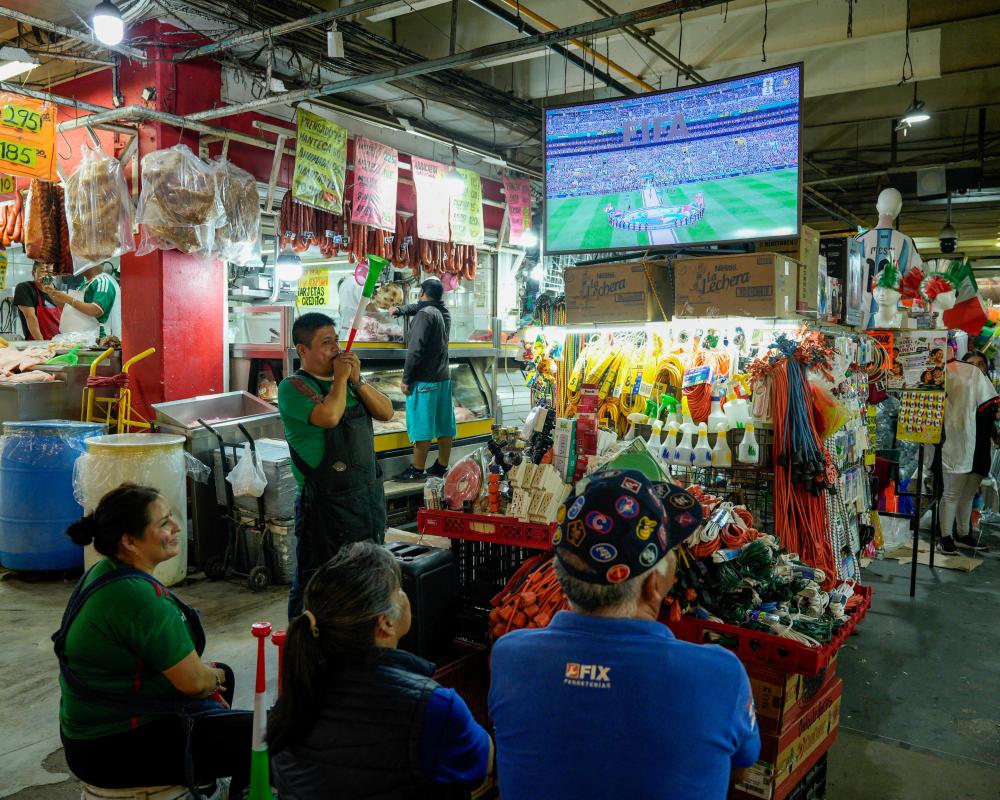
The World Cup viewed from afar is more like ambient noise – a far cry from working at it | Jonathan Liew
I fell asleep at some point during the Netherlands v Japan game. It had been a hot and drowsy day by the shores of Lake Annecy, a square and heavy heat, where the sun and the driving and the food and the boxed wine gently squeeze all the life from your body, like air being pressed out of a juice carton. I remember Virgil van Dijk angling a header into the far corner, and when I came to it was 2-1, and everyone was heading to bed, drunk on tiredness, drunk on life, drunk on drink. Not all of my friends care for football in any case, and so the World Cup had become a kind of mood music, something to fill the silences in conversation. Through the long and meandering chat about home renovations and Andy Burnham, an indistinct French voice occasionally cut through from a different universe. Maeda. Gravenberch. The Low Countries tempted to attain the final for the first time since 2010. My French isn’t great. Someone prised open a bottle of Heineken. Bodies draped themselves over the couch, fingers scrolled through phones, the immaculate decadence of boredom. I did manage to stay awake for Belgium v Egypt, albeit remembering very little beyond Romelu Lukaku forcing an own goal and the sight of Mohamed Salah sauntering regally around the place, like a PE teacher desperately willing himself not to get involved. But I do remember getting a couple of beers out of the fridge at the second hydration break and challenging Ed to a game of chess, which I lost. Lukaku, of Naples. The Belgians will take confidence from this and pursue the victory. An overwhelming knight‑and-queen attack down my a-file. Ssssake, Ed’s forgotten to tap his clock again. Not telling him next time. You will read a lot about the World Cup from people who are actually there. This is probably for the best. It is, on balance, preferable to attend something in order to understand it, be it a major football tournament or a sentencing hearing. But I wanted to convey the sensation of the World Cup as most people around the world experience it: as an ambient noise, voices ghosting in from the next dimension, flickering shapes on a distant screen, an odour and a flavour on the breeze, vivid dreams of Steph Houghton talking about “the front-footedness of the press”. The sensation of waking up and feeling like you watched the entirety of Iran v New Zealand, even though you didn’t. The fragile way in which World Cups measure out our lives, some fragrant cocktail of collective and personal memory all swirling into one. Everyone will have a story like this. I watched the 2006 final – Italy v France – at a seafood restaurant in Hvar, in the Croatian islands. It was one of those giant televisions on a stand, the kind they used to wheel into science lessons at school to show you videos about gametes. I missed Zinedine Zidane’s butt because the waiter was standing in front of the screen. And although I have watched the game in full many times since, if you ask me to pick out the overriding memory of that evening I am still more likely to recall the tenderness of the monkfish than anything that happened on the pitch. Then I started covering World Cups for work, an entirely different and more immersive experience. Very quickly you fuse into the tournament, to the point where you are basically an extension of it, a slave to its rhythms and moods. From the moment you wake to the moment you go to bed (far too late), your entire nervous system is built around the game schedule, the reliable drumbeat of regimented kick-off times, ideas and angles, content and deadlines. You spend the rest of the time thinking about transport or food. When I get home my smartwatch will typically show that my resting heart rate has been about 10-20 beats above normal for an entire month. People visibly age during these things. It’s like going to war. During the many breaks in play at this year’s tournament, the camera will inevitably pan across the crowd, and here the difference between World Cup football and regular football is perhaps at its most distinct. Everyone is dancing and putting their thumbs up. Nobody is having a bad time. Nobody is protesting or chanting about sacking the board or even hurling abuse at the referee except in the most performative way. Under most circumstances, to attend a football game – and what elevates this art form above, say, a gig or a blockbuster movie – is to submit willingly to the possibility of misery: your team can lose, the game can be terrible, your weekend can be ruined. But when you have paid £800 for a ticket, and probably many multiples of that on hotels and flights, is it remotely conceivable that you could allow yourself not to be entertained? How would you even admit it to yourself? By contrast, television grants us the freedom to detach. The freedom to allow football to swim in and out of our consciousness, to fill the gaps in life, rather than life the gaps in football. The freedom to be bored, pleasantly bored, decadently bored. To go for a smoke, to get a round in, to go to bed. In Talloires, a little resort in the Haute-Savoie, the bars and restaurants advertise “Coupe de Monde” on wooden chalkboards, the greatest sporting event in the world as an accompaniment to dinner, in between cheese and dessert. The G7 summit is taking place just up the road in Évian and as the sun sets helicopters fly low over the lake, a reminder of football’s basic transigence, its mutability, the extent to which – for all its airs and graces – the world continues to spin around it. How luxurious it is to drink boxed wine and half‑watch football as the world burns and blisters. To rail at refreshment breaks and the decision not to award a penalty to Kylian Mbappé, to see these 104 games spread out across the Americas like a lustrous map and not feel the need to watch all of them, or indeed any of them. To see this World Cup for what it truly is: utterly gripping at times, diverting at others, disposable for the most part. A kind of beautiful human-made slop, the flower arrangement at the gates of hell.
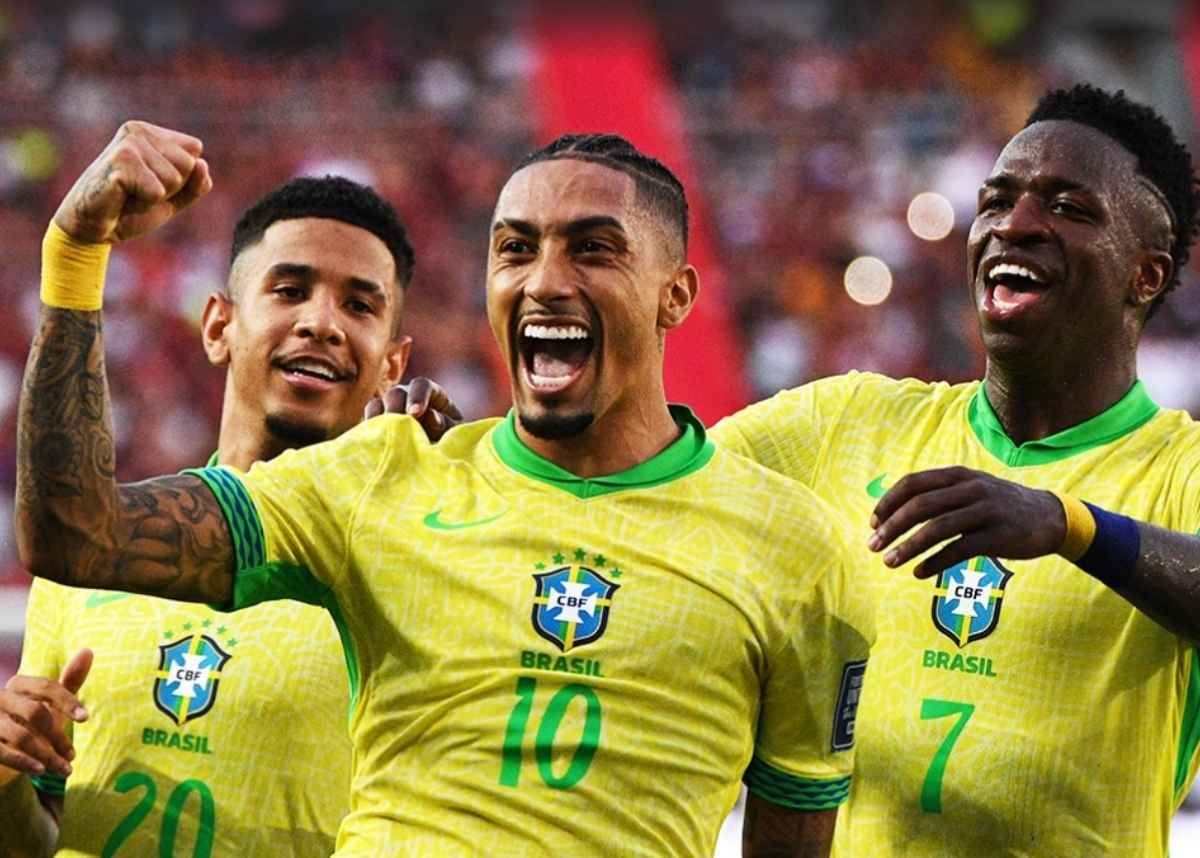
Revealed: How much Brazil asked for to come play Bafana Bafana
The record five-time world champions Brazil offered to visit Bafana Bafana for a fee of R84 million as preparations for the 2026 FIFA World Cup.
Page 1
More about South Africa
- South Africa fixtures
Results and upcoming matches
- South Africa squad
Full squad list by position