Los Angeles FC

Los Angeles FC
BMO Stadium · Los Angeles
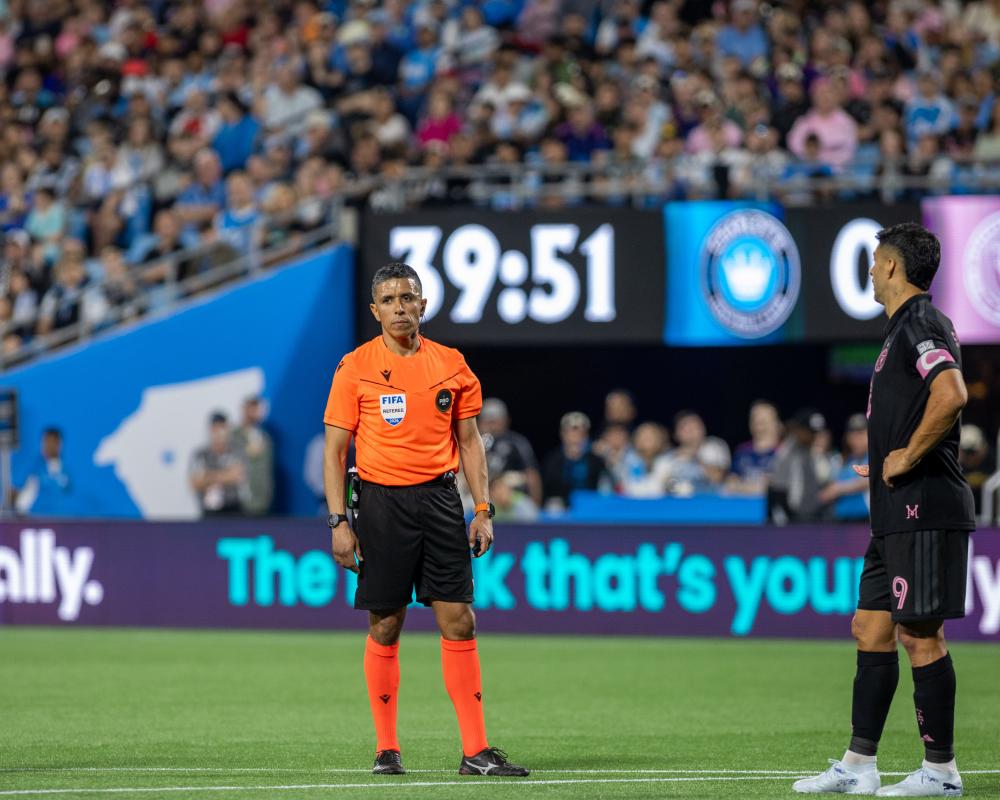
MLS lobbying Ifab to explore stopping clock for pauses in play
Major League Soccer has had discussions with the International Football Association Board, global football’s rule making body, about trialing the use of a stopped clock in matches. A continuously running clock that does not stop for fouls, set pieces, injuries and the like is foundational to the way time has been kept in the sport almost from its inception. However, the use of a clock that stops is commonplace in other American sports like basketball and gridiron football. It was even briefly used in MLS itself from its 1996 founding until the end of the 1999 season, and is still used in US college soccer. Paul Grafer, vice-president of competition for MLS, told the Guardian that reintroducing a stopped clock is “one thing that we often talk about” when discussing the future of the game. “When are we going to move away from all of these stopgap procedures and see if we can address gamesmanship and match manipulation by having the referee have a [stopped] clock?” Grafer said. “We’re open to trials around the world, and working with Ifab.” In a statement, Ali Curtis, MLS’s executive vice-president of sporting development, confirmed to the Guardian that the league has had “preliminary conversations with Ifab around future areas of innovation, including concepts such as a stopped clock, increased transparency around timekeeping, and other measures designed to improve consistency and fan understanding”. Ifab most recently debated the use of a stopped clock in 2017, deciding instead to tinker with the rules in more subtle ways. The organization introduced measures to combat time-wasting ahead of the 2022 World Cup, with referees adding previously-unheard-of amounts of stoppage time to the end of matches. Sources within Ifab told the Guardian this week that the organization shelved those initial stopped clock efforts out of concern that the unpredictable length of games would create issues for broadcasters. Others at Ifab expressed a more philosophical concern: that the idea of a 90-minute match was simply sacrosanct. A source within Ifab said on Tuesday that, in their view, MLS would face an uphill battle in terms of implementing any significant changes to timekeeping. “[Ifab] allows and introduces trials if there is wide interest in a topic,” that source said. “This one has very little support at the moment.” MLS has in recent years become a proving ground of sorts for rule changes and technologies that have eventually earned global adoption. This summer’s World Cup will feature new measures aimed at combating time-wasting surrounding injuries and substitutions, measures which were first pioneered in MLS Next Pro, MLS’s developmental league. The rules were later adopted by MLS itself before Ifab added them to the laws of the game. The league was also among the first globally to work with Ifab on implementation and testing of VAR, having partnered with the lower-division USL to do so in early 2017. The league eventually adopted the technology in all matches ahead of the 2018 season. Any adjustments to timekeeping would probably follow a similar path. “We’re always in conversation about potential trials and rules so it would be one where we would be formally submitting a proposal and seeking their acceptance,” Grafer said. “Our usual operating procedure is to trial these new rules in Next Pro. It’s the perfect incubator for those types of opportunities. We’d then look at the data and see if it’s good for the game.” The current conversation around using a stopped clock is not a new one in MLS circles, or even internationally. On its founding in 1996, MLS not only stopped the clock during pauses in play, but also had the clock itself count down instead of up, another convention still used in college soccer in the US. In its planning stages before the inaugural season, MLS also considered using a 60-minute iteration of the stopped clock and went as far as to trial it in the lower-division USISL in 1995. MLS did away with its countdown clock after the 1999 season along with the 35-yard shootout, which the league had previously used to decide tied games in the regular season. “Our core audience has spoken,” MLS Commissioner Don Garber, then in his first season at the league, told media at the time. “And we have listened.” Nearly three decades later, elements of the league’s old timekeeping standards are coming back into view. “These discussions [with Ifab] are exploratory,” Curtis said. “But they reflect a broader commitment across the global game to examine how the sport can continue to modernize while preserving what makes soccer unique.”
MLS lobbying Ifab to explore stopping clock for pauses in play
Major League Soccer has had discussions with the International Football Association Board, global football’s rule making body, about trialing the use of a stopped clock in matches. A continuously running clock that does not stop for fouls, set pieces, injuries and the like is foundational to the way time has been kept in the sport almost from its inception. However, the use of a clock that stops is commonplace in other American sports like basketball and gridiron football. It was even briefly used in MLS itself from its 1996 founding until the end of the 1999 season, and is still used in US college soccer. Paul Grafer, vice-president of competition for MLS, told the Guardian that reintroducing a stopped clock is “one thing that we often talk about” when discussing the future of the game. “When are we going to move away from all of these stopgap procedures and see if we can address gamesmanship and match manipulation by having the referee have a [stopped] clock?” Grafer said. “We’re open to trials around the world, and working with Ifab.” In a statement, Ali Curtis, MLS’s executive vice-president of sporting development, confirmed to the Guardian that the league has had “preliminary conversations with Ifab around future areas of innovation, including concepts such as a stopped clock, increased transparency around timekeeping, and other measures designed to improve consistency and fan understanding”. Ifab most recently debated the use of a stopped clock in 2017, deciding instead to tinker with the rules in more subtle ways. The organization introduced measures to combat time-wasting ahead of the 2022 World Cup, with referees adding previously-unheard-of amounts of stoppage time to the end of matches. Sources within Ifab told the Guardian this week that the organization shelved those initial stopped clock efforts out of concern that the unpredictable length of games would create issues for broadcasters. Others at Ifab expressed a more philosophical concern: that the idea of a 90-minute match was simply sacrosanct. A source within Ifab said on Tuesday that, in their view, MLS would face an uphill battle in terms of implementing any significant changes to timekeeping. “[Ifab] allows and introduces trials if there is wide interest in a topic,” that source said. “This one has very little support at the moment.” MLS has in recent years become a proving ground of sorts for rule changes and technologies that have eventually earned global adoption. This summer’s World Cup will feature new measures aimed at combating time-wasting surrounding injuries and substitutions, measures which were first pioneered in MLS Next Pro, MLS’s developmental league. The rules were later adopted by MLS itself before Ifab added them to the laws of the game. The league was also among the first globally to work with Ifab on implementation and testing of VAR, having partnered with the lower-division USL to do so in early 2017. The league eventually adopted the technology in all matches ahead of the 2018 season. Any adjustments to timekeeping would probably follow a similar path. “We’re always in conversation about potential trials and rules so it would be one where we would be formally submitting a proposal and seeking their acceptance,” Grafer said. “Our usual operating procedure is to trial these new rules in Next Pro. It’s the perfect incubator for those types of opportunities. We’d then look at the data and see if it’s good for the game.” The current conversation around using a stopped clock is not a new one in MLS circles, or even internationally. On its founding in 1996, MLS not only stopped the clock during pauses in play, but also had the clock itself count down instead of up, another convention still used in college soccer in the US. In its planning stages before the inaugural season, MLS also considered using a 60-minute iteration of the stopped clock and went as far as to trial it in the lower-division USISL in 1995. MLS did away with its countdown clock after the 1999 season along with the 35-yard shootout, which the league had previously used to decide tied games in the regular season. “Our core audience has spoken,” MLS Commissioner Don Garber, then in his first season at the league, told media at the time. “And we have listened.” Nearly three decades later, elements of the league’s old timekeeping standards are coming back into view. “These discussions [with Ifab] are exploratory,” Curtis said. “But they reflect a broader commitment across the global game to examine how the sport can continue to modernize while preserving what makes soccer unique.”

$28.3m Messi is MLS’s top earner again, making more than twice as much as Son
Lionel Messi is receiving even more on his second MLS contract, as unveiled in the MLS Players Association’s latest drop of player salary information. The union drops offer a fascinating lens into MLS squad construction, a chance to play sporting director and give pass/fail verdicts on roster construction across the 30-team circuit. The Argentinian – whose take-home figure does not include additional amounts earned via Apple streaming subscriptions or jersey sales through Adidas and Fanatics – remains far and away MLS’s top earner, receiving $28.3m in his fourth season with Inter Miami. Son Heung-min ranks second, with Los Angeles FC paying the Tottenham icon $11.2m, while Rodrigo De Paul joins Messi on the podium not as his bodyguard but as the earner of a $9.7m income. Messi’s new contract keeps him at an unprecedented rate of income. Only one team spends more across its entire roster than Miami pays Messi alone, with LAFC rostering the league’s only other eight-figure earner. While these figures don’t include transfer fees and therefore don’t tell the whole picture of a team’s investment in its roster, it is striking that each conference’s worst performer thus far harbor the league’s two lowest wage bills: Sporting Kansas City ($12.4m) and the Philadelphia Union ($11.7m). While San Diego FC’s first year largely went from strength to strength, these figures illustrate the bind they’ve put themselves in regarding Hirving “Chucky” Lozano. The team are 13th in the West, albeit just three points behind the final playoff position. After benching him during the postseason for behavioral reasons, sporting director Tyler Heaps told the media Lozano would not play for the club again … despite having not sorted out his exit plan. The public comment has proved to be a negotiating faux pas, giving suitors every reason to hold out for the best deal possible. The 30-year-old is guaranteed to be paid $9.3m this year without having played a minute, almost triple the wages of teammate and reigning MVP finalist Anders Dreyer ($3.6m). Lozano’s deal, which was announced two months before Heaps joined the club, is slated to run through 2028. First, a look at every team’s highest-paid player, listed alongside what share of that team’s total wage bill is committed to the top earner. All figures throughout the release are at annualized rates regardless of mid-season options. The salary drop reveals data about new players in the league, as well as raises for players on new deals with their club or those who moved within the league as free agents. Müller’s full salary ($5.2m) is revealed in full for the first time, as he arrived for the tail-end of 2025 at a lower rate to immediately fit into their squad. Miami will no longer catch side-eyes about De Paul’s earnings, after his half-season loan from Atlético Madrid (with a mandatory purchase option) hit the wage bill at a fraction of his full salary. Former Germany international Timo Werner leads San Jose with a healthy $4.3m compensation, while former Norwich striker Josh Sargent returned to North America after agreeing to a $5.3m salary with Toronto FC. Other highly paid newcomers include Facundo Torres (Austin, $4.4m), Germán Berterame (Miami, $3.8m), Mateusz Bogusz (Houston, $2.5m) and Morgan Guilavogui (Real Salt Lake, $2.2m). Upon signing James Rodríguez to a half-year deal, Minnesota sporting director Khaled El-Ahmad told the Guardian the deal was indisputably team-friendly. Sure enough, the Colombian playmaker checks in at an annualized salary of $684,000, making him the ninth top earner at the mid-market club. Paul Rothrock earned a hefty raise after his free agency ended with fresh terms in Seattle, up to $525,000 after receiving $105,000 last season. Cristian Espinoza has been an instant smash with Nashville, taking home $2.3m with the MLS Cup hopefuls. Finland international Robin Lod saw a slight cut from his income in Minnesota, signing with Chicago for $866,667. DC United added their two top four earners this winter: striker Tai Baribo ($2.4m) and forward Louis Munteanu ($1.6m). The Opulent XI This is the most expensive team MLS teams can cobble together, lined up in a 4-2-3-1. GK: Roman Bürki, STL ($2,750,000) RB: Richie Laryea, TOR ($1,214,438) CB: Miles Robinson, CIN ($3,950,000) CB: Thiago Martins, NYC ($2,262,000) LB: Sergio Reguilón, MIA ($1,800,000) DM: Obinna Nwobodo, CIN ($1,849,724) CM: Rodrigo De Paul, MIA ($9,688,320) RW: Lionel Messi, MIA ($28,333,333) AM: Hany Mukhtar, NSH ($5,411,667) LW: Son Heung-min, LAFC ($11,152,852) ST: Sam Surridge, NSH ($5,933,000) In total, and largely carried by Messi’s wages, the MLS Opulent XI nets a combined $74,345,334. For reference, Capology projects Burnley to have the Premier League’s thriftiest ledger this season, checking in at $75.1m. Total outlay Unsurprisingly, Miami commits far and away the most to their three highest earners (76.7%), while Philadelphia (23.4%) has the lowest commitment to their top trio. While far from a definitive tell-all figure, it’s interesting to track each team’s median earner – the midpoint player who is somewhere around the 14th to 18th top earner on most rosters. Teams performing well can cite this as evidence of credible depth, or impressive flexibility if the median is low. Those struggling to contend can cite a low median figure as evidence that there’s ample room to grow pending ownership investment – looking at Sporting KC – or a calamitous cap situation if a middling performer is high on this chart. Mostly, though, it’s interesting trivia afforded by this salary release. The data also shows how teams grew or shrank the salary investment over the bygone offseason. Some fluctuation is easily explained by one or two signings or departures; there are new top earners in San Jose (Werner), Toronto (Sargent) and Austin (Torres) while Houston added two forwards on seven-figure salaries. Conversely, Orlando’s figure dipped after seeing Luis Muriel depart, but it is bound to rise again when Antoine Griezmann joins after the World Cup. Biggest wage bill increases from fall 2025 to spring 2026 San Jose Earthquakes (+42.6%) Toronto FC (+37.3%) Austin FC (+26.7%) Houston Dynamo (+24.5%) Vancouver Whitecaps (+21.5%) LA Galaxy (+18.5%) Columbus Crew (+16.3%) Biggest wage bill decreases from fall 2025 to spring 2026 Sporting Kansas City (-29.8%) Portland Timbers (-17.6%) Orlando City (-14.7%) Seattle Sounders (-13.5%) Philadelphia Union (-12.7%) The Budget XI Poring over the data also unearths plenty of players whose performances will surely demand higher wages on their next deal. This team can be cobbled together for a meager $2,013,188 annually. Understandably, many of these players are youngsters finally establishing themselves as starters, while veteran Maxi Moralez took a cut from his past salaries at New York City FC as he approaches his 40th birthday. GK: Brian Schwake, NSH ($166,800) RB: Frankie Westfield, PHI ($125,285) CB: Reid Roberts, SJ ($88,025) CB: Manu Duah, SD ($92,025) LB: Tate Johnson, VAN ($89,025) DM: Ronald Donkor, RBNY ($175,400) CM: Adri Mehmeti, RBNY ($158,980) RW: Zavier Gozo, RSL ($126,123) AM: Maxi Moralez, NYC ($500,000) LW: Warren Madrigal, NSH ($403,500) ST: Sergi Solans, RSL ($88,025) TOTAL: $2,013,188 Thanking Their Agents FC Conversely, this batch of players have largely underperformed what would be expected given their wages. One exception is Miles Robinson, who lands here by virtue of receiving more than twice as much as all but one other center back (Thiago Martins) in the league. Another, the great Roman Bürki, has performed well below his usual standard thus far despite doubling the compensation of all but one other MLS goalkeeper (Matt Turner). GK: Roman Bürki, STL ($2,750,000) RB: Facundo Mura, MIA ($1,026,875) CB: Miles Robinson, CIN ($3,950,000) CB: Enea Mihaj, ATL ($1,557,000) LB: Sergio Reguilón, MIA ($1,800,000) DM: Gustav Berggren, RBNY ($1,310,000) CM: Luca de la Torre, CLT ($1,611,827) RW: Liel Abada, CLT ($2,648,500) AM: Daniel Gazdag, CLB ($2,049,996) LW: Hirving Lozano, SD ($9,333,333) ST: Emmanuel Latte Lath, ATL ($3,736,000)
$28.3m Messi is MLS’s top earner again, making more than twice as much as Son
Lionel Messi is receiving even more on his second MLS contract, as unveiled in the MLS Players Association’s latest drop of player salary information. The union drops offer a fascinating lens into MLS squad construction, a chance to play sporting director and give pass/fail verdicts on roster construction across the 30-team circuit. The Argentinian – whose take-home figure does not include additional amounts earned via Apple streaming subscriptions or jersey sales through Adidas and Fanatics – remains far and away MLS’s top earner, receiving $28.3m in his fourth season with Inter Miami. Son Heung-min ranks second, with Los Angeles FC paying the Tottenham icon $11.2m, while Rodrigo De Paul joins Messi on the podium not as his bodyguard but as the earner of a $9.7m income. Messi’s new contract keeps him at an unprecedented rate of income. Only one team spends more across its entire roster than Miami pays Messi alone, with LAFC rostering the league’s only other eight-figure earner. While these figures don’t include transfer fees and therefore don’t tell the whole picture of a team’s investment in its roster, it is striking that each conference’s worst performer thus far harbor the league’s two lowest wage bills: Sporting Kansas City ($12.4m) and the Philadelphia Union ($11.7m). While San Diego FC’s first year largely went from strength to strength, these figures illustrate the bind they’ve put themselves in regarding Hirving “Chucky” Lozano. The team are 13th in the West, albeit just three points behind the final playoff position. After benching him during the postseason for behavioral reasons, sporting director Tyler Heaps told the media Lozano would not play for the club again … despite having not sorted out his exit plan. The public comment has proved to be a negotiating faux pas, giving suitors every reason to hold out for the best deal possible. The 30-year-old is guaranteed to be paid $9.3m this year without having played a minute, almost triple the wages of teammate and reigning MVP finalist Anders Dreyer ($3.6m). Lozano’s deal, which was announced two months before Heaps joined the club, is slated to run through 2028. First, a look at every team’s highest-paid player, listed alongside what share of that team’s total wage bill is committed to the top earner. All figures throughout the release are at annualized rates regardless of mid-season options. The salary drop reveals data about new players in the league, as well as raises for players on new deals with their club or those who moved within the league as free agents. Müller’s full salary ($5.2m) is revealed in full for the first time, as he arrived for the tail-end of 2025 at a lower rate to immediately fit into their squad. Miami will no longer catch side-eyes about De Paul’s earnings, after his half-season loan from Atlético Madrid (with a mandatory purchase option) hit the wage bill at a fraction of his full salary. Former Germany international Timo Werner leads San Jose with a healthy $4.3m compensation, while former Norwich striker Josh Sargent returned to North America after agreeing to a $5.3m salary with Toronto FC. Other highly paid newcomers include Facundo Torres (Austin, $4.4m), Germán Berterame (Miami, $3.8m), Mateusz Bogusz (Houston, $2.5m) and Morgan Guilavogui (Real Salt Lake, $2.2m). Upon signing James Rodríguez to a half-year deal, Minnesota sporting director Khaled El-Ahmad told the Guardian the deal was indisputably team-friendly. Sure enough, the Colombian playmaker checks in at an annualized salary of $684,000, making him the ninth top earner at the mid-market club. Paul Rothrock earned a hefty raise after his free agency ended with fresh terms in Seattle, up to $525,000 after receiving $105,000 last season. Cristian Espinoza has been an instant smash with Nashville, taking home $2.3m with the MLS Cup hopefuls. Finland international Robin Lod saw a slight cut from his income in Minnesota, signing with Chicago for $866,667. DC United added their two top four earners this winter: striker Tai Baribo ($2.4m) and forward Louis Munteanu ($1.6m). The Opulent XI This is the most expensive team MLS teams can cobble together, lined up in a 4-2-3-1. GK: Roman Bürki, STL ($2,750,000) RB: Richie Laryea, TOR ($1,214,438) CB: Miles Robinson, CIN ($3,950,000) CB: Thiago Martins, NYC ($2,262,000) LB: Sergio Reguilón, MIA ($1,800,000) DM: Obinna Nwobodo, CIN ($1,849,724) CM: Rodrigo De Paul, MIA ($9,688,320) RW: Lionel Messi, MIA ($28,333,333) AM: Hany Mukhtar, NSH ($5,411,667) LW: Son Heung-min, LAFC ($11,152,852) ST: Sam Surridge, NSH ($5,933,000) In total, and largely carried by Messi’s wages, the MLS Opulent XI nets a combined $74,345,334. For reference, Capology projects Burnley to have the Premier League’s thriftiest ledger this season, checking in at $75.1m. Total outlay Unsurprisingly, Miami commits far and away the most to their three highest earners (76.7%), while Philadelphia (23.4%) has the lowest commitment to their top trio. While far from a definitive tell-all figure, it’s interesting to track each team’s median earner – the midpoint player who is somewhere around the 14th to 18th top earner on most rosters. Teams performing well can cite this as evidence of credible depth, or impressive flexibility if the median is low. Those struggling to contend can cite a low median figure as evidence that there’s ample room to grow pending ownership investment – looking at Sporting KC – or a calamitous cap situation if a middling performer is high on this chart. Mostly, though, it’s interesting trivia afforded by this salary release. The data also shows how teams grew or shrank the salary investment over the bygone offseason. Some fluctuation is easily explained by one or two signings or departures; there are new top earners in San Jose (Werner), Toronto (Sargent) and Austin (Torres) while Houston added two forwards on seven-figure salaries. Conversely, Orlando’s figure dipped after seeing Luis Muriel depart, but it is bound to rise again when Antoine Griezmann joins after the World Cup. Biggest wage bill increases from fall 2025 to spring 2026 San Jose Earthquakes (+42.6%) Toronto FC (+37.3%) Austin FC (+26.7%) Houston Dynamo (+24.5%) Vancouver Whitecaps (+21.5%) LA Galaxy (+18.5%) Columbus Crew (+16.3%) Biggest wage bill decreases from fall 2025 to spring 2026 Sporting Kansas City (-29.8%) Portland Timbers (-17.6%) Orlando City (-14.7%) Seattle Sounders (-13.5%) Philadelphia Union (-12.7%) The Budget XI Poring over the data also unearths plenty of players whose performances will surely demand higher wages on their next deal. This team can be cobbled together for a meager $2,013,188 annually. Understandably, many of these players are youngsters finally establishing themselves as starters, while veteran Maxi Moralez took a cut from his past salaries at New York City FC as he approaches his 40th birthday. GK: Brian Schwake, NSH ($166,800) RB: Frankie Westfield, PHI ($125,285) CB: Reid Roberts, SJ ($88,025) CB: Manu Duah, SD ($92,025) LB: Tate Johnson, VAN ($89,025) DM: Ronald Donkor, RBNY ($175,400) CM: Adri Mehmeti, RBNY ($158,980) RW: Zavier Gozo, RSL ($126,123) AM: Maxi Moralez, NYC ($500,000) LW: Warren Madrigal, NSH ($403,500) ST: Sergi Solans, RSL ($88,025) TOTAL: $2,013,188 Thanking Their Agents FC Conversely, this batch of players have largely underperformed what would be expected given their wages. One exception is Miles Robinson, who lands here by virtue of receiving more than twice as much as all but one other center back (Thiago Martins) in the league. Another, the great Roman Bürki, has performed well below his usual standard thus far despite doubling the compensation of all but one other MLS goalkeeper (Matt Turner). GK: Roman Bürki, STL ($2,750,000) RB: Facundo Mura, MIA ($1,026,875) CB: Miles Robinson, CIN ($3,950,000) CB: Enea Mihaj, ATL ($1,557,000) LB: Sergio Reguilón, MIA ($1,800,000) DM: Gustav Berggren, RBNY ($1,310,000) CM: Luca de la Torre, CLT ($1,611,827) RW: Liel Abada, CLT ($2,648,500) AM: Daniel Gazdag, CLB ($2,049,996) LW: Hirving Lozano, SD ($9,333,333) ST: Emmanuel Latte Lath, ATL ($3,736,000)
$28.3m Messi is MLS’s top earner again, making more than twice as much as Son
Lionel Messi is receiving even more on his second MLS contract, as unveiled in the MLS Players Association’s latest drop of player salary information. The union drops offer a fascinating lens into MLS squad construction, a chance to play sporting director and give pass/fail verdicts on roster construction across the 30-team circuit. The Argentinian – whose take-home figure does not include additional amounts earned via Apple streaming subscriptions or jersey sales through Adidas and Fanatics – remains far and away MLS’s top earner, receiving $28.3m in his fourth season with Inter Miami. Son Heung-min ranks second, with Los Angeles FC paying the Tottenham icon $11.2m, while Rodrigo De Paul joins Messi on the podium not as his bodyguard but as the earner of a $9.7m income. Messi’s new contract keeps him at an unprecedented rate of income. Only one team spends more across its entire roster than Miami pays Messi alone, with LAFC rostering the league’s only other eight-figure earner. While these figures don’t include transfer fees and therefore don’t tell the whole picture of a team’s investment in its roster, it is striking that each conference’s worst performer thus far harbor the league’s two lowest wage bills: Sporting Kansas City ($12.4m) and the Philadelphia Union ($11.7m). While San Diego FC’s first year largely went from strength to strength, these figures illustrate the bind they’ve put themselves in regarding Hirving “Chucky” Lozano. The team are 13th in the West, albeit just three points behind the final playoff position. After benching him during the postseason for behavioral reasons, sporting director Tyler Heaps told the media Lozano would not play for the club again … despite having not sorted out his exit plan. The public comment has proved to be a negotiating faux pas, giving suitors every reason to hold out for the best deal possible. The 30-year-old is guaranteed to be paid $9.3m this year without having played a minute, almost triple the wages of teammate and reigning MVP finalist Anders Dreyer ($3.6m). Lozano’s deal, which was announced two months before Heaps joined the club, is slated to run through 2028. First, a look at every team’s highest-paid player, listed alongside what share of that team’s total wage bill is committed to the top earner. All figures throughout the release are at annualized rates regardless of mid-season options. The salary drop reveals data about new players in the league, as well as raises for players on new deals with their club or those who moved within the league as free agents. Müller’s full salary ($5.2m) is revealed in full for the first time, as he arrived for the tail-end of 2025 at a lower rate to immediately fit into their squad. Miami will no longer catch side-eyes about De Paul’s earnings, after his half-season loan from Atlético Madrid (with a mandatory purchase option) hit the wage bill at a fraction of his full salary. Former Germany international Timo Werner leads San Jose with a healthy $4.3m compensation, while former Norwich striker Josh Sargent returned to North America after agreeing to a $5.3m salary with Toronto FC. Other highly paid newcomers include Facundo Torres (Austin, $4.4m), Germán Berterame (Miami, $3.8m), Mateusz Bogusz (Houston, $2.5m) and Morgan Guilavogui (Real Salt Lake, $2.2m). Upon signing James Rodríguez to a half-year deal, Minnesota sporting director Khaled El-Ahmad told the Guardian the deal was indisputably team-friendly. Sure enough, the Colombian playmaker checks in at an annualized salary of $684,000, making him the ninth top earner at the mid-market club. Paul Rothrock earned a hefty raise after his free agency ended with fresh terms in Seattle, up to $525,000 after receiving $105,000 last season. Cristian Espinoza has been an instant smash with Nashville, taking home $2.3m with the MLS Cup hopefuls. Finland international Robin Lod saw a slight cut from his income in Minnesota, signing with Chicago for $866,667. DC United added their two top four earners this winter: striker Tai Baribo ($2.4m) and forward Louis Munteanu ($1.6m). The Opulent XI This is the most expensive team MLS teams can cobble together, lined up in a 4-2-3-1. GK: Roman Bürki, STL ($2,750,000) RB: Richie Laryea, TOR ($1,214,438) CB: Miles Robinson, CIN ($3,950,000) CB: Thiago Martins, NYC ($2,262,000) LB: Sergio Reguilón, MIA ($1,800,000) DM: Obinna Nwobodo, CIN ($1,849,724) CM: Rodrigo De Paul, MIA ($9,688,320) RW: Lionel Messi, MIA ($28,333,333) AM: Hany Mukhtar, NSH ($5,411,667) LW: Son Heung-min, LAFC ($11,152,852) ST: Sam Surridge, NSH ($5,933,000) In total, and largely carried by Messi’s wages, the MLS Opulent XI nets a combined $74,345,334. For reference, Capology projects Burnley to have the Premier League’s thriftiest ledger this season, checking in at $75.1m. Total outlay Unsurprisingly, Miami commits far and away the most to their three highest earners (76.7%), while Philadelphia (23.4%) has the lowest commitment to their top trio. While far from a definitive tell-all figure, it’s interesting to track each team’s median earner – the midpoint player who is somewhere around the 14th to 18th top earner on most rosters. Teams performing well can cite this as evidence of credible depth, or impressive flexibility if the median is low. Those struggling to contend can cite a low median figure as evidence that there’s ample room to grow pending ownership investment – looking at Sporting KC – or a calamitous cap situation if a middling performer is high on this chart. Mostly, though, it’s interesting trivia afforded by this salary release. The data also shows how teams grew or shrank the salary investment over the bygone offseason. Some fluctuation is easily explained by one or two signings or departures; there are new top earners in San Jose (Werner), Toronto (Sargent) and Austin (Torres) while Houston added two forwards on seven-figure salaries. Conversely, Orlando’s figure dipped after seeing Luis Muriel depart, but it is bound to rise again when Antoine Griezmann joins after the World Cup. Biggest wage bill increases from fall 2025 to spring 2026 San Jose Earthquakes (+42.6%) Toronto FC (+37.3%) Austin FC (+26.7%) Houston Dynamo (+24.5%) Vancouver Whitecaps (+21.5%) LA Galaxy (+18.5%) Columbus Crew (+16.3%) Biggest wage bill decreases from fall 2025 to spring 2026 Sporting Kansas City (-29.8%) Portland Timbers (-17.6%) Orlando City (-14.7%) Seattle Sounders (-13.5%) Philadelphia Union (-12.7%) The Budget XI Poring over the data also unearths plenty of players whose performances will surely demand higher wages on their next deal. This team can be cobbled together for a meager $2,013,188 annually. Understandably, many of these players are youngsters finally establishing themselves as starters, while veteran Maxi Moralez took a cut from his past salaries at New York City FC as he approaches his 40th birthday. GK: Brian Schwake, NSH ($166,800) RB: Frankie Westfield, PHI ($125,285) CB: Reid Roberts, SJ ($88,025) CB: Manu Duah, SD ($92,025) LB: Tate Johnson, VAN ($89,025) DM: Ronald Donkor, RBNY ($175,400) CM: Adri Mehmeti, RBNY ($158,980) RW: Zavier Gozo, RSL ($126,123) AM: Maxi Moralez, NYC ($500,000) LW: Warren Madrigal, NSH ($403,500) ST: Sergi Solans, RSL ($88,025) TOTAL: $2,013,188 Thanking Their Agents FC Conversely, this batch of players have largely underperformed what would be expected given their wages. One exception is Miles Robinson, who lands here by virtue of receiving more than twice as much as all but one other center back (Thiago Martins) in the league. Another, the great Roman Bürki, has performed well below his usual standard thus far despite doubling the compensation of all but one other MLS goalkeeper (Matt Turner). GK: Roman Bürki, STL ($2,750,000) RB: Facundo Mura, MIA ($1,026,875) CB: Miles Robinson, CIN ($3,950,000) CB: Enea Mihaj, ATL ($1,557,000) LB: Sergio Reguilón, MIA ($1,800,000) DM: Gustav Berggren, RBNY ($1,310,000) CM: Luca de la Torre, CLT ($1,611,827) RW: Liel Abada, CLT ($2,648,500) AM: Daniel Gazdag, CLB ($2,049,996) LW: Hirving Lozano, SD ($9,333,333) ST: Emmanuel Latte Lath, ATL ($3,736,000)
$28.3m Messi is MLS’s top earner again, making more than twice as much as Son
Lionel Messi is receiving even more on his second MLS contract, as unveiled in the MLS Players Association’s latest drop of player salary information. The union drops offer a fascinating lens into MLS squad construction, a chance to play sporting director and give pass/fail verdicts on roster construction across the 30-team circuit. The Argentinian – whose take-home figure does not include additional amounts earned via Apple streaming subscriptions or jersey sales through Adidas and Fanatics – remains far and away MLS’s top earner, receiving $28.3m in his fourth season with Inter Miami. Son Heung-min ranks second, with Los Angeles FC paying the Tottenham icon $11.2m, while Rodrigo De Paul joins Messi on the podium not as his bodyguard but as the earner of a $9.7m income. Messi’s new contract keeps him at an unprecedented rate of income. Only one team spends more across its entire roster than Miami pays Messi alone, with LAFC rostering the league’s only other eight-figure earner. While these figures don’t include transfer fees and therefore don’t tell the whole picture of a team’s investment in its roster, it is striking that each conference’s worst performer thus far harbor the league’s two lowest wage bills: Sporting Kansas City ($12.4m) and the Philadelphia Union ($11.7m). While San Diego FC’s first year largely went from strength to strength, these figures illustrate the bind they’ve put themselves in regarding Hirving “Chucky” Lozano. The team are 13th in the West, albeit just three points behind the final playoff position. After benching him during the postseason for behavioral reasons, sporting director Tyler Heaps told the media Lozano would not play for the club again … despite having not sorted out his exit plan. The public comment has proved to be a negotiating faux pas, giving suitors every reason to hold out for the best deal possible. The 30-year-old is guaranteed to be paid $9.3m this year without having played a minute, almost triple the wages of teammate and reigning MVP finalist Anders Dreyer ($3.6m). Lozano’s deal, which was announced two months before Heaps joined the club, is slated to run through 2028. First, a look at every team’s highest-paid player, listed alongside what share of that team’s total wage bill is committed to the top earner. All figures throughout the release are at annualized rates regardless of mid-season options. The salary drop reveals data about new players in the league, as well as raises for players on new deals with their club or those who moved within the league as free agents. Müller’s full salary ($5.2m) is revealed in full for the first time, as he arrived for the tail-end of 2025 at a lower rate to immediately fit into their squad. Miami will no longer catch side-eyes about De Paul’s earnings, after his half-season loan from Atlético Madrid (with a mandatory purchase option) hit the wage bill at a fraction of his full salary. Former Germany international Timo Werner leads San Jose with a healthy $4.3m compensation, while former Norwich striker Josh Sargent returned to North America after agreeing to a $5.3m salary with Toronto FC. Other highly paid newcomers include Facundo Torres (Austin, $4.4m), Germán Berterame (Miami, $3.8m), Mateusz Bogusz (Houston, $2.5m) and Morgan Guilavogui (Real Salt Lake, $2.2m). Upon signing James Rodríguez to a half-year deal, Minnesota sporting director Khaled El-Ahmad told the Guardian the deal was indisputably team-friendly. Sure enough, the Colombian playmaker checks in at an annualized salary of $684,000, making him the ninth top earner at the mid-market club. Paul Rothrock earned a hefty raise after his free agency ended with fresh terms in Seattle, up to $525,000 after receiving $105,000 last season. Cristian Espinoza has been an instant smash with Nashville, taking home $2.3m with the MLS Cup hopefuls. Finland international Robin Lod saw a slight cut from his income in Minnesota, signing with Chicago for $866,667. DC United added their two top four earners this winter: striker Tai Baribo ($2.4m) and forward Louis Munteanu ($1.6m). The Opulent XI This is the most expensive team MLS teams can cobble together, lined up in a 4-2-3-1. GK: Roman Bürki, STL ($2,750,000) RB: Richie Laryea, TOR ($1,214,438) CB: Miles Robinson, CIN ($3,950,000) CB: Thiago Martins, NYC ($2,262,000) LB: Sergio Reguilón, MIA ($1,800,000) DM: Obinna Nwobodo, CIN ($1,849,724) CM: Rodrigo De Paul, MIA ($9,688,320) RW: Lionel Messi, MIA ($28,333,333) AM: Hany Mukhtar, NSH ($5,411,667) LW: Son Heung-min, LAFC ($11,152,852) ST: Sam Surridge, NSH ($5,933,000) In total, and largely carried by Messi’s wages, the MLS Opulent XI nets a combined $74,345,334. For reference, Capology projects Burnley to have the Premier League’s thriftiest ledger this season, checking in at $75.1m. Total outlay Unsurprisingly, Miami commits far and away the most to their three highest earners (76.7%), while Philadelphia (23.4%) has the lowest commitment to their top trio. While far from a definitive tell-all figure, it’s interesting to track each team’s median earner – the midpoint player who is somewhere around the 14th to 18th top earner on most rosters. Teams performing well can cite this as evidence of credible depth, or impressive flexibility if the median is low. Those struggling to contend can cite a low median figure as evidence that there’s ample room to grow pending ownership investment – looking at Sporting KC – or a calamitous cap situation if a middling performer is high on this chart. Mostly, though, it’s interesting trivia afforded by this salary release. The data also shows how teams grew or shrank the salary investment over the bygone offseason. Some fluctuation is easily explained by one or two signings or departures; there are new top earners in San Jose (Werner), Toronto (Sargent) and Austin (Torres) while Houston added two forwards on seven-figure salaries. Conversely, Orlando’s figure dipped after seeing Luis Muriel depart, but it is bound to rise again when Antoine Griezmann joins after the World Cup. Biggest wage bill increases from fall 2025 to spring 2026 San Jose Earthquakes (+42.6%) Toronto FC (+37.3%) Austin FC (+26.7%) Houston Dynamo (+24.5%) Vancouver Whitecaps (+21.5%) LA Galaxy (+18.5%) Columbus Crew (+16.3%) Biggest wage bill decreases from fall 2025 to spring 2026 Sporting Kansas City (-29.8%) Portland Timbers (-17.6%) Orlando City (-14.7%) Seattle Sounders (-13.5%) Philadelphia Union (-12.7%) The Budget XI Poring over the data also unearths plenty of players whose performances will surely demand higher wages on their next deal. This team can be cobbled together for a meager $2,013,188 annually. Understandably, many of these players are youngsters finally establishing themselves as starters, while veteran Maxi Moralez took a cut from his past salaries at New York City FC as he approaches his 40th birthday. GK: Brian Schwake, NSH ($166,800) RB: Frankie Westfield, PHI ($125,285) CB: Reid Roberts, SJ ($88,025) CB: Manu Duah, SD ($92,025) LB: Tate Johnson, VAN ($89,025) DM: Ronald Donkor, RBNY ($175,400) CM: Adri Mehmeti, RBNY ($158,980) RW: Zavier Gozo, RSL ($126,123) AM: Maxi Moralez, NYC ($500,000) LW: Warren Madrigal, NSH ($403,500) ST: Sergi Solans, RSL ($88,025) TOTAL: $2,013,188 Thanking Their Agents FC Conversely, this batch of players have largely underperformed what would be expected given their wages. One exception is Miles Robinson, who lands here by virtue of receiving more than twice as much as all but one other center back (Thiago Martins) in the league. Another, the great Roman Bürki, has performed well below his usual standard thus far despite doubling the compensation of all but one other MLS goalkeeper (Matt Turner). GK: Roman Bürki, STL ($2,750,000) RB: Facundo Mura, MIA ($1,026,875) CB: Miles Robinson, CIN ($3,950,000) CB: Enea Mihaj, ATL ($1,557,000) LB: Sergio Reguilón, MIA ($1,800,000) DM: Gustav Berggren, RBNY ($1,310,000) CM: Luca de la Torre, CLT ($1,611,827) RW: Liel Abada, CLT ($2,648,500) AM: Daniel Gazdag, CLB ($2,049,996) LW: Hirving Lozano, SD ($9,333,333) ST: Emmanuel Latte Lath, ATL ($3,736,000)
$28.3m Messi is MLS’s top earner again, making more than twice as much as Son
Lionel Messi is receiving even more on his second MLS contract, as unveiled in the MLS Players Association’s latest drop of player salary information. The union drops offer a fascinating lens into MLS squad construction, a chance to play sporting director and give pass/fail verdicts on roster construction across the 30-team circuit. The Argentinian – whose take-home figure does not include additional amounts earned via Apple streaming subscriptions or jersey sales through Adidas and Fanatics – remains far and away MLS’s top earner, receiving $28.3m in his fourth season with Inter Miami. Son Heung-min ranks second, with Los Angeles FC paying the Tottenham icon $11.2m, while Rodrigo De Paul joins Messi on the podium not as his bodyguard but as the earner of a $9.7m income. Messi’s new contract keeps him at an unprecedented rate of income. Only one team spends more across its entire roster than Miami pays Messi alone, with LAFC rostering the league’s only other eight-figure earner. While these figures don’t include transfer fees and therefore don’t tell the whole picture of a team’s investment in its roster, it is striking that each conference’s worst performer thus far harbor the league’s two lowest wage bills: Sporting Kansas City ($12.4m) and the Philadelphia Union ($11.7m). While San Diego FC’s first year largely went from strength to strength, these figures illustrate the bind they’ve put themselves in regarding Hirving “Chucky” Lozano. The team are 13th in the West, albeit just three points behind the final playoff position. After benching him during the postseason for behavioral reasons, sporting director Tyler Heaps told the media Lozano would not play for the club again … despite having not sorted out his exit plan. The public comment has proved to be a negotiating faux pas, giving suitors every reason to hold out for the best deal possible. The 30-year-old is guaranteed to be paid $9.3m this year without having played a minute, almost triple the wages of teammate and reigning MVP finalist Anders Dreyer ($3.6m). Lozano’s deal, which was announced two months before Heaps joined the club, is slated to run through 2028. First, a look at every team’s highest-paid player, listed alongside what share of that team’s total wage bill is committed to the top earner. All figures throughout the release are at annualized rates regardless of mid-season options. The salary drop reveals data about new players in the league, as well as raises for players on new deals with their club or those who moved within the league as free agents. Müller’s full salary ($5.2m) is revealed in full for the first time, as he arrived for the tail-end of 2025 at a lower rate to immediately fit into their squad. Miami will no longer catch side-eyes about De Paul’s earnings, after his half-season loan from Atlético Madrid (with a mandatory purchase option) hit the wage bill at a fraction of his full salary. Former Germany international Timo Werner leads San Jose with a healthy $4.3m compensation, while former Norwich striker Josh Sargent returned to North America after agreeing to a $5.3m salary with Toronto FC. Other highly paid newcomers include Facundo Torres (Austin, $4.4m), Germán Berterame (Miami, $3.8m), Mateusz Bogusz (Houston, $2.5m) and Morgan Guilavogui (Real Salt Lake, $2.2m). Upon signing James Rodríguez to a half-year deal, Minnesota sporting director Khaled El-Ahmad told the Guardian the deal was indisputably team-friendly. Sure enough, the Colombian playmaker checks in at an annualized salary of $684,000, making him the ninth top earner at the mid-market club. Paul Rothrock earned a hefty raise after his free agency ended with fresh terms in Seattle, up to $525,000 after receiving $105,000 last season. Cristian Espinoza has been an instant smash with Nashville, taking home $2.3m with the MLS Cup hopefuls. Finland international Robin Lod saw a slight cut from his income in Minnesota, signing with Chicago for $866,667. DC United added their two top four earners this winter: striker Tai Baribo ($2.4m) and forward Louis Munteanu ($1.6m). The Opulent XI This is the most expensive team MLS teams can cobble together, lined up in a 4-2-3-1. GK: Roman Bürki, STL ($2,750,000) RB: Richie Laryea, TOR ($1,214,438) CB: Miles Robinson, CIN ($3,950,000) CB: Thiago Martins, NYC ($2,262,000) LB: Sergio Reguilón, MIA ($1,800,000) DM: Obinna Nwobodo, CIN ($1,849,724) CM: Rodrigo De Paul, MIA ($9,688,320) RW: Lionel Messi, MIA ($28,333,333) AM: Hany Mukhtar, NSH ($5,411,667) LW: Son Heung-min, LAFC ($11,152,852) ST: Sam Surridge, NSH ($5,933,000) In total, and largely carried by Messi’s wages, the MLS Opulent XI nets a combined $74,345,334. For reference, Capology projects Burnley to have the Premier League’s thriftiest ledger this season, checking in at $75.1m. Total outlay Unsurprisingly, Miami commits far and away the most to their three highest earners (76.7%), while Philadelphia (23.4%) has the lowest commitment to their top trio. While far from a definitive tell-all figure, it’s interesting to track each team’s median earner – the midpoint player who is somewhere around the 14th to 18th top earner on most rosters. Teams performing well can cite this as evidence of credible depth, or impressive flexibility if the median is low. Those struggling to contend can cite a low median figure as evidence that there’s ample room to grow pending ownership investment – looking at Sporting KC – or a calamitous cap situation if a middling performer is high on this chart. Mostly, though, it’s interesting trivia afforded by this salary release. The data also shows how teams grew or shrank the salary investment over the bygone offseason. Some fluctuation is easily explained by one or two signings or departures; there are new top earners in San Jose (Werner), Toronto (Sargent) and Austin (Torres) while Houston added two forwards on seven-figure salaries. Conversely, Orlando’s figure dipped after seeing Luis Muriel depart, but it is bound to rise again when Antoine Griezmann joins after the World Cup. Biggest wage bill increases from fall 2025 to spring 2026 San Jose Earthquakes (+42.6%) Toronto FC (+37.3%) Austin FC (+26.7%) Houston Dynamo (+24.5%) Vancouver Whitecaps (+21.5%) LA Galaxy (+18.5%) Columbus Crew (+16.3%) Biggest wage bill decreases from fall 2025 to spring 2026 Sporting Kansas City (-29.8%) Portland Timbers (-17.6%) Orlando City (-14.7%) Seattle Sounders (-13.5%) Philadelphia Union (-12.7%) The Budget XI Poring over the data also unearths plenty of players whose performances will surely demand higher wages on their next deal. This team can be cobbled together for a meager $2,013,188 annually. Understandably, many of these players are youngsters finally establishing themselves as starters, while veteran Maxi Moralez took a cut from his past salaries at New York City FC as he approaches his 40th birthday. GK: Brian Schwake, NSH ($166,800) RB: Frankie Westfield, PHI ($125,285) CB: Reid Roberts, SJ ($88,025) CB: Manu Duah, SD ($92,025) LB: Tate Johnson, VAN ($89,025) DM: Ronald Donkor, RBNY ($175,400) CM: Adri Mehmeti, RBNY ($158,980) RW: Zavier Gozo, RSL ($126,123) AM: Maxi Moralez, NYC ($500,000) LW: Warren Madrigal, NSH ($403,500) ST: Sergi Solans, RSL ($88,025) TOTAL: $2,013,188 Thanking Their Agents FC Conversely, this batch of players have largely underperformed what would be expected given their wages. One exception is Miles Robinson, who lands here by virtue of receiving more than twice as much as all but one other center back (Thiago Martins) in the league. Another, the great Roman Bürki, has performed well below his usual standard thus far despite doubling the compensation of all but one other MLS goalkeeper (Matt Turner). GK: Roman Bürki, STL ($2,750,000) RB: Facundo Mura, MIA ($1,026,875) CB: Miles Robinson, CIN ($3,950,000) CB: Enea Mihaj, ATL ($1,557,000) LB: Sergio Reguilón, MIA ($1,800,000) DM: Gustav Berggren, RBNY ($1,310,000) CM: Luca de la Torre, CLT ($1,611,827) RW: Liel Abada, CLT ($2,648,500) AM: Daniel Gazdag, CLB ($2,049,996) LW: Hirving Lozano, SD ($9,333,333) ST: Emmanuel Latte Lath, ATL ($3,736,000)
$28.3m Messi is MLS’s top earner again, making more than twice as much as Son
Lionel Messi is receiving even more on his second MLS contract, as unveiled in the MLS Players Association’s latest drop of player salary information. The union drops offer a fascinating lens into MLS squad construction, a chance to play sporting director and give pass/fail verdicts on roster construction across the 30-team circuit. The Argentinian – whose take-home figure does not include additional amounts earned via Apple streaming subscriptions or jersey sales through Adidas and Fanatics – remains far and away MLS’s top earner, receiving $28.3m in his fourth season with Inter Miami. Son Heung-min ranks second, with Los Angeles FC paying the Tottenham icon $11.2m, while Rodrigo De Paul joins Messi on the podium not as his bodyguard but as the earner of a $9.7m income. Messi’s new contract keeps him at an unprecedented rate of income. Only one team spends more across its entire roster than Miami pays Messi alone, with LAFC rostering the league’s only other eight-figure earner. While these figures don’t include transfer fees and therefore don’t tell the whole picture of a team’s investment in its roster, it is striking that each conference’s worst performer thus far harbor the league’s two lowest wage bills: Sporting Kansas City ($12.4m) and the Philadelphia Union ($11.7m). While San Diego FC’s first year largely went from strength to strength, these figures illustrate the bind they’ve put themselves in regarding Hirving “Chucky” Lozano. The team are 13th in the West, albeit just three points behind the final playoff position. After benching him during the postseason for behavioral reasons, sporting director Tyler Heaps told the media Lozano would not play for the club again … despite having not sorted out his exit plan. The public comment has proved to be a negotiating faux pas, giving suitors every reason to hold out for the best deal possible. The 30-year-old is guaranteed to be paid $9.3m this year without having played a minute, almost triple the wages of teammate and reigning MVP finalist Anders Dreyer ($3.6m). Lozano’s deal, which was announced two months before Heaps joined the club, is slated to run through 2028. First, a look at every team’s highest-paid player, listed alongside what share of that team’s total wage bill is committed to the top earner. All figures throughout the release are at annualized rates regardless of mid-season options. The salary drop reveals data about new players in the league, as well as raises for players on new deals with their club or those who moved within the league as free agents. Müller’s full salary ($5.2m) is revealed in full for the first time, as he arrived for the tail-end of 2025 at a lower rate to immediately fit into their squad. Miami will no longer catch side-eyes about De Paul’s earnings, after his half-season loan from Atlético Madrid (with a mandatory purchase option) hit the wage bill at a fraction of his full salary. Former Germany international Timo Werner leads San Jose with a healthy $4.3m compensation, while former Norwich striker Josh Sargent returned to North America after agreeing to a $5.3m salary with Toronto FC. Other highly paid newcomers include Facundo Torres (Austin, $4.4m), Germán Berterame (Miami, $3.8m), Mateusz Bogusz (Houston, $2.5m) and Morgan Guilavogui (Real Salt Lake, $2.2m). Upon signing James Rodríguez to a half-year deal, Minnesota sporting director Khaled El-Ahmad told the Guardian the deal was indisputably team-friendly. Sure enough, the Colombian playmaker checks in at an annualized salary of $684,000, making him the ninth top earner at the mid-market club. Paul Rothrock earned a hefty raise after his free agency ended with fresh terms in Seattle, up to $525,000 after receiving $105,000 last season. Cristian Espinoza has been an instant smash with Nashville, taking home $2.3m with the MLS Cup hopefuls. Finland international Robin Lod saw a slight cut from his income in Minnesota, signing with Chicago for $866,667. DC United added their two top four earners this winter: striker Tai Baribo ($2.4m) and forward Louis Munteanu ($1.6m). The Opulent XI This is the most expensive team MLS teams can cobble together, lined up in a 4-2-3-1. GK: Roman Bürki, STL ($2,750,000) RB: Richie Laryea, TOR ($1,214,438) CB: Miles Robinson, CIN ($3,950,000) CB: Thiago Martins, NYC ($2,262,000) LB: Sergio Reguilón, MIA ($1,800,000) DM: Obinna Nwobodo, CIN ($1,849,724) CM: Rodrigo De Paul, MIA ($9,688,320) RW: Lionel Messi, MIA ($28,333,333) AM: Hany Mukhtar, NSH ($5,411,667) LW: Son Heung-min, LAFC ($11,152,852) ST: Sam Surridge, NSH ($5,933,000) In total, and largely carried by Messi’s wages, the MLS Opulent XI nets a combined $74,345,334. For reference, Capology projects Burnley to have the Premier League’s thriftiest ledger this season, checking in at $75.1m. Total outlay Unsurprisingly, Miami commits far and away the most to their three highest earners (76.7%), while Philadelphia (23.4%) has the lowest commitment to their top trio. While far from a definitive tell-all figure, it’s interesting to track each team’s median earner – the midpoint player who is somewhere around the 14th to 18th top earner on most rosters. Teams performing well can cite this as evidence of credible depth, or impressive flexibility if the median is low. Those struggling to contend can cite a low median figure as evidence that there’s ample room to grow pending ownership investment – looking at Sporting KC – or a calamitous cap situation if a middling performer is high on this chart. Mostly, though, it’s interesting trivia afforded by this salary release. The data also shows how teams grew or shrank the salary investment over the bygone offseason. Some fluctuation is easily explained by one or two signings or departures; there are new top earners in San Jose (Werner), Toronto (Sargent) and Austin (Torres) while Houston added two forwards on seven-figure salaries. Conversely, Orlando’s figure dipped after seeing Luis Muriel depart, but it is bound to rise again when Antoine Griezmann joins after the World Cup. Biggest wage bill increases from fall 2025 to spring 2026 San Jose Earthquakes (+42.6%) Toronto FC (+37.3%) Austin FC (+26.7%) Houston Dynamo (+24.5%) Vancouver Whitecaps (+21.5%) LA Galaxy (+18.5%) Columbus Crew (+16.3%) Biggest wage bill decreases from fall 2025 to spring 2026 Sporting Kansas City (-29.8%) Portland Timbers (-17.6%) Orlando City (-14.7%) Seattle Sounders (-13.5%) Philadelphia Union (-12.7%) The Budget XI Poring over the data also unearths plenty of players whose performances will surely demand higher wages on their next deal. This team can be cobbled together for a meager $2,013,188 annually. Understandably, many of these players are youngsters finally establishing themselves as starters, while veteran Maxi Moralez took a cut from his past salaries at New York City FC as he approaches his 40th birthday. GK: Brian Schwake, NSH ($166,800) RB: Frankie Westfield, PHI ($125,285) CB: Reid Roberts, SJ ($88,025) CB: Manu Duah, SD ($92,025) LB: Tate Johnson, VAN ($89,025) DM: Ronald Donkor, RBNY ($175,400) CM: Adri Mehmeti, RBNY ($158,980) RW: Zavier Gozo, RSL ($126,123) AM: Maxi Moralez, NYC ($500,000) LW: Warren Madrigal, NSH ($403,500) ST: Sergi Solans, RSL ($88,025) TOTAL: $2,013,188 Thanking Their Agents FC Conversely, this batch of players have largely underperformed what would be expected given their wages. One exception is Miles Robinson, who lands here by virtue of receiving more than twice as much as all but one other center back (Thiago Martins) in the league. Another, the great Roman Bürki, has performed well below his usual standard thus far despite doubling the compensation of all but one other MLS goalkeeper (Matt Turner). GK: Roman Bürki, STL ($2,750,000) RB: Facundo Mura, MIA ($1,026,875) CB: Miles Robinson, CIN ($3,950,000) CB: Enea Mihaj, ATL ($1,557,000) LB: Sergio Reguilón, MIA ($1,800,000) DM: Gustav Berggren, RBNY ($1,310,000) CM: Luca de la Torre, CLT ($1,611,827) RW: Liel Abada, CLT ($2,648,500) AM: Daniel Gazdag, CLB ($2,049,996) LW: Hirving Lozano, SD ($9,333,333) ST: Emmanuel Latte Lath, ATL ($3,736,000)
$28.3m Messi is MLS’s top earner again, making more than twice as much as Son
Lionel Messi is receiving even more on his second MLS contract, as unveiled in the MLS Players Association’s latest drop of player salary information. The union drops offer a fascinating lens into MLS squad construction, a chance to play sporting director and give pass/fail verdicts on roster construction across the 30-team circuit. The Argentinian – whose take-home figure does not include additional amounts earned via Apple streaming subscriptions or jersey sales through Adidas and Fanatics – remains far and away MLS’s top earner, receiving $28.3m in his fourth season with Inter Miami. Son Heung-min ranks second, with Los Angeles FC paying the Tottenham icon $11.2m, while Rodrigo De Paul joins Messi on the podium not as his bodyguard but as the earner of a $9.7m income. Messi’s new contract keeps him at an unprecedented rate of income. Only one team spends more across its entire roster than Miami pays Messi alone, with LAFC rostering the league’s only other eight-figure earner. While these figures don’t include transfer fees and therefore don’t tell the whole picture of a team’s investment in its roster, it is striking that each conference’s worst performer thus far harbor the league’s two lowest wage bills: Sporting Kansas City ($12.4m) and the Philadelphia Union ($11.7m). While San Diego FC’s first year largely went from strength to strength, these figures illustrate the bind they’ve put themselves in regarding Hirving “Chucky” Lozano. The team are 13th in the West, albeit just three points behind the final playoff position. After benching him during the postseason for behavioral reasons, sporting director Tyler Heaps told the media Lozano would not play for the club again … despite having not sorted out his exit plan. The public comment has proved to be a negotiating faux pas, giving suitors every reason to hold out for the best deal possible. The 30-year-old is guaranteed to be paid $9.3m this year without having played a minute, almost triple the wages of teammate and reigning MVP finalist Anders Dreyer ($3.6m). Lozano’s deal, which was announced two months before Heaps joined the club, is slated to run through 2028. First, a look at every team’s highest-paid player, listed alongside what share of that team’s total wage bill is committed to the top earner. All figures throughout the release are at annualized rates regardless of mid-season options. The salary drop reveals data about new players in the league, as well as raises for players on new deals with their club or those who moved within the league as free agents. Müller’s full salary ($5.2m) is revealed in full for the first time, as he arrived for the tail-end of 2025 at a lower rate to immediately fit into their squad. Miami will no longer catch side-eyes about De Paul’s earnings, after his half-season loan from Atlético Madrid (with a mandatory purchase option) hit the wage bill at a fraction of his full salary. Former Germany international Timo Werner leads San Jose with a healthy $4.3m compensation, while former Norwich striker Josh Sargent returned to North America after agreeing to a $5.3m salary with Toronto FC. Other highly paid newcomers include Facundo Torres (Austin, $4.4m), Germán Berterame (Miami, $3.8m), Mateusz Bogusz (Houston, $2.5m) and Morgan Guilavogui (Real Salt Lake, $2.2m). Upon signing James Rodríguez to a half-year deal, Minnesota sporting director Khaled El-Ahmad told the Guardian the deal was indisputably team-friendly. Sure enough, the Colombian playmaker checks in at an annualized salary of $684,000, making him the ninth top earner at the mid-market club. Paul Rothrock earned a hefty raise after his free agency ended with fresh terms in Seattle, up to $525,000 after receiving $105,000 last season. Cristian Espinoza has been an instant smash with Nashville, taking home $2.3m with the MLS Cup hopefuls. Finland international Robin Lod saw a slight cut from his income in Minnesota, signing with Chicago for $866,667. DC United added their two top four earners this winter: striker Tai Baribo ($2.4m) and forward Louis Munteanu ($1.6m). The Opulent XI This is the most expensive team MLS teams can cobble together, lined up in a 4-2-3-1. GK: Roman Bürki, STL ($2,750,000) RB: Richie Laryea, TOR ($1,214,438) CB: Miles Robinson, CIN ($3,950,000) CB: Thiago Martins, NYC ($2,262,000) LB: Sergio Reguilón, MIA ($1,800,000) DM: Obinna Nwobodo, CIN ($1,849,724) CM: Rodrigo De Paul, MIA ($9,688,320) RW: Lionel Messi, MIA ($28,333,333) AM: Hany Mukhtar, NSH ($5,411,667) LW: Son Heung-min, LAFC ($11,152,852) ST: Sam Surridge, NSH ($5,933,000) In total, and largely carried by Messi’s wages, the MLS Opulent XI nets a combined $74,345,334. For reference, Capology projects Burnley to have the Premier League’s thriftiest ledger this season, checking in at $75.1m. Total outlay Unsurprisingly, Miami commits far and away the most to their three highest earners (76.7%), while Philadelphia (23.4%) has the lowest commitment to their top trio. While far from a definitive tell-all figure, it’s interesting to track each team’s median earner – the midpoint player who is somewhere around the 14th to 18th top earner on most rosters. Teams performing well can cite this as evidence of credible depth, or impressive flexibility if the median is low. Those struggling to contend can cite a low median figure as evidence that there’s ample room to grow pending ownership investment – looking at Sporting KC – or a calamitous cap situation if a middling performer is high on this chart. Mostly, though, it’s interesting trivia afforded by this salary release. The data also shows how teams grew or shrank the salary investment over the bygone offseason. Some fluctuation is easily explained by one or two signings or departures; there are new top earners in San Jose (Werner), Toronto (Sargent) and Austin (Torres) while Houston added two forwards on seven-figure salaries. Conversely, Orlando’s figure dipped after seeing Luis Muriel depart, but it is bound to rise again when Antoine Griezmann joins after the World Cup. Biggest wage bill increases from fall 2025 to spring 2026 San Jose Earthquakes (+42.6%) Toronto FC (+37.3%) Austin FC (+26.7%) Houston Dynamo (+24.5%) Vancouver Whitecaps (+21.5%) LA Galaxy (+18.5%) Columbus Crew (+16.3%) Biggest wage bill decreases from fall 2025 to spring 2026 Sporting Kansas City (-29.8%) Portland Timbers (-17.6%) Orlando City (-14.7%) Seattle Sounders (-13.5%) Philadelphia Union (-12.7%) The Budget XI Poring over the data also unearths plenty of players whose performances will surely demand higher wages on their next deal. This team can be cobbled together for a meager $2,013,188 annually. Understandably, many of these players are youngsters finally establishing themselves as starters, while veteran Maxi Moralez took a cut from his past salaries at New York City FC as he approaches his 40th birthday. GK: Brian Schwake, NSH ($166,800) RB: Frankie Westfield, PHI ($125,285) CB: Reid Roberts, SJ ($88,025) CB: Manu Duah, SD ($92,025) LB: Tate Johnson, VAN ($89,025) DM: Ronald Donkor, RBNY ($175,400) CM: Adri Mehmeti, RBNY ($158,980) RW: Zavier Gozo, RSL ($126,123) AM: Maxi Moralez, NYC ($500,000) LW: Warren Madrigal, NSH ($403,500) ST: Sergi Solans, RSL ($88,025) TOTAL: $2,013,188 Thanking Their Agents FC Conversely, this batch of players have largely underperformed what would be expected given their wages. One exception is Miles Robinson, who lands here by virtue of receiving more than twice as much as all but one other center back (Thiago Martins) in the league. Another, the great Roman Bürki, has performed well below his usual standard thus far despite doubling the compensation of all but one other MLS goalkeeper (Matt Turner). GK: Roman Bürki, STL ($2,750,000) RB: Facundo Mura, MIA ($1,026,875) CB: Miles Robinson, CIN ($3,950,000) CB: Enea Mihaj, ATL ($1,557,000) LB: Sergio Reguilón, MIA ($1,800,000) DM: Gustav Berggren, RBNY ($1,310,000) CM: Luca de la Torre, CLT ($1,611,827) RW: Liel Abada, CLT ($2,648,500) AM: Daniel Gazdag, CLB ($2,049,996) LW: Hirving Lozano, SD ($9,333,333) ST: Emmanuel Latte Lath, ATL ($3,736,000)
$28.3m Messi is MLS’s top earner again, making more than twice as much as Son
Lionel Messi is receiving even more on his second MLS contract, as unveiled in the MLS Players Association’s latest drop of player salary information. The union drops offer a fascinating lens into MLS squad construction, a chance to play sporting director and give pass/fail verdicts on roster construction across the 30-team circuit. The Argentinian – whose take-home figure does not include additional amounts earned via Apple streaming subscriptions or jersey sales through Adidas and Fanatics – remains far and away MLS’s top earner, receiving $28.3m in his fourth season with Inter Miami. Son Heung-min ranks second, with Los Angeles FC paying the Tottenham icon $11.2m, while Rodrigo De Paul joins Messi on the podium not as his bodyguard but as the earner of a $9.7m income. Messi’s new contract keeps him at an unprecedented rate of income. Only one team spends more across its entire roster than Miami pays Messi alone, with LAFC rostering the league’s only other eight-figure earner. While these figures don’t include transfer fees and therefore don’t tell the whole picture of a team’s investment in its roster, it is striking that each conference’s worst performer thus far harbor the league’s two lowest wage bills: Sporting Kansas City ($12.4m) and the Philadelphia Union ($11.7m). While San Diego FC’s first year largely went from strength to strength, these figures illustrate the bind they’ve put themselves in regarding Hirving “Chucky” Lozano. The team are 13th in the West, albeit just three points behind the final playoff position. After benching him during the postseason for behavioral reasons, sporting director Tyler Heaps told the media Lozano would not play for the club again … despite having not sorted out his exit plan. The public comment has proved to be a negotiating faux pas, giving suitors every reason to hold out for the best deal possible. The 30-year-old is guaranteed to be paid $9.3m this year without having played a minute, almost triple the wages of teammate and reigning MVP finalist Anders Dreyer ($3.6m). Lozano’s deal, which was announced two months before Heaps joined the club, is slated to run through 2028. First, a look at every team’s highest-paid player, listed alongside what share of that team’s total wage bill is committed to the top earner. All figures throughout the release are at annualized rates regardless of mid-season options. The salary drop reveals data about new players in the league, as well as raises for players on new deals with their club or those who moved within the league as free agents. Müller’s full salary ($5.2m) is revealed in full for the first time, as he arrived for the tail-end of 2025 at a lower rate to immediately fit into their squad. Miami will no longer catch side-eyes about De Paul’s earnings, after his half-season loan from Atlético Madrid (with a mandatory purchase option) hit the wage bill at a fraction of his full salary. Former Germany international Timo Werner leads San Jose with a healthy $4.3m compensation, while former Norwich striker Josh Sargent returned to North America after agreeing to a $5.3m salary with Toronto FC. Other highly paid newcomers include Facundo Torres (Austin, $4.4m), Germán Berterame (Miami, $3.8m), Mateusz Bogusz (Houston, $2.5m) and Morgan Guilavogui (Real Salt Lake, $2.2m). Upon signing James Rodríguez to a half-year deal, Minnesota sporting director Khaled El-Ahmad told the Guardian the deal was indisputably team-friendly. Sure enough, the Colombian playmaker checks in at an annualized salary of $684,000, making him the ninth top earner at the mid-market club. Paul Rothrock earned a hefty raise after his free agency ended with fresh terms in Seattle, up to $525,000 after receiving $105,000 last season. Cristian Espinoza has been an instant smash with Nashville, taking home $2.3m with the MLS Cup hopefuls. Finland international Robin Lod saw a slight cut from his income in Minnesota, signing with Chicago for $866,667. DC United added their two top four earners this winter: striker Tai Baribo ($2.4m) and forward Louis Munteanu ($1.6m). The Opulent XI This is the most expensive team MLS teams can cobble together, lined up in a 4-2-3-1. GK: Roman Bürki, STL ($2,750,000) RB: Richie Laryea, TOR ($1,214,438) CB: Miles Robinson, CIN ($3,950,000) CB: Thiago Martins, NYC ($2,262,000) LB: Sergio Reguilón, MIA ($1,800,000) DM: Obinna Nwobodo, CIN ($1,849,724) CM: Rodrigo De Paul, MIA ($9,688,320) RW: Lionel Messi, MIA ($28,333,333) AM: Hany Mukhtar, NSH ($5,411,667) LW: Son Heung-min, LAFC ($11,152,852) ST: Sam Surridge, NSH ($5,933,000) In total, and largely carried by Messi’s wages, the MLS Opulent XI nets a combined $74,345,334. For reference, Capology projects Burnley to have the Premier League’s thriftiest ledger this season, checking in at $75.1m. Total outlay Unsurprisingly, Miami commits far and away the most to their three highest earners (76.7%), while Philadelphia (23.4%) has the lowest commitment to their top trio. While far from a definitive tell-all figure, it’s interesting to track each team’s median earner – the midpoint player who is somewhere around the 14th to 18th top earner on most rosters. Teams performing well can cite this as evidence of credible depth, or impressive flexibility if the median is low. Those struggling to contend can cite a low median figure as evidence that there’s ample room to grow pending ownership investment – looking at Sporting KC – or a calamitous cap situation if a middling performer is high on this chart. Mostly, though, it’s interesting trivia afforded by this salary release. The data also shows how teams grew or shrank the salary investment over the bygone offseason. Some fluctuation is easily explained by one or two signings or departures; there are new top earners in San Jose (Werner), Toronto (Sargent) and Austin (Torres) while Houston added two forwards on seven-figure salaries. Conversely, Orlando’s figure dipped after seeing Luis Muriel depart, but it is bound to rise again when Antoine Griezmann joins after the World Cup. Biggest wage bill increases from fall 2025 to spring 2026 San Jose Earthquakes (+42.6%) Toronto FC (+37.3%) Austin FC (+26.7%) Houston Dynamo (+24.5%) Vancouver Whitecaps (+21.5%) LA Galaxy (+18.5%) Columbus Crew (+16.3%) Biggest wage bill decreases from fall 2025 to spring 2026 Sporting Kansas City (-29.8%) Portland Timbers (-17.6%) Orlando City (-14.7%) Seattle Sounders (-13.5%) Philadelphia Union (-12.7%) The Budget XI Poring over the data also unearths plenty of players whose performances will surely demand higher wages on their next deal. This team can be cobbled together for a meager $2,013,188 annually. Understandably, many of these players are youngsters finally establishing themselves as starters, while veteran Maxi Moralez took a cut from his past salaries at New York City FC as he approaches his 40th birthday. GK: Brian Schwake, NSH ($166,800) RB: Frankie Westfield, PHI ($125,285) CB: Reid Roberts, SJ ($88,025) CB: Manu Duah, SD ($92,025) LB: Tate Johnson, VAN ($89,025) DM: Ronald Donkor, RBNY ($175,400) CM: Adri Mehmeti, RBNY ($158,980) RW: Zavier Gozo, RSL ($126,123) AM: Maxi Moralez, NYC ($500,000) LW: Warren Madrigal, NSH ($403,500) ST: Sergi Solans, RSL ($88,025) TOTAL: $2,013,188 Thanking Their Agents FC Conversely, this batch of players have largely underperformed what would be expected given their wages. One exception is Miles Robinson, who lands here by virtue of receiving more than twice as much as all but one other center back (Thiago Martins) in the league. Another, the great Roman Bürki, has performed well below his usual standard thus far despite doubling the compensation of all but one other MLS goalkeeper (Matt Turner). GK: Roman Bürki, STL ($2,750,000) RB: Facundo Mura, MIA ($1,026,875) CB: Miles Robinson, CIN ($3,950,000) CB: Enea Mihaj, ATL ($1,557,000) LB: Sergio Reguilón, MIA ($1,800,000) DM: Gustav Berggren, RBNY ($1,310,000) CM: Luca de la Torre, CLT ($1,611,827) RW: Liel Abada, CLT ($2,648,500) AM: Daniel Gazdag, CLB ($2,049,996) LW: Hirving Lozano, SD ($9,333,333) ST: Emmanuel Latte Lath, ATL ($3,736,000)
Page 1
More about Los Angeles FC
- Los Angeles FC fixtures
Results and upcoming matches
- Los Angeles FC squad
Full squad list by position