Iraq
France swat Norway 4-1 to top World Cup Group I, Senegal stay alive
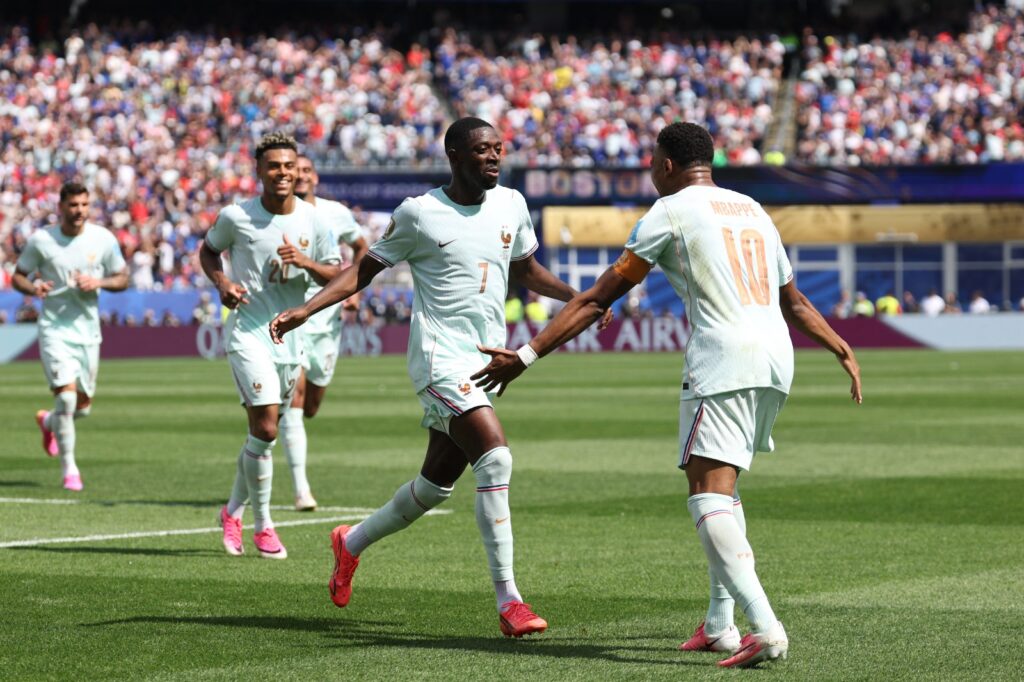
Latest News International News North & East Environment Business Bites Social Love Horse Racing World Champs Commonwealth Games FIFA World Cup Entertainment Art & Culture Tuesday Style Food Awards JOL Takes Style Out Design Week JA Black Friday Relationships Classifieds Motor Vehicles Place an Ad Jobs & Careers Study Centre Jnr Study Centre Advertorial Supplements Latest News International News North & East Environment Business Bites Social Love Horse Racing World Champs Commonwealth Games FIFA World Cup Entertainment Art & Culture Tuesday Style Food Awards JOL Takes Style Out Design Week JA Black Friday Relationships Classifieds Motor Vehicles Place an Ad Jobs & Careers Study Centre Jnr Study Centre Advertorial Supplements International News Business Bites Food Awards Entertainment World Champs Career & Education Classifieds Environment Advertorial Supplements Design Week France's forward #07 Ousmane Dembele celebrates scoring his team's third goal with forward #10 Kylian Mbappe during the 2026 World Cup Group I football match between Norway and France at the Boston Stadium in Foxborough on June 26, 2026. (Photo by FRANCK FIFE / AFP) Football, Latest News, Sports, World Cup June 26, 2026 France swat Norway 4-1 to top World Cup Group I, Senegal stay alive FOXBOROUGH, United States (AFP) — France swatted aside Norway 4-1 to clinch top spot in World Cup Group I on Friday as Senegal kept their hopes of last 32 qualification alive with a 5-0 win over Iraq. Paris Saint-Germain forward Ousmane Dembele scored a brilliant first-half hat-trick as France extended their 100 per cent start to the tournament after wins over Senegal and Iraq. Tags: France Iraq Norway Senegal {"jamaica-observer":"Jamaica Observer"} 0 Comments · Make a comment ALSO ON JAMAICA OBSERVER Entertainment, Latest News Diana King’s Shy Guy hits platinum in the UK BY KEVIN JACKSON Observer Writer June 26, 2026 Diana King’s biggest Billboard Hot 100 hit to date, Shy Guy (which peaked at #13 in 1995), has been certified platinum in the United Kingdom (UK). T... {"jamaica-observer":"Jamaica Observer"} Entertainment, Latest News Admiral Jerry returns to ‘Chant Down Babylon’ with a Windrush anthem for a new generation June 26, 2026 Nearly four decades after lending his unmistakable voice to UB40's golden era, Birmingham reggae pioneer Admiral Jerry is back—not to bask in nostalgi... {"jamaica-observer":"Jamaica Observer"} Latest News, Regional Continued fighting in Haiti resulting in more displacements June 26, 2026 UNITED NATIONS (CMC)—The United Nations on Friday said that the humanitarian situation in Haiti continues to deteriorate, with new displacements recor... {"jamaica-observer":"Jamaica Observer"} Entertainment, Latest News Capleton’s long-awaited Canada return postponed due to venue change for SoulFoodFestival416 Vanassa McKenzie | Observer Online Reporter June 26, 2026 The wait for Capleton's return to Canada will be a little longer. Organisers of SoulFoodFestival416 have announced that the reggae icon's headline per... {"jamaica-observer":"Jamaica Observer"} Latest News, News Retired US soldier sentenced for murder of Portland mason June 26, 2026 PORTLAND, Jamaica — A 48-year-old retired United States soldier has been sentenced to 22 years in prison after pleading guilty to the 2022 murder of P... {"jamaica-observer":"Jamaica Observer"} Latest News, News 28 Haitians returned after arriving illegally in Portland June 26, 2026 PORT ANTONIO, Portland — Twenty-eight Haitians who arrived illegally in Jamaica on Monday were returned to Haiti on Thursday night after being process... {"jamaica-observer":"Jamaica Observer"} Latest News, News ‘Months without pay’: Correctional officer says salary stopped before appeal heard BY CARLYSIA RAMDEEN Observer Online reporter [email protected] June 26, 2026 KINGSTON, Jamaica — A correctional officer facing dismissal from the public service following a criminal conviction says he has gone months without a ... {"jamaica-observer":"Jamaica Observer"} HOUSE RULES We welcome reader comments on the top stories of the day. Some comments may be republished on the website or in the newspaper; email addresses will not be published. Please understand that comments are moderated and it is not always possible to publish all that have been submitted. We will, however, try to publish comments that are representative of all received. We ask that comments are civil and free of libellous or hateful material. Also please stick to the topic under discussion. Please do not write in block capitals since this makes your comment hard to read. Please don't use the comments to advertise. However, our advertising department can be more than accommodating if emailed: [email protected]. If readers wish to report offensive comments, suggest a correction or share a story then please email:[email protected]. Lastly, read our Terms and Conditions and Privacy Policy Recent Posts Archives Please enable JavaScript to view the poll powered by Disqus. Recent Posts Archives Breaking news from the premier Jamaican newspaper, the Jamaica Observer. Follow Jamaican news online for free and stay informed on what's happening in the Caribbean Featured Tags Entertainment Entertainment Jamaica Observer,© All Rights Reserved Privacy Policy Editorial Code of Conduct Privacy Manager

Zidane Iqbal: The footballer who gave Pakistan its first World Cup moment
Islamabad, Pakistan – The scoreline read 4-1 to Norway. Iraq had been heavily beaten in their first World Cup match in 40 years. Manchester City striker Erling Haaland scored twice in his World Cup debut as Norway cruised to victory in Group I. But for Pakistan, the result barely mattered. When Zidane Iqbal crossed the touchline for Iraq at Boston Stadium in Foxborough, Massachusetts, in the 59th minute on Tuesday, history was made. He became the first player of Pakistani heritage to appear in a FIFA World Cup. Pakistan’s national team has never qualified for the tournament. It sits 198th in FIFA’s rankings. For decades, more than 250 million Pakistanis have watched football’s biggest event from the outside. That changed, in its own complicated way, through a 23-year-old born in Manchester, England. Between three nations Zidane Ammar Iqbal was born on April 27, 2003, to a Pakistani father and an Iraqi mother. His father, Aamar, is from the city of Sahiwal in Punjab while his mother, Ayat, was born in southern Iraq. Growing up in Manchester, Iqbal was eligible to represent England, Pakistan or Iraq. The decision he eventually made was not a calculated one. Iraq found him the way many things happen now: through social media. A large Instagram page tracking Iraqis around the world contacted him to ask whether rumours about his heritage were true. Word eventually reached the Iraq Football Association, which pursued him through a series of video calls with Iqbal and his parents. Asked by the sports news outlet The Athletic why he chose Iraq, Iqbal said: “All the love and support from the fans in Iraq and across the world and how hard the FA tried to bring me. When someone shows so much love, it’s only right that you feel it.” He had never visited Iraq before receiving an under-23 call-up in 2021. The culture shock, he admitted, was real. But he kept returning. Gradually, a country that had once been only part of his heritage began to feel like home. The road not taken Iqbal joined Manchester United’s academy at the age of eight and spent 12 years at the club. In December 2021 at 18, he became the first British South Asian player in nearly two decades to appear for United in the UEFA Champions League. But regular first-team football never followed. He eventually moved to FC Utrecht in the Dutch Eredivisie for about 1 million euros ($1.1m). His performances during Iraq’s gruelling 21-match qualification campaign, including a winning goal against Indonesia, kept him central to the team’s plans throughout. The Pakistan Football Federation (PFF) had monitored his progress. But it was never truly a contest. Ali Ahsan, editor of FootballPakistan.com, said the structural gap between the two football systems was simply too wide. “We are struggling to attract players from bigger clubs, our ranking, the lack of a professional set-up. The PFF still has no technical director or dedicated national team recruitment staff,” Ahsan told Al Jazeera. “For Zidane, he picked Iraq to be able to play major tournaments, which he probably wouldn’t have gotten with Pakistan,” Ahsan said. “Had he chosen Pakistan, he could have had a big impact on raising Pakistani football’s profile internationally. He was still at United at the time. He could have started a serious conversation about how football needs to be improved, inspired kids to take it more seriously. Iraq is already a well-established team with a dedicated history, structure and fanbase.” For Iqbal, the path led elsewhere. But for Pakistan, the moment still mattered. “I hope there are children – whether Asian, Arab, whatever you are – who watch that and think they can do it,” Iqbal told The Athletic. “It’s definitely possible. And if I’ve done it, why can’t they?” Iraq next face France on Monday before taking on Senegal in their final group match on June 26. Few expect them to advance. But few expected them to be there at all. Against Norway, Iraq lost. For Pakistan, history was made anyway.
Who is Zidane Iqbal? The Iraq midfielder making history as first player of Pakistani origin to play at World Cup
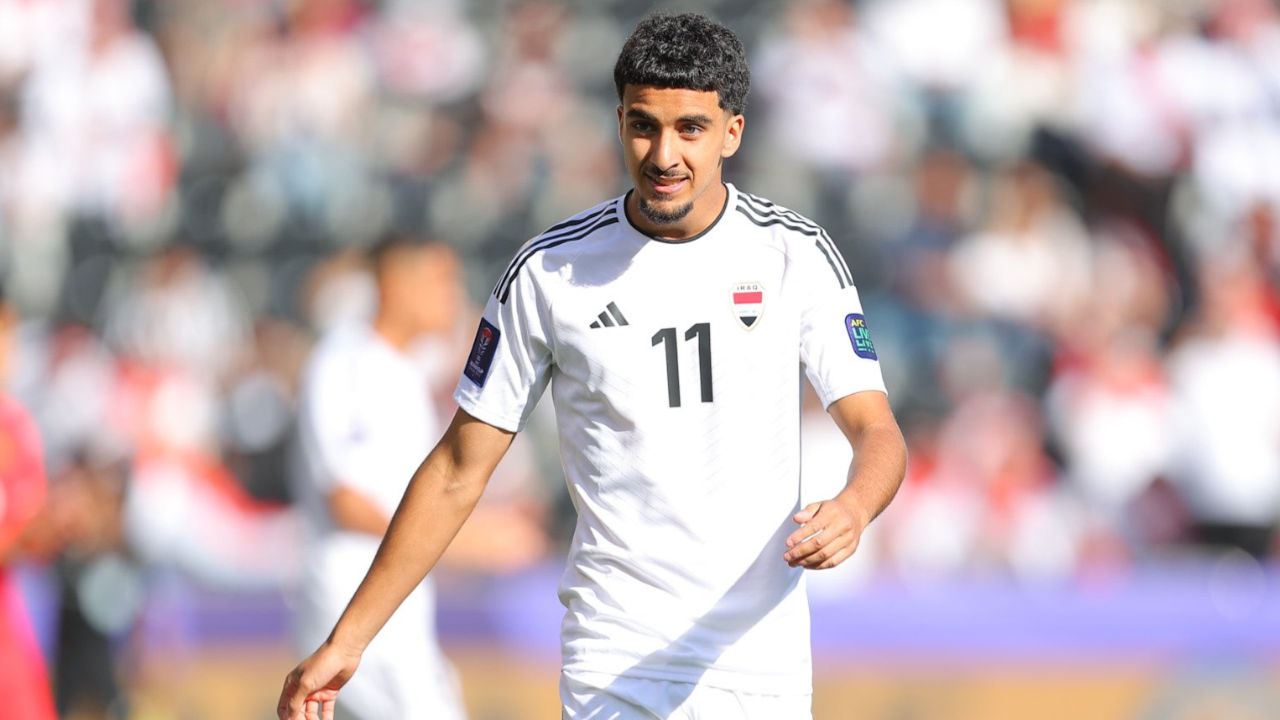
Iraq’s return to the FIFA World Cup after 40 years ended in a 4-1 defeat to Norway in Foxborough, but the game still produced a piece of history. When Zidane Iqbal came off the bench in the 59th minute, becoming the first player of Pakistani heritage to feature in a men’s World Cup match.The milestone arrived on a difficult evening for Iraq, who were facing their first World Cup match since Mexico 1986 and eventually fell to a Norway side inspired by Erling Haaland's first-half brace. Yet amid the disappointment of defeat, Iqbal's appearance represented a significant moment for Iraqi football, British South Asian representation and Pakistani football history.A historic substitution in FoxboroughThe landmark moment arrived shortly before the hour mark at Boston Stadium. With Iraq trailing Norway during their opening Group I fixture, head coach Jesús Casas turned to his bench in the 59th minute and introduced Iqbal in place of midfielder Zaid Ismael. The substitution gave the 22-year-old the final 31 minutes of regulation time plus stoppage time to influence the contest.The significance of the change extended well beyond tactical considerations. By stepping onto the pitch, Iqbal became the first player of British-Pakistani heritage ever to feature in a men's FIFA World Cup match. He also became the first player of Pakistani origin to appear at football's biggest tournament.The occasion added another chapter to a career already filled with notable firsts. Earlier in his development, Iqbal became the first Iraqi player to represent Manchester United and the first British South Asian footballer to appear in the UEFA Champions League.While Iraq ultimately suffered a heavy defeat, the midfielder's World Cup debut ensured the evening would still occupy a unique place in football history.From Manchester to the World CupIqbal's path to the World Cup began thousands of miles away from Iraq. Born and raised in Manchester, England, he grew up with a multicultural background that made him eligible to represent multiple nations. His father is Pakistani, with family roots in Sahiwal and Sialkot, while his mother is Iraqi.Under FIFA eligibility rules, Iqbal could have pursued an international future with England, Pakistan or Iraq. The Iraqi Football Association identified his potential early and actively recruited him through the youth levels, offering a clear pathway towards senior international football. That long-term approach eventually proved decisive.Iqbal formally secured an Iraqi passport in May 2021, paving the way for his international future with the Lions of Mesopotamia. Less than a year later, he made his senior debut against Iran in a FIFA World Cup qualifier at Tehran's Azadi Stadium on January 27, 2022, appearing as a late substitute to earn his first international cap.The decision has since developed into a substantial international career. By the time Iraq arrived at the 2026 World Cup, Iqbal had accumulated 24 senior appearances for his adopted national team.Establishing himself in Iraq's midfieldAlthough still only 22, Iqbal has already become a regular figure within Iraq's national-team setup.His 24 caps have been spread across multiple competitions, highlighting his growing importance to the squad. Fourteen appearances have come in World Cup qualification matches, while he has also featured in international friendlies, AFC Asian Cup fixtures, Arabian Gulf Cup matches and now the FIFA World Cup itself.The midfielder currently plays club football for Dutch Eredivisie side Utrecht after progressing through Manchester United's academy system. His technical ability, composure in possession and versatility have made him one of the most promising players in Iraq's emerging generation.That generation carried considerable hope into the 2026 tournament. Iraq's qualification ended a four-decade World Cup drought stretching back to their only previous appearance in Mexico in 1986. For many younger supporters, this represented the nation's first opportunity to watch Iraq compete on football's biggest stage.The opening result did not go according to plan. Erling Haaland scored twice before half-time, Leo Østigård added a third after the break and a late own goal completed Norway's 4-1 victory. Aymen Hussein's equaliser briefly gave Iraq hope during the first half, but Norway's superior quality eventually told.The result means Iraq face an immediate challenge in Group I, with France awaiting in their next fixture after the world champions defeated Senegal 3-1 earlier on Matchday One. Norway and France currently occupy the top two positions in the group on three points apiece.Get the latest Sports News and Live updates. Download the TOI app.
World Cup round-up: Messi makes history, Haaland bags and Liverpool transfer target wows
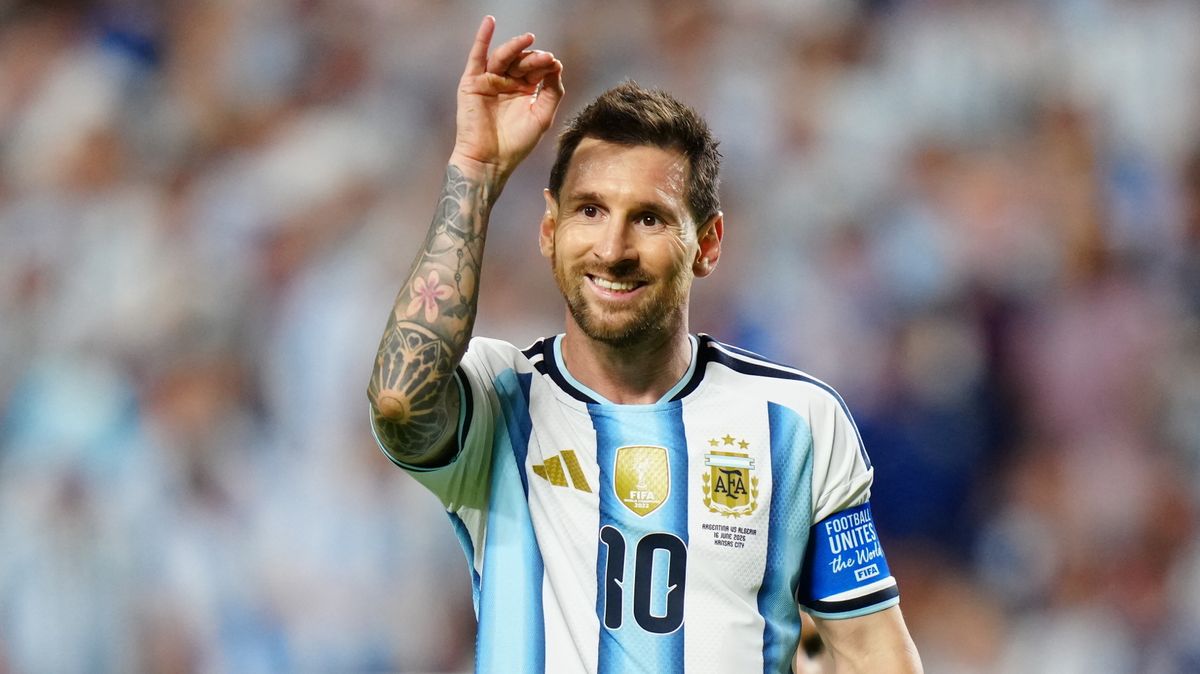
Lionel Messi stole the show on day six of the 2026 World Cup as the football icon netted his first hat-trick in the competition in a 3-0 win over Algeria. The footy god may be seeing out his career at David Beckham's Inter Miami in the MLS at the grand old age of 38, but he still has magic in his boots and outshone Premier League goal machine Erling Haaland's feats for Norway against Iraq earlier. Elsewhere, there was tragic news with the death of a fan who had travelled to the US to support his beloved Scotland and a candid admission from England manager Thomas Tuchel ahead of England's opening game of the tournament against Croatia this evening. Here's your overnight World Cup round-up. JOIN US ON FB! Get all the best sports news and much more on our Facebook page Messi etched his name into the record books twice during Argentina's World Cup encounter with Algeria, with his treble marking the first occasion he has netted three times in a single match at the tournament. The 38-year-old has now drawn level with Miroslav Klose on 16 World Cup goals, and it seems inevitable he will surpass that figure in the weeks ahead as the reigning champions defend their crown from the 2022 tournament. Erling Haaland was among those left speechless by Messi's performance, taking to Snapchat to express his admiration by posting: "Messi is a madman [crown emoji]." Earlier, Haaland matched Kylian Mbappe's achievement with an impressive double from the Manchester City man against Iraq. Real Madrid ace Mbappe had found the net twice in his team's 3-1 triumph over Senegal just hours before, briefly drawing level with Folarin Balogun, Kai Havertz, and Elijah Just as the 2026 World Cup joint-leading scorer. France toiled in the first half against Senegal but came alive in the second 45 minutes, with Bayern Munich marvel Michael Olise's combining with Mbappe to devastating effect. Liverpool transfer target Bradley Barcola then came off the bench and the Paris Saint-Germain star added a great second with impressive movement, before Ibrahim Mbaye pulled one back in added time for Senegal, only for Mbappe to instantly reply with a third. Norway made their first appearance at World Cup since 1998, Iraq since 1986, and Haaland scored after 28 minutes to put his side into the lead, before Aymen Hussein levelled the scores with a brilliant header 10 minutes later. Haaland scored a second after a goalkeeping howler from Jalal Hassan after 42 minutes. Leo Ostgard netted a second half header from a Martin Odegaard corner, before Kristian Thorstvedt scored in stoppage time from a Haaland assist in a 4-1 victory. There was tragic news emerging overnight with confirmation that Scotland fan Donny Strathie had died in Boston on Sunday, aged 76. He had a ticket for the Tartan Army's forthcoming fixture against Morocco, with his relatives requesting a tribute be held during that match on Friday. The dad-of-two, from Grangemouth, was a lifelong supporter of the Scotland team, and a heartfelt poster circulating online is urging fans to participate in a minute's applause during the 76th minute in his honour. Scotland are top of Group C after their win over Haiti in their opening game. Thomas Tuchel's press conference ahead of England's opening game against Croatia was held overnight and the Three Lions manager revealed he is "not there yet" regarding singing the English national anthem. As the action in Group L prepares to get underway this evening, the German coach admitted: "Not yet, I think we are not there yet. At the very end maybe, I am still a bit shy, I don't want to offend people and don't want to have the focus on that now. "But I feel basically at home when I land, when I fly home. I would say now: ‘I fly home’ when I fly home to my home in London and it feels like home when I land in London and I'm in England. "Yeah, it feels like that. I can't explain it but it felt like this from the first weeks at Chelsea, it just felt so good to be in the country and in the city of course, and be a part of Premier League. "Every day was a gift, almost, it just felt like to be in the right place with the right mindset of players, and what the league brings out of players and what the fans expect from the players, and from the coach, it was just... it just made me feel very comfortable. "I liked it from the first day, it was so easy for me to adapt, that's why... I cannot say often enough, I'm grateful, and it's an honour for me to be England head coach and nobody wants it more than me." Former Premier League ace Marko Arnautoivc scored a last-gasp penalty for Austria in a 3-1 win over Jordan. The ex-Stoke City and West Ham United striker netted in the 112th minute as Austria's record-scorer made no mistake from the penalty spot. Romano Schmid opened the scoring for the Europeans in the 20th minute, only for Ali Olwan to find an equaliser early in the second half. The Jordan star honoured injured teammate Yazan Al-Naimat by holding up his number 11 shirt. But an own goal from Yazan Al-Arab in the 76th minute put Austria back in front, before Arnautovic scored the latest goal of the competition so far.
Norway vs Iraq, FIFA World Cup 2026 Match Result: Haaland marks World Cup debut with two goals in 4-1 win
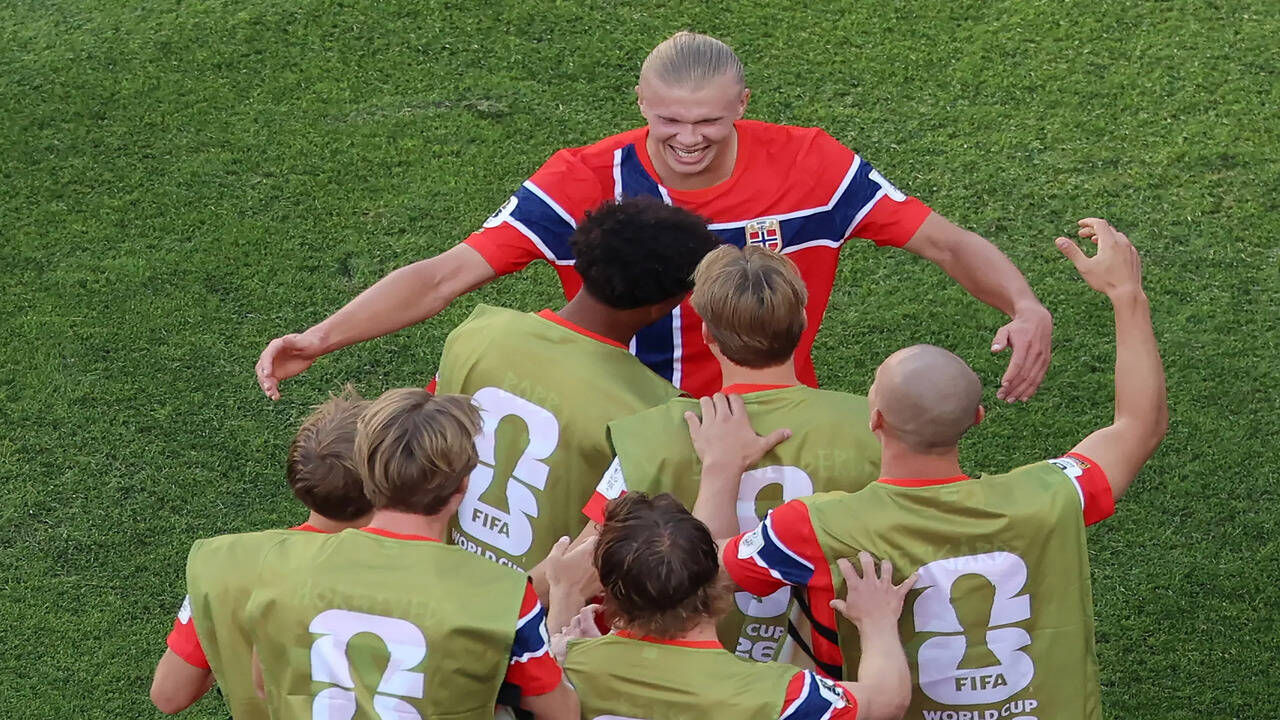
Norway's long-awaited return to the FIFA World Cup ended in celebration as Ståle Solbakken's side defeated Iraq 4-1 in their opening Group I match at Boston Stadium in Foxborough, Massachusetts. Appearing at the tournament for the first time since 1998, Norway arrived carrying the expectations of a generation that had waited 28 years to see the national team back on football's biggest stage. Iraq, meanwhile, were making only their second World Cup appearance and their first since Mexico 1986, ending a 40-year absence of their own.The evening ultimately belonged to Erling Haaland, whose first World Cup appearance produced the first two goals of Norway's campaign. The Manchester City striker struck twice before half-time, while second-half goals from Leo Østigård and an unfortunate late own goal completed a convincing victory that leaves Norway level on three points with France at the top of Group I after Didier Deschamps' side defeated Senegal 3-1 earlier in the day.Haaland announces himself on the World Cup stageFor much of the opening half-hour, Norway controlled possession and territory without finding the breakthrough. Martin Ødegaard dictated play from midfield, while Alexander Sørloth and Haaland repeatedly stretched the Iraqi defence with intelligent movement around the penalty area.The deadlock finally broke in the 29th minute following a turnover deep inside Iraqi territory. Norway moved the ball quickly towards the left flank, where David Møller Wolfe delivered a precise cross into the danger area. Haaland reacted quickest at the far post, lunging forward to meet the delivery and smashing a powerful first-time finish high into the net for Norway's first World Cup goal since 1998.The goal carried obvious significance beyond the scoreboard. Haaland had entered the tournament as one of football's biggest stars despite never previously appearing at a major international tournament. Norway's failure to qualify for recent World Cups and European Championships had left one of the game's most prolific forwards without a global stage. That changed in Foxborough as the 25-year-old finally opened his World Cup account.Iraq, however, refused to allow the match to drift away from them. Their equaliser arrived in the 39th minute through a moment of genuine quality. Amir Al-Ammari produced an inviting delivery into the penalty area and Aymen Hussein rose above a crowd of Norwegian defenders, directing a powerful header beyond Ørjan Nyland to level the contest at 1-1.For a brief period, Iraq looked capable of carrying that momentum into half-time. Instead, disaster struck four minutes later.A routine backpass towards goalkeeper Jalal Hassan lacked sufficient pace and conviction, allowing Haaland to anticipate the danger immediately. The Norwegian striker intercepted the ball before Hassan could react and calmly rolled his finish into an empty net in the 43rd minute, restoring Norway's lead and silencing the Iraqi resurgence almost as quickly as it had emerged.Norway's quality tells after the breakThe second half followed a familiar pattern, with Norway controlling possession and forcing Iraq to spend long periods defending inside their own half.The statistics reflected that dominance. Norway finished with 63 per cent possession, completed 477 accurate passes at a 90 per cent success rate and generated an expected goals figure of 2.59 compared to Iraq's 0.77. They also held advantages in total shots (12-11), shots on target (6-1) and corner kicks (5-2).Despite those advantages, Iraq remained within touching distance entering the final quarter of the match. The contest effectively ended in the 76th minute through a contribution from an unlikely source.Defender Leo Østigård had only entered the match four minutes earlier after replacing David Møller Wolfe. When Ødegaard curled a corner into the penalty area, Østigård timed his movement perfectly, rising above the Iraqi defence and powering a towering header beyond Hassan to extend Norway's advantage to 3-1.The goal rewarded Norway's sustained pressure while highlighting the influence of captain Ødegaard, whose delivery produced the decisive third goal after another assured performance in midfield.Iraq continued searching for a route back into the match, but Norway's organisation and control left few openings. The final scoreline became even more emphatic deep into stoppage time when Aymen Hussein, attempting to deal with another dangerous Norwegian attack, inadvertently diverted the ball into his own net in the 96th minute.The unfortunate own goal completed a 4-1 victory that perhaps looked slightly harsher on Iraq than the overall contest suggested, but there was little doubt regarding the deserved winner.Group I begins to take shapeThe result immediately transforms the complexion of Group I following France's 3-1 victory over Senegal earlier in the day. Norway and France both sit on three points after Matchday One, while Senegal and Iraq face early pressure heading into their second fixtures.Norway arrived in North America after one of the most impressive qualifying campaigns in Europe. Solbakken's side secured qualification with a perfect 8-0 record, while Haaland led the continent's scoring charts with 16 goals in just eight qualifying matches, eight more than any other player.Those goals helped return Norway to a World Cup for the first time since the generation that famously defeated Brazil and reached the Round of 16 in France in 1998. Their World Cup history remains relatively brief, with appearances in 1938, 1994, 1998 and now 2026, but this current squad carries genuine ambition.Iraq's return was equally historic despite the defeat. The Lions of Mesopotamia had spent four decades waiting to return to the tournament after their only previous appearance in Mexico 1986. While the result was disappointing, Hussein's goal ensured they avoided leaving empty-handed from an attacking perspective.Attention now turns towards the next round of Group I fixtures. Norway will face Senegal on June 22, while Iraq take on France on the same matchday after Didier Deschamps' side opened their campaign with a 3-1 victory powered by a Kylian Mbappé brace. Another win would place Norway in a commanding position ahead of what is already shaping up to be one of the marquee fixtures of the entire group stage.Norway's final group match against France on June 26 at Gillette Stadium in Foxborough has already been widely viewed as the standout contest in Group I. The meeting will bring together two of the tournament's most dangerous attacking sides, with Haaland and Mbappé set to face each other at international level for the first time. France arrived in North America among the leading favourites to lift the trophy, while Norway's impressive qualifying campaign and emphatic opening victory have strengthened belief that they can challenge the group's top seed. After a 28-year wait to return to the World Cup, Norway could hardly have asked for a stronger start to a campaign that now carries genuine knockout-stage ambitions.Get the latest Sports News and Live updates. Download the TOI app.
Norway’s Erling Haaland punishes Iraq with double on World Cup debut
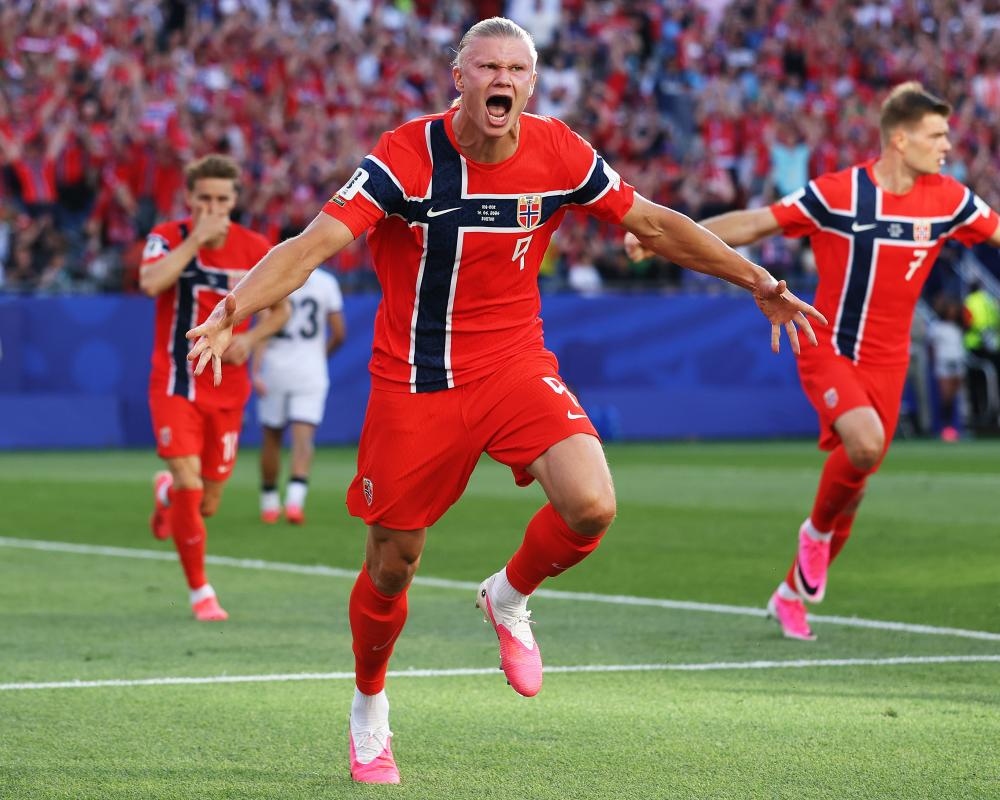
Surely nobody expected anything different. Erling Haaland’s arrival on the biggest football stage of all involved a match-defining performance. Kylian Mbappé had laid down a marker with two goals in France’s win over Senegal. Haaland responded in kind, courtesy of a first-half double of his own. The Manchester City striker’s quest for the Golden Boot depends on Norway enjoying a decent run in the event. Their hopes for that extended stay are so hugely reliant on Haaland. Theirs is a powerful combination. The name on the back of the shirt is different for club versus country – Haaland becomes Braut Haaland – yet the output is identically ruthless. This is a 25-year-old you simply cannot take your eyes off. Iraq did that twice and suffered as a consequence. Haaland used post-match media duties to contradict the sentiment of his international head coach. Ståle Solbakken had branded Haaland the finest goalscorer in the world on the eve of this game. Haaland pointed out his numbers had been bettered by Mbappé and Harry Kane during the 2025-26 season. He did, however, deliver a warning regards his level of intensity. “I think today you saw the same energy [as before],” Haaland said. “Of course we have to be happy but also stay calm.” The team who had waited 28 years for a World Cup return saw off the one who had not participated for 40. Iraq emerge with great credit from a match where the more than 30 world ranking places between the sides was not particularly obvious. Norway will need to improve, especially in the defensive third, where they looked occasionally shaky. Mbappé will have taken note, with France to face Norway in the final game of this section. Yet this was Haaland’s day. Martin Ødegaard was less visible than his fellow A-lister, albeit the Arsenal man created his country’s third goal. The captain was substituted shortly afterwards, as if to save him for sterner tests. Even in the final seconds of stoppage time, Haaland’s work was not done. His looping header from a Kristoffer Ajer cross made Aymen Hussein panic sufficiently under pressure from Kristian Thorstvedt to bundle the ball into his own net. Norway’s win had gloss applied. It took a little over two minutes for it to become apparent what everybody bar a small band of Iraqis had come to see. Antonio Nusa played a glorious high pass ahead of the marauding Haaland. More than 60,000 people gasped. Uncharacteristically, the No 9 was unable to get the ball properly under control, but the ripples of excitement were obvious. Four minutes later, Haaland left Zaid Tahseen for dust before being unable to pick out Alexander Sørloth for what would have been a tap-in. Iraq responded through Ali al-Hamadi, who scooped a decent chance over the bar. Norway are a team who have split opinion before this tournament. Underrated or overrated? Both views have been widely articulated. The star appeal of Haaland and Ødegaard sets them apart – and is hugely impressive for a nation of fewer than 6 million people – but there is also a clear depth of talent. Nusa was particularly lively here. Oscar Bobb, who would walk into decent international teams, was named among Norway’s substitutes. This is rightly, then, portrayed as a golden generation of Norwegian footballers. With that comes expectation and pressure, especially against opposition as underwhelming as Iraq. The journey of Iraq to reach the World Cup, both in respect of playing more qualifying games than any other nation and logistical challenges imposed by the Middle East war, is worthy of huge credit. Nonetheless, it will be a shock if they do not finish bottom of Group I. The record books will show that Haaland’s moment, inevitably the first of many on this stage, arrived in the 29th minute. Nusa, who was bamboozling Iraq with his every touch, fed David Møller Wolfe. Haaland beat a path to the back post, from there he converted Møller Wolfe’s cross from all of two yards out. Cometh the hour. Haaland’s statistics remain absurd: this was his 11th goal in the same number of recent competitive outings for Norway. The record was to become even better. What happened next was not in the script. Iraq became the latest underdogs to provide tremors in this World Cup. Not only was their equaliser of great quality, it served as the finest moment in the country’s brief World Cup history. Back in 1986 Iraq scored only once, in the 2-1 loss to Belgium. This one was a cracker. Ali Jassim found Amir al-Ammari, who stood up a cross. Hussein was never the favourite to win the ball but outjumped a clutch of Norway defenders to plant a magnificent header past the diving Ørjan Håskjold Nyland. The scale of euphoria perfectly depicted the significance of the goal. Haaland is prolific enough without opposition players teeing him up. Iraq could only hold on to parity for barely three minutes, the consequence of a crazy act of self-harm. For reasons known to himself, Jalal Hassan paused rather than rushing to boot a back-pass clear. Haaland spotted the goalkeeper’s uncertainty, weird as it was for a player who has amassed more than 100 caps. Haaland’s shot rebounded from the goalkeeper then back from himself to restore Norway’s lead. Iraq could count themselves unfortunate to be behind at the break. Møller Wolfe’s magnificent block denied Ibrahim Bayesh. In the final act of the half, Akam Hashem’s half-volley dipped just inches over Nyland’s bar. The second period quickly lapsed into the instantly forgettable category. Hussein Ali could not keep a back-post volley low enough to trouble Nyland. Haaland could never be described as peripheral but Iraq could take heart from the fact Norway’s phenomenon had no chances between half-time and the hydration break. Leeway for Norway was provided by a substitute. Leo Østigård leapt highest to meet Ødegaard’s corner, with Iraq not unreasonably questioning the level of grappling in the vicinity of the scorer. Hassan saved from Haaland, denying the striker a hat-trick and the usurping of Mbappé. This time, at least. Haaland is up and running.
Norway’s Erling Haaland punishes Iraq with double on World Cup debut
Surely nobody expected anything different. Erling Haaland’s arrival on the biggest football stage of all involved a match-defining performance. Kylian Mbappé had laid down a marker with two goals in France’s win against Senegal. Haaland responded in kind, courtesy of a first-half double of his own. The Manchester City striker’s quest for the Golden Boot depends on Norway enjoying a decent run in the event. Their hopes for that extended stay are so hugely reliant on Haaland. Theirs is a powerful combination. The name on the back of the shirt is different for club versus country – Haaland becomes Braut Haaland – yet the output is identically ruthless. This is a 25-year-old you simply cannot take your eyes off. Iraq did that twice and suffered as a consequence. Haaland used post-match media duties to contradict the sentiment of his international head coach. On the eve of this game, Ståle Solbakken had branded Haaland the finest goalscorer in the world. Haaland pointed out his numbers had been bettered by Mbappé and Harry Kane during the 2025-26 season. He did, however, deliver a warning regarding his level of intensity. “I think today you saw the same energy [as before],” Haaland said. “Of course we have to be happy but also stay calm.” The team that had waited 28 years for a World Cup return saw off the team that had not participated for 40. Iraq emerge with great credit from a match where the more than 30 world ranking places between the sides was not particularly obvious. Norway will need to improve, especially in the defensive third, where they looked occasionally shaky. Mbappé will have taken note, with France to face Norway in the final game of this section. Yet this was Haaland’s day. Martin Ødegaard was less visible than his fellow A-lister, albeit the Arsenal man created his side’s third goal. The captain was substituted shortly afterwards, as if to save him for sterner tests. Even in the final seconds of stoppage time, Haaland’s work was not done. His looping header from a Kristoffer Ajer cross made Aymen Hussein panic sufficiently under pressure from Kristian Thorstvedt to bundle the ball into his own net. Norway’s win had gloss applied. It took a little over two minutes for it to become apparent what everybody bar a small band of Iraqis had come to see. Antonio Nusa played a glorious high pass ahead of the marauding Haaland. More than 60,000 people gasped. Uncharacteristically, the No 9 was unable to get the ball properly under control, but the ripples of excitement were obvious. Four minutes later, Haaland left Zaid Tahseen for dust before being unable to pick out Alexander Sørloth for what would have been a tap-in. Iraq responded through Ali al-Hamadi, who scooped a decent chance over the bar. Norway are a team who have split opinion before this tournament. Underrated or overrated? Both views have been widely articulated. The star appeal of Haaland and Ødegaard sets them apart – and is hugely impressive for a nation of fewer than 6 million people – but there is also a clear depth of talent. Nusa was particularly lively here. Oscar Bobb, who would walk into decent international teams, was named among Norway’s substitutes. This is rightly, then, portrayed as a golden generation of Norwegian footballers. With that comes expectation and pressure, especially against opposition as underwhelming as Iraq. The journey of Iraq to reach the World Cup, both in respect of playing more qualifying games than any other nation and logistical challenges imposed by the Middle East war, is worthy of huge credit. Nonetheless, it will be a shock if they do not finish bottom of Group I. The record books will show that Haaland’s moment, inevitably the first of many on this stage, arrived in the 29th minute. Nusa, who was bamboozling Iraq with his every touch, fed David Møller Wolfe. Haaland beat a path to the back post, from there he converted Møller Wolfe’s cross from all of two yards out. Cometh the hour. Haaland’s statistics remain absurd: this was his 11th goal in the same number of recent competitive outings for Norway. The record was to become even better. What happened next was not in the script. Iraq became the latest underdogs to provide tremors in this World Cup. Not only was their equaliser of great quality, it served as the finest moment in the country’s brief World Cup history. Back in 1986 Iraq scored only once, in the 2-1 defeat against Belgium. This one was a cracker. Ali Jassim found Amir al-Ammari, who stood up a cross. Hussein was never the favourite to win the ball but outjumped a clutch of Norway defenders to plant a magnificent header past the diving Ørjan Håskjold Nyland. The scale of euphoria depicted perfectly the significance of the goal. Haaland is prolific enough without opposition players teeing him up. Iraq held on to parity for barely three minutes. For reasons known to himself, Jalal Hassan paused rather than rushing to boot a back-pass clear. Haaland spotted the goalkeeper’s uncertainty, weird as it was for a player who has amassed more than 100 caps. Haaland’s shot rebounded from the goalkeeper then back from himself to restore Norway’s lead. Iraq could count themselves unfortunate to be behind at the break. Møller Wolfe’s magnificent block denied Ibrahim Bayesh. In the final act of the half, Akam Hashem’s half-volley dipped just inches over Nyland’s bar. The second period lapsed quickly into the instantly forgettable category. Hussein Ali could not keep a back-post volley low enough to trouble Nyland. Haaland could never be described as peripheral but Iraq could take heart from the fact Norway’s phenomenon had no chances between half-time and the hydration break. Leeway for Norway was provided by a substitute. Leo Østigård leapt highest to meet Ødegaard’s corner, with Iraq not unreasonably questioning the level of grappling in the vicinity of the scorer. Hassan saved from Haaland, denying the striker a hat-trick and the usurping of Mbappé. This time, at least. Haaland is up and running.
Norway’s Erling Haaland punishes Iraq with double on World Cup debut
Surely nobody expected anything different. Erling Haaland’s arrival on the biggest football stage of all involved a match-defining performance. Kylian Mbappé had laid down a marker with two goals in France’s win against Senegal. Haaland responded in kind, courtesy of a first-half double of his own. The Manchester City striker’s quest for the Golden Boot depends on Norway enjoying a decent run in the event. Their hopes for that extended stay are so hugely reliant on Haaland. Theirs is a powerful combination. The name on the back of the shirt is different for club versus country – Haaland becomes Braut Haaland – yet the output is identically ruthless. This is a 25-year-old you simply cannot take your eyes off. Iraq did that twice and suffered as a consequence. Haaland used post-match media duties to contradict the sentiment of his international head coach. On the eve of this game, Ståle Solbakken had branded Haaland the finest goalscorer in the world. Haaland pointed out his numbers had been bettered by Mbappé and Harry Kane during the 2025-26 season. He did, however, deliver a warning regarding his level of intensity. “I think today you saw the same energy [as before],” Haaland said. “Of course we have to be happy but also stay calm.” The team that had waited 28 years for a World Cup return saw off the team that had not participated for 40. Iraq emerge with great credit from a match where the more than 30 world ranking places between the sides was not particularly obvious. Norway will need to improve, especially in the defensive third, where they looked occasionally shaky. Mbappé will have taken note, with France to face Norway in the final game of this section. Yet this was Haaland’s day. Martin Ødegaard was less visible than his fellow A-lister, albeit the Arsenal man created his side’s third goal. The captain was substituted shortly afterwards, as if to save him for sterner tests. Even in the final seconds of stoppage time, Haaland’s work was not done. His looping header from a Kristoffer Ajer cross made Aymen Hussein panic sufficiently under pressure from Kristian Thorstvedt to bundle the ball into his own net. Norway’s win had gloss applied. It took a little over two minutes for it to become apparent what everybody bar a small band of Iraqis had come to see. Antonio Nusa played a glorious high pass ahead of the marauding Haaland. More than 60,000 people gasped. Uncharacteristically, the No 9 was unable to get the ball properly under control, but the ripples of excitement were obvious. Four minutes later, Haaland left Zaid Tahseen for dust before being unable to pick out Alexander Sørloth for what would have been a tap-in. Iraq responded through Ali al-Hamadi, who scooped a decent chance over the bar. Norway are a team who have split opinion before this tournament. Underrated or overrated? Both views have been widely articulated. The star appeal of Haaland and Ødegaard sets them apart – and is hugely impressive for a nation of fewer than 6 million people – but there is also a clear depth of talent. Nusa was particularly lively here. Oscar Bobb, who would walk into decent international teams, was named among Norway’s substitutes. This is rightly, then, portrayed as a golden generation of Norwegian footballers. With that comes expectation and pressure, especially against opposition as underwhelming as Iraq. The journey of Iraq to reach the World Cup, both in respect of playing more qualifying games than any other nation and logistical challenges imposed by the Middle East war, is worthy of huge credit. Nonetheless, it will be a shock if they do not finish bottom of Group I. The record books will show that Haaland’s moment, inevitably the first of many on this stage, arrived in the 29th minute. Nusa, who was bamboozling Iraq with his every touch, fed David Møller Wolfe. Haaland beat a path to the back post, from there he converted Møller Wolfe’s cross from all of two yards out. Cometh the hour. Haaland’s statistics remain absurd: this was his 11th goal in the same number of recent competitive outings for Norway. The record was to become even better. What happened next was not in the script. Iraq became the latest underdogs to provide tremors in this World Cup. Not only was their equaliser of great quality, it served as the finest moment in the country’s brief World Cup history. Back in 1986 Iraq scored only once, in the 2-1 defeat against Belgium. This one was a cracker. Ali Jasim found Amir al-Ammari, who stood up a cross. Hussein was never the favourite to win the ball but outjumped a clutch of Norway defenders to plant a magnificent header past the diving Ørjan Håskjold Nyland. The scale of euphoria depicted perfectly the significance of the goal. Haaland is prolific enough without opposition players teeing him up. Iraq held on to parity for barely three minutes. For reasons known to himself, Jalal Hassan paused rather than rushing to boot a back-pass clear. Haaland spotted the goalkeeper’s uncertainty, weird as it was for a player who has amassed more than 100 caps. Haaland’s shot rebounded from the goalkeeper then back from himself to restore Norway’s lead. Iraq could count themselves unfortunate to be behind at the break. Møller Wolfe’s magnificent block denied Ibrahim Bayesh. In the final act of the half, Akam Hashem’s half-volley dipped just inches over Nyland’s bar. The second period lapsed quickly into the instantly forgettable category. Hussein Ali could not keep a back-post volley low enough to trouble Nyland. Haaland could never be described as peripheral but Iraq could take heart from the fact Norway’s phenomenon had no chances between half-time and the hydration break. Leeway for Norway was provided by a substitute. Leo Østigård leaped highest to meet Ødegaard’s corner, with Iraq not unreasonably questioning the level of grappling in the vicinity of the scorer. Hassan saved from Haaland, denying the striker a hat-trick and the usurping of Mbappé. This time, at least. Haaland is up and running.
Capturing Norway's World Cup mood as Erling Haaland fuels belief after 'finally' ending wait
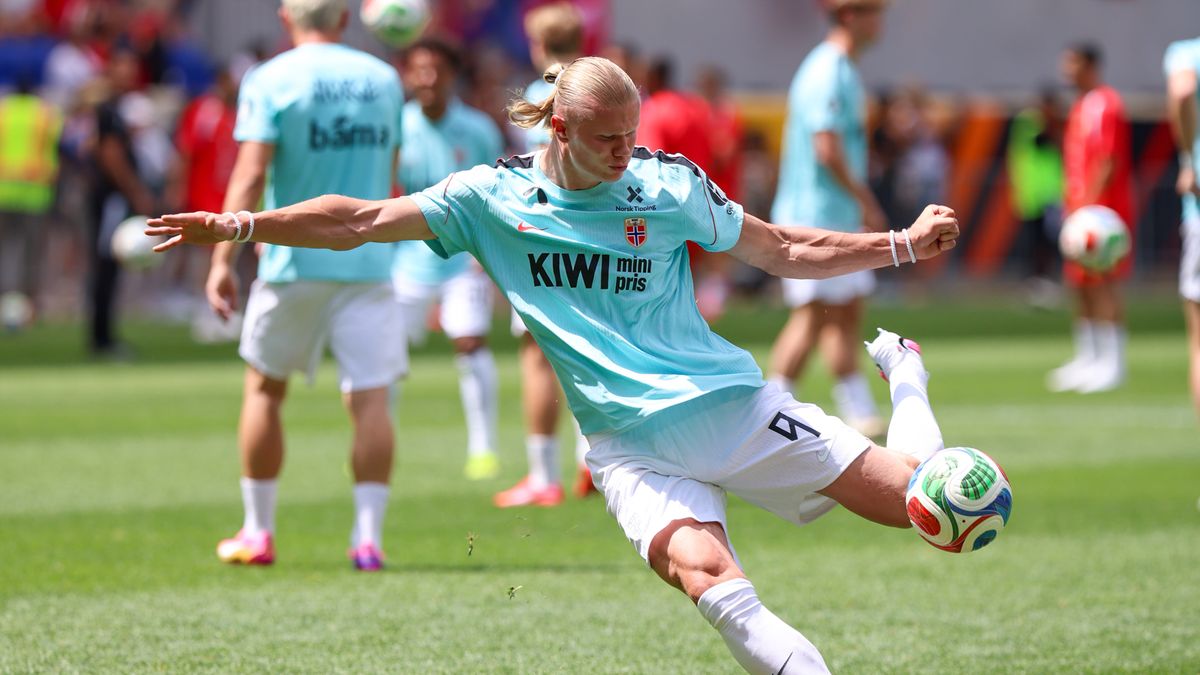
In Norway, optimism abounds. The nation is back at the World Cup for the first time in 28 years and in Erling Haaland they have arguably the best No.9 in football. In a tournament which offers opportunity across eight games and five weeks, Norway are being backed as dark horses by plenty of pundits and fans, and World Cup fever is catching. "The optimism in Norway is big," said former national team and Premier League striker Jan Åge Fjørtoft, speaking to the Manchester Evening News ahead of the tournament. "We are just discussing who we are going to meet in the final! That is the boiling point in Norway right now. I find myself being the one to hold back a bit." Click here to find out the latest Manchester City news in our daily newsletter Haaland is the primary reason for such belief - together with Martin Odegaard they have two of the leading players in world football. Their supporting cast isn't bad either and although they are in a challenging group with France and Senegal as well as opening opponents Iraq, the prospect of the top three qualifying means Norway are fancied to reach the knockout stages at least. More than 30,000 Norwegians braved freezing temperatures to welcome their superstars back to Oslo when World Cup qualification was confirmed, and they believe they can thrive in the heat of North America. Norway blitzed qualifying, comfortably topping a group containing Italy and breezing past the Azzurri twice. So expectation levels are rising in a football-mad nation. Huge crowds are expected to take in games on big screens up and down the country, while thousands will travel to the States to watch them in action in a World Cup for the first time since 1998, where they reached the last-16 before being beaten by Italy. "It is the first time in a while and many people might see it as their only opportunity to watch Norway in a World Cup," says journalist Steffen Stenersen of VG Sporten. That includes Haaland, born two years after Norway's last World Cup appearance. Get the latest World Cup news straight to your inbox by signing up to our Make Football Great Again newsletter now! "It was a lot of pressure," he said, speaking to ESPN. "It is a lot of pressure now still, but yeah, I could feel it ever since I started with the national team, the pressure [to get to a World Cup]. To qualify for the World Cup is a really special thing. I'm looking forward to it. It's going to be amazing. Finally." And Norway got there in style, plundering 37 goals across eight matches with Haaland hitting 16 of them. The Manchester City striker is the superstar of this side but there is more to Norway than Haaland. "It certainly helps having him!" Stenersen added. "Erling and Martin Odegaard are world class players. But we have four or five players below those that who are on a level that would have made them the big stars in Norway 10 years ago, like Antonio Nusa, Sander Berge (of Fulham) .. . . so it is not only about those two. We have four, five, six exciting players behind them to make a good XI. We are a more well-balanced team, not perfect, but one that if we not could beat anyone on a good day, could beat most of them." Fjørtoft agrees, affectionately labelling Haaland 'cartoonish' for his mannerisms and body language but knowing full well how destructive and dominant a player he is. "Erling is world class, he is the greatest footballer we have ever had," he said. "Martin is a captain who has lifted the Premier League. "If Erling scores five or six goals in a World Cup then we know we can go far. We didn't concede a lot of goals in qualification but in Norway we have a tradition of not playing as well in the tournament as we do in qualification. "But we have a pragmatic national coach in Stale Solbakken and the first thing he did was build the leadership around Martin and Erling and that has made them own the national team." Fjørtoft , who played in the 1994 World Cup for Norway in America, is well placed to talk about what it means to represent the country in a major tournament. "When we qualified in '94 it was the first time since 1938 so we haven't been in a lot of World Cups. It was a surprise to us all to qualify," he recalled. "For this generation they maybe didn't expect to come there because of our history, but they just had to prove to themselves that they could get the next step. "For a Norwegian it has always been difficult to win big trophies abroad. So after their careers this generation, whether they win the Champions League as Erling has, there will still be that feeling of representing your country in a World Cup "When football players get buried there is nothing in their obituary about how much money you have made, it is how much you have won, the number of caps and playing in a World Cup. It is a great honour. "If I had a tattoo I would put 1994 on it because that was my highlight of my career." Maybe a few of the Class of 2026 will be getting inked up come July.
Page 1
More about Iraq
- Iraq fixtures
Results and upcoming matches
- Iraq squad
Full squad list by position