Algeria
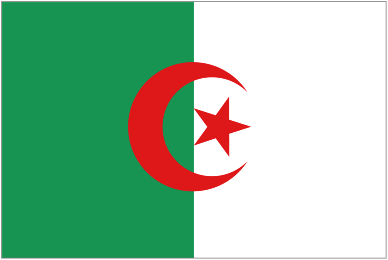
Algeria
Nelson Mandela Stadium · Algiers
England and Scotland World Cup round of 32 opponents as it stands
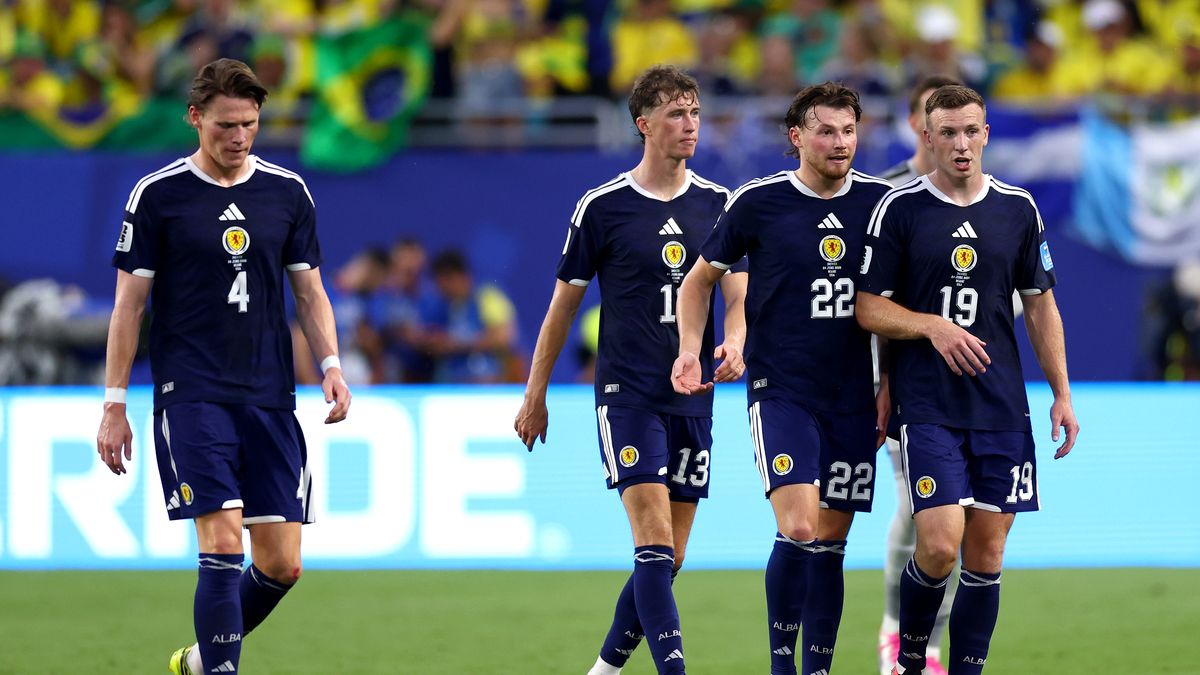
England and Scotland’s opponents in the first knockout round of the World Cup have become much clearer after Steve Clarke's side lost 3-0 to Brazil on Thursday morning. As things stands, the Three Lions would face Algeria on July 1 at 5pm, while the Tartan Army would take on co-hosts Mexico on the same day at 2am. Thomas Tuchel's were forced to settle for a point in a goalless draw with Ghana in Boston on Tuesday night, a result which leaves them still at the top of the Group L standings. For Scotland , their chances of qualifying were handed a major blow after their 3-0 defeat to Brazil in their Group C clash in Miami on Wednesday night. Real Madrid forward Vinicius Jr. scored a brace in Florida, while Manchester United star Matheus Cunha also found the back of the net. The defeat leaves Scotland in third place in their group and currently ranked as the sixth-best third-placed team in the World Cup groups so far, but that is likely to change with several more final group games left to play. As it stands, England would be set to face Algeria in the round of 32 at the World Cup. This game would take place on Wednesday, July 1 in Atlanta with a 5pm kick-off UK time. There is still time for that to change with England set to face Panama in their final Group L fixture on Saturday, while Algeria will take on Austria in the early hours of Sunday morning. Scotland, meanwhile, would still manage to book a spot in the knockout stages and would face co-host Mexico in Mexico City. This game would take place on Wednesday, July 1 with kick-off at 2am UK time. JOIN US ON FACEBOOK! Latest news, analysis and much more on Mirror Football's Facebook page The specific third-place team England eventually draws is decided by a complex FIFA combination matrix. This matrix assigns matchups based on which eight third-placed teams (out of all 12 groups) accumulate enough points to advance. If Scotland do eventually qualify as a third-placed team from Group C into the knockouts, that would shift the sequence of the table and alter England's potential opponents. Even though England won't play the team from Group C, the inclusion (or elimination) of Group C's 3rd-place team changes the math of the matrix, potentially altering which team from Group E, H, I, J, or K gets assigned to England Get the latest World Cup news straight to your inbox by signing up to our Make Football Great Again newsletter now! Join our new WhatsApp community and receive your daily dose of Mirror Football content. We also treat our community members to special offers, promotions, and adverts from us and our partners. If you don't like our community, you can check out any time you like. If you're curious, you can read our Privacy Notice.
Numbers game: stats that tell stories from the first 24 World Cup matches
The first round of fixtures at the World Cup is in the bank so we’ve finally seen all 48 teams. But what have we learned? Who was good, bad, lucky or fired after one game? A dig into the Opta data has revealed some facts that may not have been immediately apparent from the scorelines. Mexico 2–0 South Africa Mexico moved the ball upfield slower than any other team. They could afford to take their time as South Africa offered next to no threat. It is unlikely to end well when a team receive as many red cards as they have touches in the opposition penalty area, which was the case for the losing side. South Korea 2–1 Czechia This game was the first to feature one of the trademarks of the 2025-26 Premier League season. The former West Ham defender Vladimir Coufal launched a long throw-in, which the Wolves centre-back Ladislav Krejci headed home to give Czechia the lead. South Korea were worthy winners, with the 25-pass buildup to Hwang In-beom’s equaliser the joint-fifth longest passing sequence leading to a goal in the World Cup since records begin in 1966. Canada 1–1 Bosnia and Herzegovina Czechia’s set-play prowess looked weak compared with Bosnia and Herzegovina’s. Seven of their eight shots against Canada were from set pieces. Sergej Barbarez will need his team to generate more than one open play chance per match. Their remaining opponents being as wasteful as the Canadians will help too. United States 4–1 Paraguay Opta Analyst’s pre-match predications rated this as the second-closest of the opening set of fixtures. The USA looked at the supercomputer and laughed. Paraguay conceded the joint second-fewest goals in the South American qualifying group yet allowed their hosts 53 touches in their penalty area, the second-most after Curaçao against Germany. Qatar 1–1 Switzerland Australia 2–0 Turkey Spain 0–0 Cape Verde Saudi Arabia 1–1 Uruguay Portugal 1–1 DR Congo These matches are grouped together because their favourites failed to win for broadly the same reason. Portugal, Spain, Switzerland, Turkey and Uruguay are the top five teams for possession and final-third pass accuracy. They had the ball where a team would want it and, Portugal aside, generated at least 25 shots. The problem was the quality of their chances. A reasonable expected goals tally looks far less impressive when divided among numerous low probability efforts from long range. Spain averaged 0.08 xG per shot, with Uruguay (0.06) and Turkey (0.04) among the teams below them. That is worse than Burnley and Wolves averaged in the Premier League this season (0.09), two teams nobody is looking to emulate. The so-called minnows have defensive fortitude hey did not always carry in the past. Giants be warned. Brazil 1–1 Morocco This summed up what we can probably expect from Brazil. Their midfield may be porous, as shown by Morocco’s goal, but if they can get the ball to Vinícius Júnior then they’ll probably be fine. We should doff our caps to Carlo Ancelotti, though. His half-time changes helped ensure Morocco did not have a shot between the break and the 98th minute. Haiti 0–1 Scotland There have already been nine draws. Even allowing for the World Cup being bigger than ever, the proportion of draws in this phase of the competition has never been higher. Is this a byproduct of a bloated format with little jeopardy for most teams? We’ll see. This is the one match that should have ended all-square. It was a dead heat on expected goals to two decimal places, at 1.05 apiece. Germany 7–1 Curaçao Transfermarkt’s data suggests the Germany starting XI was worth €559.4m (£485m) more than the 11 men that lined up for Curaçao. Opta gave the four-time champions a 90.7% chance of winning the match. Netherlands 2–2 Japan The Netherlands increased their expected goals tally by 1.38 in Opta’s post-shot model, the most of any team. Japan had 19 touches in the opposition penalty area and had the lowest xG of any team that scored at least twice. Côte d’Ivoire 1–0 Ecuador Ghana 1–0 Panama These matches ended in similarly glorious or heartbreaking fashion depending on your perspective. Ecuador hit a post three times, while Panama missed two Opta-defined big chances. The data suggested the teams were probably worthy of a draw as the clock hit 89 minutes. Amad Diallo and Caleb Yirenkyi put paid to those hopes with very late winners for the countries. Sweden 5–1 Tunisia This result may give the impression that Sweden are back on track after their deeply disappointing qualification campaign. The notion is undermined by Graham Potter’s men overachieving against their xG by 3.67 goals, the most of any team. It is fair to assume the Tunisian football federation is not paying attention to expected goal outliers, as it fired Sabri Lamouchi after the game. It will take more than Hervé Renard to save them. Belgium 1–1 Egypt This was a lesson in the importance of taking chances. At 1-0 up early in the second half, Mohamed Salah had a header saved, with the goalscorer, Emam Ashour, blasting the rebound out for a throw-in. Omar Marmoush sliced wide on a counterattack shortly afterwards too. Enter Romelu. Lukaku came on in the 66th minute, immediately forced an equalising own goal and Egypt mustered only three low-value chances between that point and full time. Iran 2–2 New Zealand Iran fielded the joint second-oldest starting XI in the history of the World Cup (at 31.8 years old). People who love naming footballers of yesteryear will enjoy trying to recall the Germany side of 1998 that was older. They beat Iran 2-0, funnily enough. Age didn’t prevent this from being one of the most entertaining matches. Iran were unlucky to run into the New Zealand duo of Chris Wood and Elijah Just. The former assisted the latter twice, making them the only combination to have linked up for two goals. France 3–1 Senegal France produced a game of two halves. Their efforts in the opening 45 minutes had them careering towards the “big team with lots of the ball fail to win” section of this roundup. Gorgeous defence-splitting passes from Michael Olise and Adrien Rabiot ensured otherwise. Six Premier League teams did not muster more than their two through-ball assists in the entire season; France logged their pair in a 16-minute spell of incision. Iraq 1–4 Norway Iraq were holding their own until a pair of defensive errors handed Norway a second lead. Erling Haaland leads the World Cup for individual expected goals, with the goalkeeper Jalal Hassan’s blunder contributing hugely to his tally. Argentina 3–0 Algeria The most surprising statistic of the first wave of fixtures is that Algeria had more touches in the opposition penalty area than Argentina, limiting the defending champions to 12. But they were also the only team to fail to register a shot on target and when Lionel Messi is on song, data is almost irrelevant. Almost. Austria 3–1 Jordan Eleven shots with four on target. As it was for Austria, so it was for Jordan. The difference came in Opta-defined big chances – opportunities where you can reasonably expect the attacker to score. The Austrians led that metric 4-0 and they benefited from an own goal too. England 4–2 Croatia England had seven big chances, more than any other side. It was hardly surprising that four came from dead-ball situations, as they had more shots this way than in open play. Harry Kane’s double carried him on to our rundown of the highest goalscorers in World Cup history and he should join the top 10 before the group stage is out. Uzbekistan 1–3 Colombia Last and by most means least, we have a fairly routine win for Colombia. Uzbekistan made the xG figures look respectable thanks to Abbosbek Fayzullayev scoring with a chance valued at 0.98. Few people in any walk of life will ever be handed a better opportunity to become a national hero.
All-time greatest: who is the highest goalscorer in World Cup history?
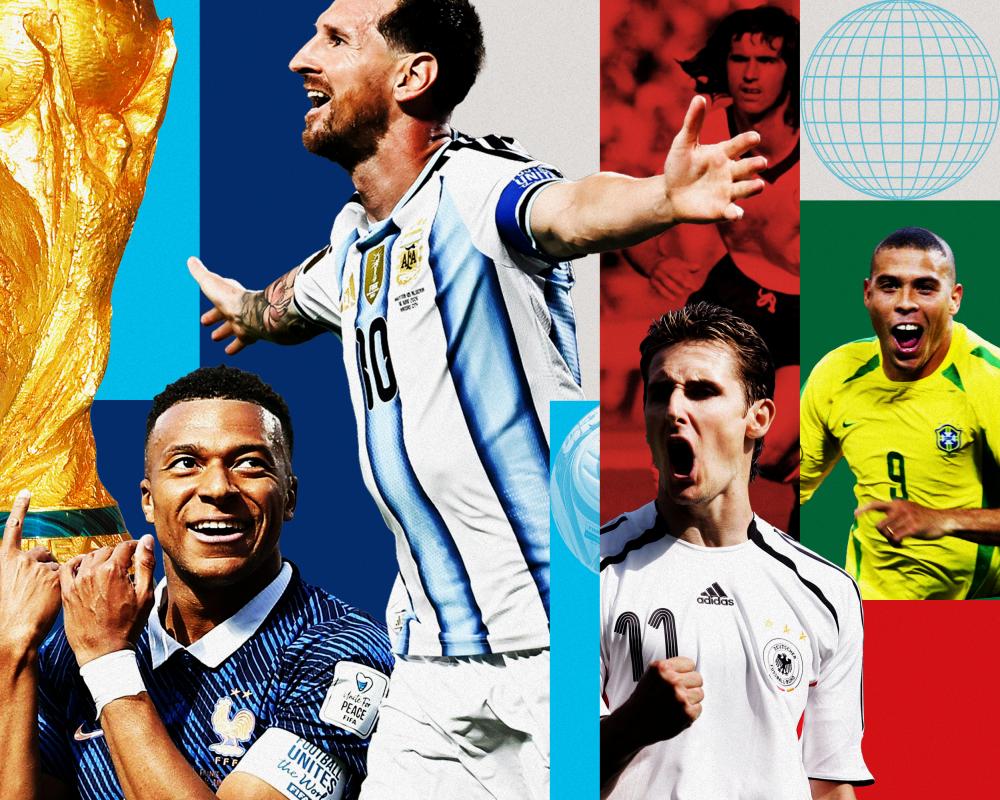
Lionel Messi started his 2026 World Cup campaign with a hat-trick in a 3-0 win over Algeria. The trio of strikes gave him a career total of 16 World Cup goals, equalling the existing record held by Miroslav Klose. It’s reasonable to expect the Inter Miami player to set a new mark this summer but he is being chased hard by Kylian Mbappé. He scored twice in France’s opening match victory against Senegal, giving him a total of 14 goals since his competition debut eight years ago. The list shows the top 20 World Cup goalscorers of all time, from data provided by Transfermarkt. If two players are tied, advantage is given to the man who made fewer appearances.
All-time greatest: who is the highest goalscorer in World Cup history?
Lionel Messi started his 2026 World Cup campaign with a hat-trick in a 3-0 win over Algeria. The trio of strikes gave him a career total of 16 World Cup goals, equalling the existing record held by Miroslav Klose. It’s reasonable to expect the Inter Miami player to set a new mark this summer but he is being chased hard by Kylian Mbappé. He scored twice in France’s opening match victory against Senegal, giving him a total of 14 goals since his competition debut eight years ago. The list shows the top 20 World Cup goalscorers of all time, from data provided by Transfermarkt. If two players are tied, advantage is given to the man who made fewer appearances. England supporters will be hoping Harry Kane swiftly joins our list by adding to his eight goals.
All-time greatest: who is the highest goalscorer in World Cup history?
Lionel Messi started his 2026 World Cup campaign with a hat-trick in a 3-0 win over Algeria. The trio of strikes gave him a career total of 16 World Cup goals, equalling the existing record held by Miroslav Klose. It’s reasonable to expect the Inter Miami player to set a new mark this summer but he is being chased hard by Kylian Mbappé. He scored twice in France’s opening match victory against Senegal, giving him a total of 14 goals since his competition debut eight years ago. The list shows the top 20 World Cup goalscorers of all time, from data provided by Transfermarkt. If two players are tied, advantage is given to the man who made fewer appearances. England supporters will be hoping Harry Kane swiftly joins our list by adding to his eight goals.

10 Photos of Luca Zidane: Zinedine Zidane's Son Defies Horrific Face Injury At World Cup Opener
Luca Zidane's World Cup debut for Algeria in Kansas City has put the son of Zinedine Zidane back under the spotlight, this time with a protective mask after a brutal facial injury kept him out for more than a month.The goalkeeper started against Argentina on Tuesday in Algeria's opening match, a striking turn for a player whose international path has been as personal as it has been sporting.Algeria's World Cup GambleThe news came after Luca Zidane, 28, switched his senior international allegiance to Algeria in 2025, having previously represented France at youth level. He is eligible through his grandparents' birthplace, and he has been open about the cultural pull that helped shape the decision.'We've lived in an Algerian culture since we were small,' he told The Athletic, adding that the final call was his, after speaking with family, including his father, Zinedine Zidane.The mask, though, added a grim little twist. Zidane fractured his jaw and chin in April while playing for Granada in Spain's second division after a collision against Almeria, and the injury was serious enough to require surgery.Reuters reported that Granada said medical examinations confirmed fractures to both his jaw and chin, following a concussion in the match.For Algeria, the calculation is simple enough. They are not just carrying a famous surname in goal, they are carrying a goalkeeper who had barely returned to action before the tournament.Zidane had not played since 26 April before friendly appearances for Algeria earlier this month, which makes his presence against Argentina all the more notable. Nothing is confirmed yet so everything should be taken with a grain of salt when it comes to how comfortably he will handle the demands of a full World Cup campaign.Road To This MomentTo recall, Zidane's international switch was not a sudden whim. He came through France's youth set-up, but 2025 brought the change of heart that pushed him towards Algeria, a country tied to his family history and, by his own account, to his upbringing as well.He is related to Zinedine Zidane, and the family link is doing a lot of heavy lifting here, because in football terms Luca has spent years trying to build a career separate from his father's shadow.The World Cup stage now gives him the biggest possible platform to do that. He arrived in the tournament after keeping a clean sheet in Algeria's pre-tournament win over the Netherlands, making six saves in a 1-0 victory on 3 June.That performance, more than the family name, offered Algeria a reason to believe they had found a goalkeeper capable of handling a high-pressure month.His route to the match was hardly straightforward. The April injury against Almeria left him in real doubt for the World Cup, with multiple reports saying he faced a race against time after the jaw and chin fractures.By the end of May and into June, however, he had been named in Algeria's squad, and BBC Sport reported on 31 May that he was included in the final group for the tournament.Why The Mask Matters For AlgeriaThe mask is more than a piece of kit. It is a visible reminder that Zidane's World Cup appearance was almost derailed before it started, and that Algeria are asking a goalkeeper to compete after a fairly nasty injury, however protected he now may be.There is something a bit mad about the image, frankly, but football is full of these moments where medical recovery, national hope and sheer celebrity collide in public.Algeria opened against Argentina in Kansas City, with Jordan and Austria also in Group J. That makes every early point valuable, and every decision in goal slightly magnified. Zidane's selection says Algeria trust him enough to start, even if the memory of April still hangs around him like a warning label.Algeria must get through a demanding group, and Zidane must prove that the mask is only a footnote rather than a symbol of fragility. For a player whose surname has followed him from France's youth ranks to Granada and now to a World Cup opener in Kansas City, that is a rather loaded ask.
World Cup round-up: Messi makes history, Haaland bags and Liverpool transfer target wows
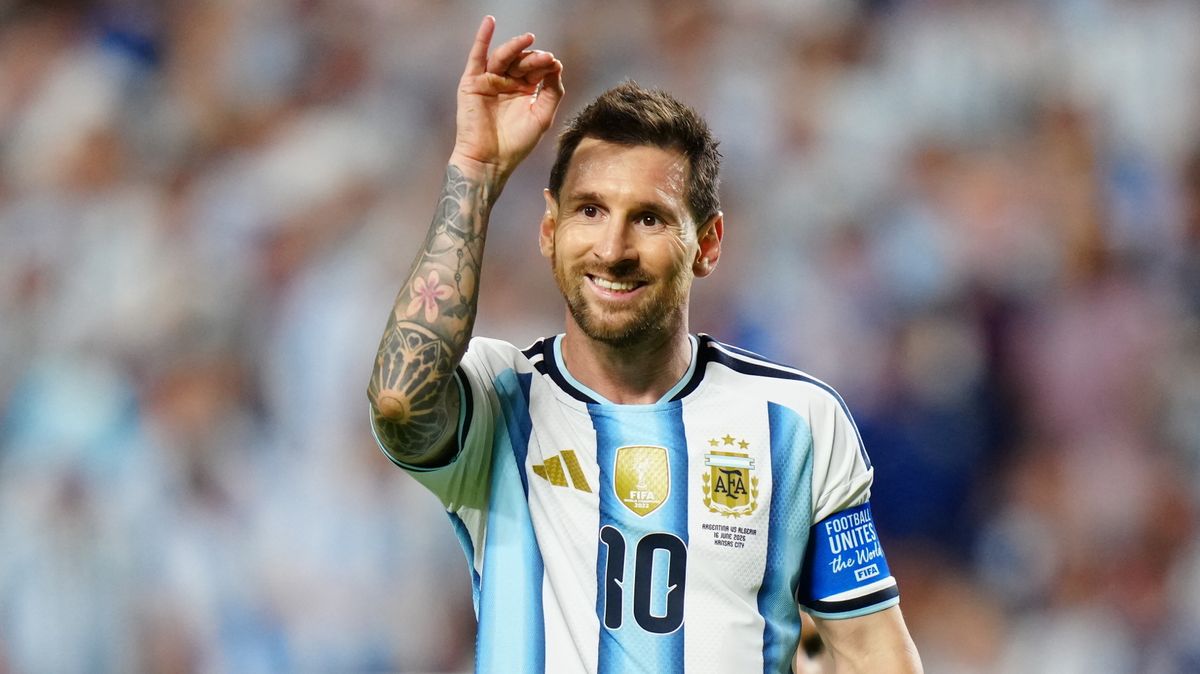
Lionel Messi stole the show on day six of the 2026 World Cup as the football icon netted his first hat-trick in the competition in a 3-0 win over Algeria. The footy god may be seeing out his career at David Beckham's Inter Miami in the MLS at the grand old age of 38, but he still has magic in his boots and outshone Premier League goal machine Erling Haaland's feats for Norway against Iraq earlier. Elsewhere, there was tragic news with the death of a fan who had travelled to the US to support his beloved Scotland and a candid admission from England manager Thomas Tuchel ahead of England's opening game of the tournament against Croatia this evening. Here's your overnight World Cup round-up. JOIN US ON FB! Get all the best sports news and much more on our Facebook page Messi etched his name into the record books twice during Argentina's World Cup encounter with Algeria, with his treble marking the first occasion he has netted three times in a single match at the tournament. The 38-year-old has now drawn level with Miroslav Klose on 16 World Cup goals, and it seems inevitable he will surpass that figure in the weeks ahead as the reigning champions defend their crown from the 2022 tournament. Erling Haaland was among those left speechless by Messi's performance, taking to Snapchat to express his admiration by posting: "Messi is a madman [crown emoji]." Earlier, Haaland matched Kylian Mbappe's achievement with an impressive double from the Manchester City man against Iraq. Real Madrid ace Mbappe had found the net twice in his team's 3-1 triumph over Senegal just hours before, briefly drawing level with Folarin Balogun, Kai Havertz, and Elijah Just as the 2026 World Cup joint-leading scorer. France toiled in the first half against Senegal but came alive in the second 45 minutes, with Bayern Munich marvel Michael Olise's combining with Mbappe to devastating effect. Liverpool transfer target Bradley Barcola then came off the bench and the Paris Saint-Germain star added a great second with impressive movement, before Ibrahim Mbaye pulled one back in added time for Senegal, only for Mbappe to instantly reply with a third. Norway made their first appearance at World Cup since 1998, Iraq since 1986, and Haaland scored after 28 minutes to put his side into the lead, before Aymen Hussein levelled the scores with a brilliant header 10 minutes later. Haaland scored a second after a goalkeeping howler from Jalal Hassan after 42 minutes. Leo Ostgard netted a second half header from a Martin Odegaard corner, before Kristian Thorstvedt scored in stoppage time from a Haaland assist in a 4-1 victory. There was tragic news emerging overnight with confirmation that Scotland fan Donny Strathie had died in Boston on Sunday, aged 76. He had a ticket for the Tartan Army's forthcoming fixture against Morocco, with his relatives requesting a tribute be held during that match on Friday. The dad-of-two, from Grangemouth, was a lifelong supporter of the Scotland team, and a heartfelt poster circulating online is urging fans to participate in a minute's applause during the 76th minute in his honour. Scotland are top of Group C after their win over Haiti in their opening game. Thomas Tuchel's press conference ahead of England's opening game against Croatia was held overnight and the Three Lions manager revealed he is "not there yet" regarding singing the English national anthem. As the action in Group L prepares to get underway this evening, the German coach admitted: "Not yet, I think we are not there yet. At the very end maybe, I am still a bit shy, I don't want to offend people and don't want to have the focus on that now. "But I feel basically at home when I land, when I fly home. I would say now: ‘I fly home’ when I fly home to my home in London and it feels like home when I land in London and I'm in England. "Yeah, it feels like that. I can't explain it but it felt like this from the first weeks at Chelsea, it just felt so good to be in the country and in the city of course, and be a part of Premier League. "Every day was a gift, almost, it just felt like to be in the right place with the right mindset of players, and what the league brings out of players and what the fans expect from the players, and from the coach, it was just... it just made me feel very comfortable. "I liked it from the first day, it was so easy for me to adapt, that's why... I cannot say often enough, I'm grateful, and it's an honour for me to be England head coach and nobody wants it more than me." Former Premier League ace Marko Arnautoivc scored a last-gasp penalty for Austria in a 3-1 win over Jordan. The ex-Stoke City and West Ham United striker netted in the 112th minute as Austria's record-scorer made no mistake from the penalty spot. Romano Schmid opened the scoring for the Europeans in the 20th minute, only for Ali Olwan to find an equaliser early in the second half. The Jordan star honoured injured teammate Yazan Al-Naimat by holding up his number 11 shirt. But an own goal from Yazan Al-Arab in the 76th minute put Austria back in front, before Arnautovic scored the latest goal of the competition so far.
What happened on a historic night for Argentina? ‘Messi things’ | Pablo Iglesias Maurer
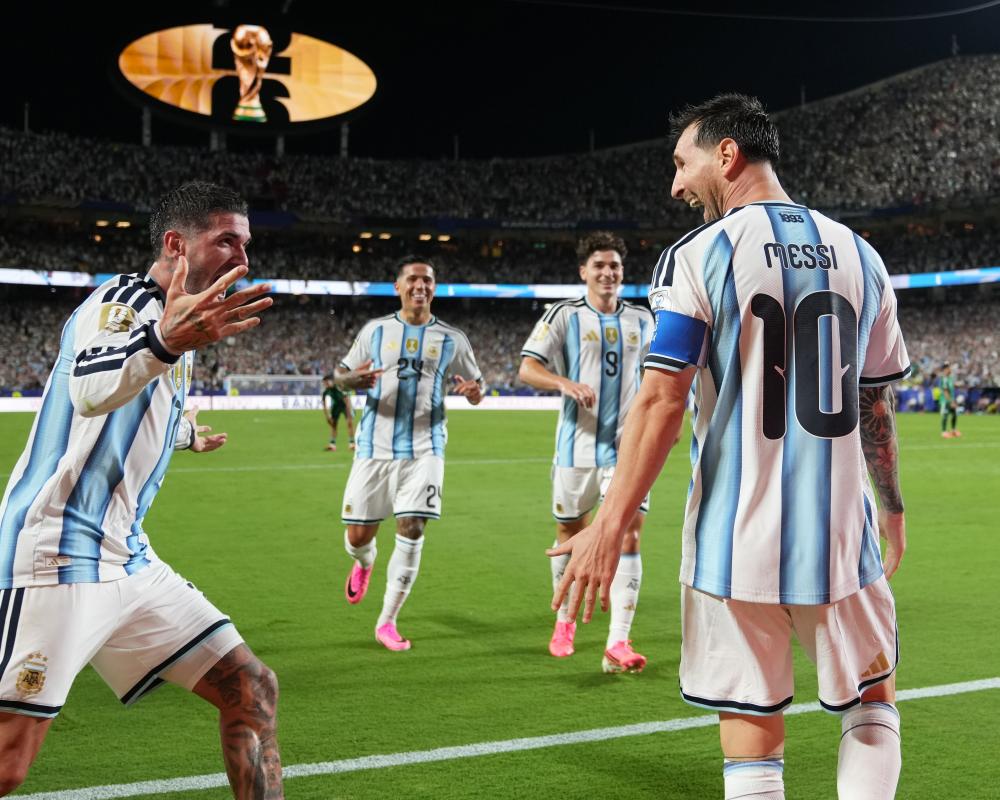
Long after the dust had settled on Argentina’s 3-0 group-stage victory over Algeria on Tuesday night, Algeria and Bayern Munich midfielder Ibrahim Maza wearily emerged from behind a curtain and stepped up to the microphone. Maza had played well, even assisting on Algeria’s disallowed first goal. He’d also had a front row seat to a Lionel Messi masterclass, just a few yards away from Argentina’s captain when he scored his third goal of the evening and tied Miroslav Klose as the World Cup’s all-time leading goalscorer. In short order, he was asked to expand on what made Messi unplayable on Tuesday evening. “Messi things,” Maza said, a smile creeping across his face. “I don’t think I need to explain to you [what that means]. I think you just have to watch the game and then you’ll know what I mean by Messi things. He can decide the game on his own, as we saw today.” Messi did indeed decide the game on his own on Tuesday, scoring a trio of clinically-taken goals to bury Algeria and push Argentina to the brink of the knockout round. He did so 20 years to the day after scoring his first World Cup goal for Argentina. It feels sometimes like Messi is ageless, but rolling the tape on that strike – which came in Argentina’s 2006 group stage opener against Serbia and Montenegro – reveals a mop-headed teenager with alien-like speed and reflexes. He blurs across the area and smashes a finish across the face of goal, announcing his presence on the world stage. He became Argentina’s youngest-ever World Cup goalscorer that day and on Tuesday he became their oldest, eclipsing former Argentina great Martin Palermo’s record by over two full years. Messi moves slower now and undoubtedly enjoys the space he’s frequently given by defenders who fear humiliation at his hands. Twenty years on, Messi lacks a little pace but his mind is as sharp as ever, as is his ability to find space where there isn’t any to be found. He remains awe-inspiring. Not long after Maza slipped back through the curtain and headed towards the team bus, Messi himself emerged, smiling and clutching a Michelob Ultra “Superior Player of the Match” trophy, probably the least important silverware he’s ever touched. Messi, of course, is famously competitive and frequently minimizes these types of individual accomplishments, something he did on Tuesday. “Honestly [the record doesn’t matter],” he told a gaggle of reporters. “It’s an honor to be there, for what it means to be next to Klose, [Brazilian] Ronaldo is also there. [Kylian] Mbappé too, he scored twice today. At the end of the day it’s just a statistic and nothing more. ” It’s easy to question the veracity of Messi’s feelings, of course. He is relentlessly competitive, sometimes to the point of pettiness. The mere mention of Mbappé’s goals, scored hours earlier, and of the other participants on the list, demonstrates his interest. Messi’s Argentina and Inter Miami teammate Rodrigo De Paul, who assisted on Messi’s first goal on Tuesday, laughed when he was asked about Messi’s record. “I swear he doesn’t care. Sometimes we’ll be in a room drinking mate and we’ll tell him ‘hey man, you’re just one away or two away’ or whatever. And I swear he has no idea. I don’t know how that works.” Messi left Tuesday’s match after 80 minutes to a thunderous ovation. The nearly 70,000 in attendance chanted his name, while Messi raised his arms in acknowledgement. His head coach, Lionel Scaloni, met him at the touchline. He was visibly emotional, holding back tears as he eventually sat down on the bench next to Messi. It was not the only time that emotion got the best of him. He welled up after Messi’s third goal, and again on the field as Argentine supporters serenaded their team after the match. “There are no words; anything I say would be superfluous,” Scaloni said after the match. “It’s what he’s been doing for 20 years, it’s what the people of this sport want to see.” “He’s an animal,” added De Paul. “What makes me the happiest is that I feel like he’s enjoying it. That he doesn’t feel the weight of the pressure that he felt for so long. Everyone knows his mentality. He doesn’t let himself enjoy things much because he’s always focused in helping us and the team. But I see him good now, I see him happy. That’s contagious among the group.” Messi’s happiness was easy enough to see on Tuesday night. He beamed after every goal, celebrating much like the 19-year-old who found the back of the net for the first time 20 years ago. He lingered on the pitch after the final whistle, waving at fans and embracing his teammates. He had a warm smile on his face even as he walked towards the team bus, in the wee hours of the morning.
What happened on a historic night for Argentina? ‘Messi things’ | Pablo Iglesias Maurer
Long after the dust had settled on Argentina’s 3-0 group-stage victory over Algeria on Tuesday night, Algeria and Bayern Leverkusen midfielder Ibrahim Maza wearily emerged from behind a curtain and stepped up to the microphone. Maza had played well, even assisting on Algeria’s disallowed first goal. He’d also had a front row seat to a Lionel Messi masterclass, just a few yards away from Argentina’s captain when he scored his third goal of the evening and tied Miroslav Klose as the World Cup’s all-time leading scorer. In short order, he was asked to expand on what made Messi unplayable on Tuesday evening. “Messi things,” Maza said, a smile creeping across his face. “I don’t think I need to explain to you [what that means]. I think you just have to watch the game and then you’ll know what I mean by Messi things. He can decide the game on his own, as we saw today.” Messi did indeed decide the game on his own on Tuesday, scoring a trio of clinically taken goals to bury Algeria and push Argentina to the brink of the knockout round. He did so 20 years to the day after scoring his first World Cup goal for Argentina. It feels sometimes like Messi is ageless, but rolling the tape on that strike – which came in Argentina’s 2006 group-stage opener against Serbia and Montenegro – reveals a mop-headed teenager with alien-like speed and reflexes. He blurs across the area and smashes a finish across the face of goal, announcing his presence on the world stage. He became Argentina’s youngest-ever World Cup goalscorer that day and on Tuesday he became their oldest, eclipsing Argentina great Martin Palermo’s record by more than two full years. Messi moves slower now and undoubtedly enjoys the space he’s frequently given by defenders who fear humiliation at his hands. Twenty years on, he lacks a little pace but his mind is as sharp as ever, as is his ability to find space where there isn’t any to be found. He remains awe-inspiring. Not long after Maza slipped back through the curtain and headed towards the team bus, Messi himself emerged, smiling and clutching a Michelob Ultra “Superior Player of the Match” trophy, probably the least important silverware he has ever touched. Messi, of course, is famously competitive and frequently minimizes these types of individual accomplishments, something he did Tuesday. “Honestly [the record doesn’t matter],” he told a gaggle of reporters. “It’s an honor to be there, for what it means to be next to Klose, [Brazilian] Ronaldo is also there. [Kylian] Mbappé too, he scored twice today. At the end of the day it’s just a statistic and nothing more. ” It’s easy to question the veracity of Messi’s feelings, of course. He is relentlessly competitive, sometimes to the point of pettiness. The mere mention of Mbappé’s goals, scored hours earlier, and of the other participants on the list, demonstrates his interest. Messi’s Argentina and Inter Miami teammate Rodrigo De Paul, who assisted on the first goal, laughed when he was asked about the record. “I swear he doesn’t care. Sometimes we’ll be in a room drinking mate and we’ll tell him ‘hey man, you’re just one away or two away’ or whatever. And I swear he has no idea,” he said. “I don’t know how that works.” Messi left Tuesday’s match after 80 minutes to a thunderous ovation. The nearly 70,000 in attendance chanted his name, while Messi raised his arms in acknowledgment. His head coach, Lionel Scaloni, met him at the touchline. He was visibly emotional, holding back tears as he eventually sat down on the bench next to Messi. It was not the only time that emotion got the best of him. He welled up after Messi’s third goal, and again on the field as Argentina supporters serenaded their team after the match. “There are no words; anything I say would be superfluous,” Scaloni said after the match. “It’s what he’s been doing for 20 years, it’s what the people of this sport want to see.” “He’s an animal,” added De Paul. “What makes me the happiest is that I feel like he’s enjoying it. That he doesn’t feel the weight of the pressure that he felt for so long. Everyone knows his mentality. He doesn’t let himself enjoy things much because he’s always focused in helping us and the team. But I see him good now, I see him happy. That’s contagious among the group.” Messi’s happiness was easy enough to see Tuesday night. He beamed after every goal, celebrating much like the 18-year-old who found the back of the net for the first time 20 years ago. He lingered on the pitch after the final whistle, waving at fans and embracing his teammates. He had a warm smile on his face even as he walked towards the team bus, in the wee hours of the morning.
What happened on a historic night for Argentina? ‘Messi things’ | Pablo Iglesias Maurer
Long after the dust had settled on Argentina’s 3-0 group-stage victory over Algeria on Tuesday night, Algeria and Bayern Munich midfielder Ibrahim Maza emerged wearily from behind a curtain and stepped up to the microphone. Maza had played well, even assisting on Algeria’s disallowed first goal. He had also had a front-row seat to a Lionel Messi masterclass, just a few yards away from Argentina’s captain when he scored his third goal of the evening and tied Miroslav Klose as the World Cup’s all-time leading scorer. In short order, he was asked to expand on what made Messi unplayable on Tuesday evening. “Messi things,” Maza said, a smile creeping across his face. “I don’t think I need to explain to you [what that means]. You just have to watch the game and then you’ll know what I mean by Messi things. He can decide the game on his own, as we saw today.” Messi did indeed decide the game on his own on Tuesday, scoring a trio of clinically taken goals to bury Algeria and push Argentina to the verge of the knockout round. He did so 20 years to the day after scoring his first World Cup goal for Argentina. It feels sometimes like Messi is ageless, but rolling the tape on that strike – which came in Argentina’s 2006 group‑stage opener against Serbia and Montenegro – reveals a mop‑headed teenager with alien‑like speed and reflexes. He blurs across the area and smashes a finish across the face of goal, announcing his presence on the world stage. He became Argentina’s youngest World Cup goalscorer that day and on Tuesday he became their oldest, eclipsing former Argentina great Martin Palermo’s record by more than two full years. Messi moves slower now and undoubtedly enjoys the space he is frequently given by defenders who fear humiliation at his hands. Twenty years on, Messi lacks a little pace but his mind is as sharp as ever, as is his ability to find space where there isn’t any to be found. He remains awe-inspiring. Not long after Maza slipped back through the curtain and headed towards the team bus, Messi himself emerged, smiling and clutching a Michelob Ultra “Superior Player of the Match” trophy, probably the least important silverware he has ever touched. Messi, of course, is famously competitive and frequently minimizes these types of individual accomplishments. “Honestly [the record doesn’t matter],” he said. “It’s an honor to be there, for what it means to be next to Klose, [the Brazilian] Ronaldo is also there. [Kylian] Mbappé too, he scored twice today. It’s just a statistic and nothing more. ” It is easy to question the veracity of Messi’s feelings, of course. He is relentlessly competitive, sometimes to the point of pettiness. The mere mention of Mbappé’s goals, scored hours earlier, and of the other participants on the list, demonstrates his interest. Messi’s Argentina and Inter Miami teammate Rodrigo De Paul, who assisted on Messi’s first goal, laughed when he was asked about Messi’s record. “I swear he doesn’t care. Sometimes we’ll be in a room drinking mate and we’ll tell him: ‘Hey man, you’re just one away or two away’, or whatever. And I swear he has no idea. I don’t know how that works.” Messi left after 80 minutes to a thunderous ovation. The crowd of nearly 70,000 chanted his name, and Messi raised his arms in acknowledgement. His head coach, Lionel Scaloni, met him at the touchline. He was holding back tears as he eventually sat on the bench next to Messi. It was not the only time that emotion got the best of him. He welled up after Messi’s third goal, and again on the field as Argentina supporters serenaded their team after the match. “There are no words; anything I say would be superfluous,” Scaloni said after the match. “It’s what he’s been doing for 20 years, it’s what the people of this sport want to see.” De Paul said: “He’s an animal. What makes me the happiest is that I feel like he’s enjoying it. That he doesn’t feel the weight of the pressure that he felt for so long. Everyone knows his mentality. He doesn’t let himself enjoy things much because he’s always focused in helping us and the team. But I see him good now, I see him happy. That’s contagious among the group.” Messi’s happiness was easy enough to see. He beamed after every goal, celebrating much like the 19-year-old who found the back of the net for the first time 20 years ago. He lingered on the pitch after the final whistle, waving at fans and embracing his teammates, a smile on his face even as he walked towards the team bus in the wee hours of the morning.
Page 1
More about Algeria
- Algeria fixtures
Results and upcoming matches
- Algeria squad
Full squad list by position