Vitinha



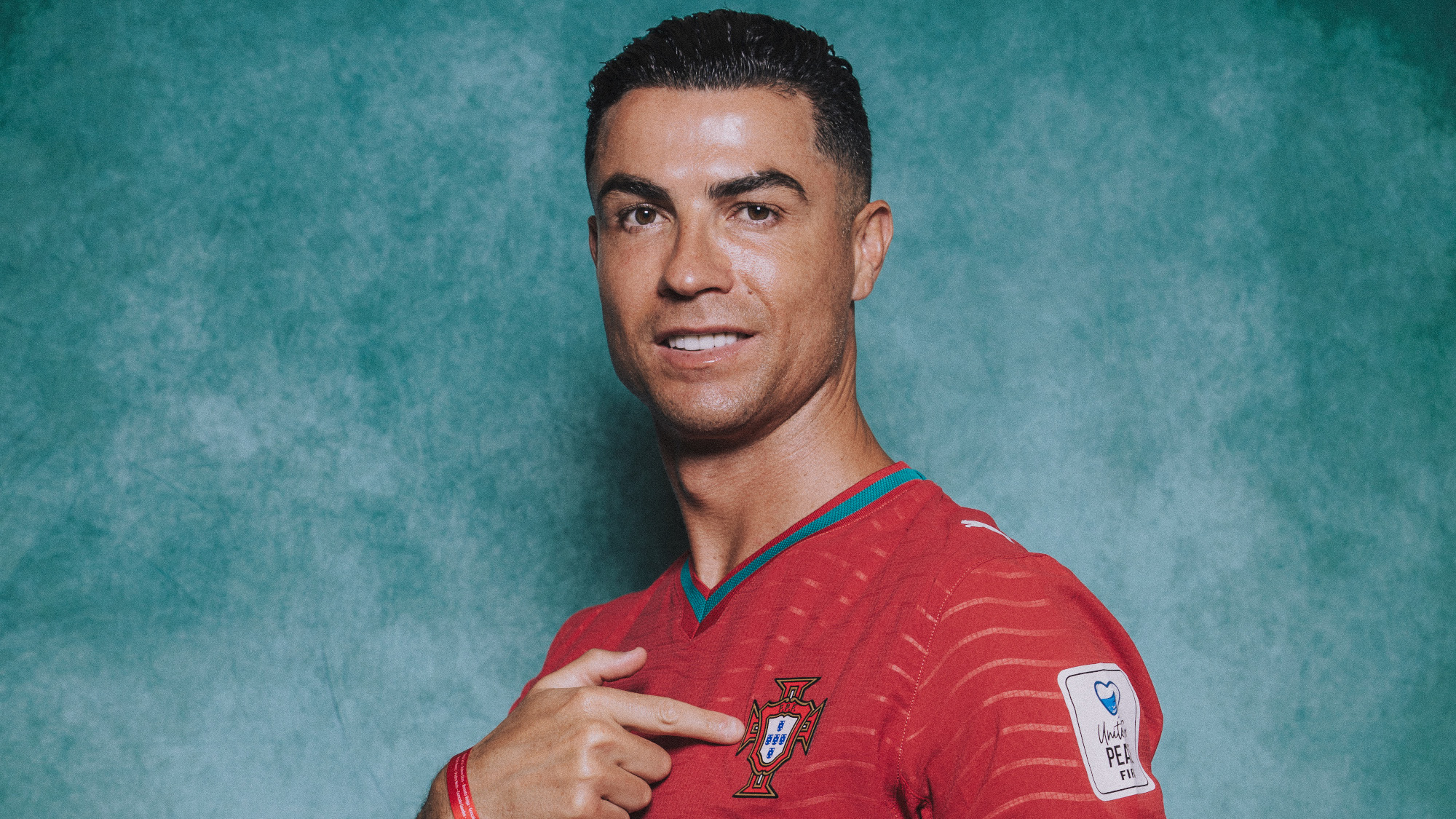
Ronaldo as excited for sixth World Cup as his first, says Martinez
Cristiano Ronaldo is preparing for his sixth World Cup as if it was his first, said Portugal coach Roberto Martinez as he hailed the 41-year-old as "an example and a reference for football." Armed with a richly talented generation, Portugal are among the favourites to win the World Cup for the first time. Ronaldo's continued presence in Martinez's team has sparked debate over whether he is still a positive influence. No one can match the five-time Ballon d'Or winner's 143 international goals. But he has failed to net in his last nine matches at major tournaments and offers little in a defensive role when the opposition are in possession. Martinez, though, has no doubt he remains Portugal's best option up front. "He is an example and a reference for football. For all those children on the street who begin to feel the love for sport, following the example of Cristiano Ronaldo is wonderful," Martinez told a press conference ahead of Portugal's World Cup opener against DR Congo. "It is his sixth World Cup, but I can say that internally it seems to be his first World Cup in terms of intensity, in terms of emotional output, of how important it is for him to be prepared to lead the group. "Within the team he is a vital player because he is the finisher, he is the player in the penalty area, he is the player who has those movements that can open spaces for other players. Within our attacking game, his numbers reflect the importance he has." Bruno Fernandes said his first experience of a major tournament as a child came on home soil, when a 19-year-old Ronaldo helped Portugal reach the final of Euro 2004. "All of us in this national team we have grown up watching Cristiano Ronaldo play and for us it's such an honour to play next to him now in the same team," said the Manchester United captain. "We're all here to support him and to support Portugal to go as far as possible." 'DREAMING NOT FORBIDDEN' Fresh from winning Premier League player of the year accolades, Fernandes is part of one of the strongest midfields in the World Cup. Vitinha and Joao Neves have recently won a second consecutive Champions League with Paris Saint-Germain, while Bernardo Silva is set to join Real Madrid after a trophy-laden nine years at Manchester City. "We have a very strong team, great individual quality, and beyond the individual quality and the strengths that we have as individual players, I think we are a very cohesive team, a very united team," added Fernandes. "Obviously our dream is to be there (winning the World Cup) and I think that dreaming is not forbidden." Portugal will also face tournament debutants Uzbekistan and Colombia in Group K. Martinez, though, warned against looking beyond DR Congo after the shock Spain suffered in being held 0-0 by Cape Verde in their opening match. "We've got very little to win tomorrow from the outside. If you win against Congo, it's expected. If you win by one, it's a big problem. If you draw, it's a catastrophe. If you lose, this is the end of the world," said the Spaniard. "They come with no expectations, they are enjoying being here. We've seen incredible performances from teams like Qatar, Cape Verde, exemplary performances, that shows you that there are no easy games in a World Cup." Martinez also confirmed reports he is set to leave his role after the World Cup when his contract expires. "My contract ends after the World Cup. This is not news, this is just a fact," he added. "We're now focused on finishing the work that we've begun three-and-a-half years ago. "When I came to Portugal the focus was to try to win everything, but most importantly to prepare for the World Cup." -------------------------------- Where to watch the FIFA World Cup 2026™ Fans can watch every FIFA World Cup 2026™ match live on DStv Premium, Compact Plus, Compact, Family and Access. All matches are also available to stream on supported packages, ensuring flexible viewing options wherever you are. How to stream the FIFA World Cup 2026™ With DStv Stream, you can follow every match anytime, anywhere. Download the app and enjoy seamless live streaming on the go. GET DStv | START STREAMING
Bold Bayern and PSG leave Premier League elite looking more like lambs than lions | Jonathan Wilson
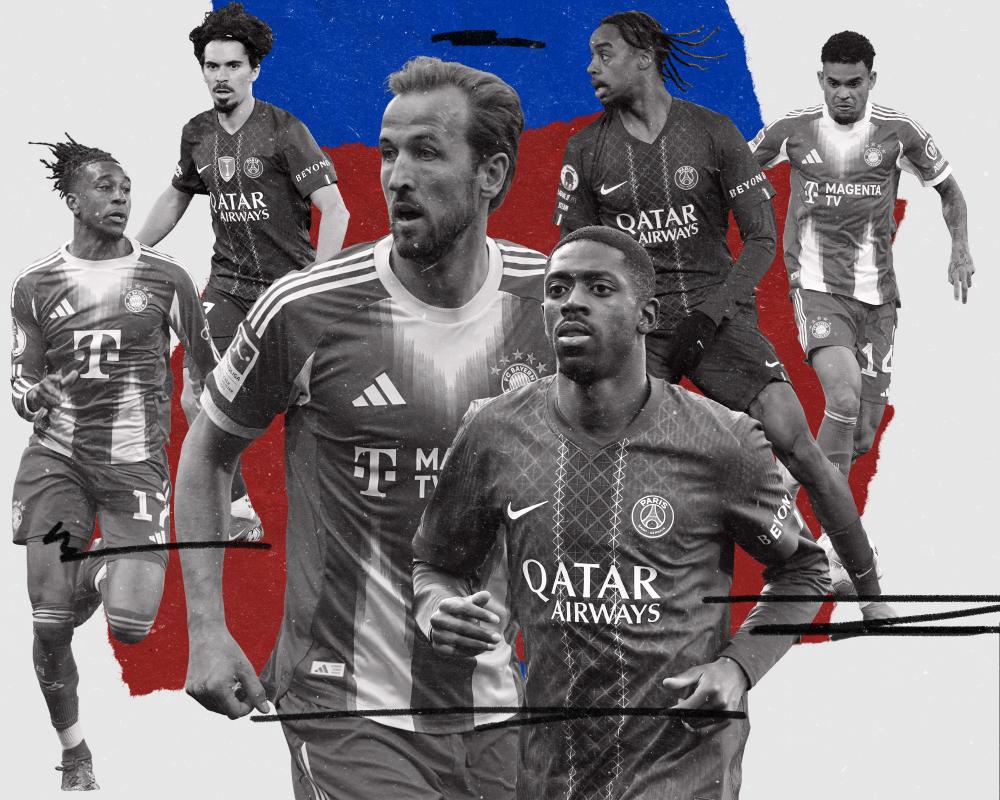
Paris Saint-Germain have won 11 of the past 13 French league titles and, going into this weekend, stood four points clear of Lens at the top of Ligue 1. Bayern Munich have already wrapped up this season’s Bundesliga title, their 13th in 14 years. According to Deloitte, Bayern are the third-richest club in the world by revenue, PSG fourth. They meet in the Champions League semi-finals on Tuesday as two modern super-clubs. The idea of a top-five European league feels outmoded. Rather there are the best Premier League clubs, plus perhaps five or six others of whom PSG and Bayern are the outstanding two still left in this season’s competition. There has been a sense in the recent past that their domestic domination has been a hinderance in Europe, that the lack of challenge at home had left them flabby and complacent, unable to deal with opponents capable of putting up a fight and making them defend. Yet PSG are the defending champions and Bayern are the favourites. So what has changed? It may simply be the calendar, allied to the increasingly demanding nature of the Premier League. Top footballers have never played so much football at such a high tempo and nobody plays more than those in the Premier League. The economic iniquities of the modern game mean the average Premier League fixture is simply much tougher than those of any other league. There was derision when Arsenal threw away a 2-0 lead to draw at bottom-placed Wolves, but Wolves are the 29th richest club in the world, their annual revenue a little under double that of the side bottom of the Bundesliga, Heidenheim, and about eight times that of Ligue 1’s Metz. Fifteen of the 30 wealthiest clubs in the world by revenue come from the Premier League; only four from Germany and one from France. It probably is the case, as the critics claim, that Premier League teams are wasteful and far less efficient than their continental rivals. But it’s also true that once you get beyond the top couple of teams, every Premier League side is way stronger than its equivalent in any other league in the world, something seen in the domination of the Europa League and Europa Conference League. Aston Villa came sixth in the Premier League last season with revenues of £491m; sixth in France were Lyon with revenues of £141m and sixth in Germany were Mainz with £105m. That means Bayern or PSG can rest players or take certain periods of certain games a little easier and that leaves them fresher come the end of the season. As the demands on players have increased, it may be that the benefits of not being flogged through an exhausting battle every week have come to outweigh the disadvantages of not being quite so case-hardened as their English opponents. When Michel Platini was president of Uefa, he spoke of English clubs as lions in winter but lambs in spring. It seems likely that over the past couple of seasons that has been enhanced: these are not just lambs, but exhausted lambs, physically, mentally and emotionally shattered by the constant strain of Premier League football, not gambolling but trudging. But it’s not just about English exhaustion. PSG under Luis Enrique are a very different team to the celebrity-laden underperformers of before. Luis Enrique’s first great achievement was to break the club’s dependency on famous names and create a well-balanced side far removed from the top-heavy glitz of the Lionel Messi-Neymar-Kylian Mbappé era. His second was to create a team that peak in the key months of spring. In the group stage in each of the past two seasons, there has been little special about PSG. They finished 11th last season and 15th this campaign. Come the knockouts, though, it was a different story. Luis Enrique’s intensity, his relentless drive and that capacity of his side to take off for the key months of the season seem sufficient to override the danger of softness implicit in a less challenging league. Perhaps they can’t be entirely trusted defensively – Liverpool caused them problems in the second leg of their quarter-final, as Chelsea and Monaco had at points in the previous two rounds – but, in the end, the pace and attacking verve of their forward line was more than good enough. Ultimately 8-2 and 4-0 aggregate wins over Chelsea and Liverpool tell their own story. It may be true that the two goals in the second leg at Anfield came late as Liverpool were forced to overcommit, but equally they should have won the first leg far more comfortably given balance of play and chances created. Which is to say that the suspicion of a soft underbelly, a slight unfamiliarity with pressure, has not entirely gone away but that other factors now take precedence. It’s a similar story with Bayern, who have not been tested by any Bundesliga opponents this season as PSG have been by Lens. There is a fallibility about them that allowed Real Madrid an unlikely route back into the first leg of their quarter-final and made the second leg thrilling in a way it didn’t need to be and really should not have been. Even in the Bundesliga, Bayern are conceding almost a goal a game. Dayot Upamecano is the model of the modern super-club defender, far better on the ball, as he showed with his assist for Harry Kane in the second leg against Real Madrid, than he is at actually defending. Like PSG, the German champions overwhelm sides with the quality of their attacking: with Kane scoring himself and creating space for the group of rapid and technically gifted forwards who play off him – perm three from Michael Olise, Luis Díaz, Jamal Musiala, Serge Gnabry (out injured now) and Lennart Karl – they’re averaging 3.5 goals per game in Bundesliga and Champions League this season, or 22% more than the average Premier League game (that is, both sides combined). As English football responds to the end of the guardiolista tactical consensus by wandering uncertainly back towards defensiveness, Bayern and PSG are attacking their way through defensive frailty. It’s great to watch, and it seems to be working.
Bold Bayern and PSG leave Premier League elite looking more like lambs than lions | Jonathan Wilson
Paris Saint-Germain have won 11 of the past 13 French league titles and, going into this weekend, stood four points clear of Lens at the top of Ligue 1. Bayern Munich have already wrapped up this season’s Bundesliga title, their 13th in 14 years. According to Deloitte, Bayern are the third-richest club in the world by revenue, PSG fourth. They meet in the Champions League semi-finals on Tuesday as two modern super-clubs. The idea of a top-five European league feels outmoded. Rather there are the best Premier League clubs, plus perhaps five or six others of whom PSG and Bayern are the outstanding two still left in this season’s competition. There has been a sense in the recent past that their domestic domination has been a hinderance in Europe, that the lack of challenge at home had left them flabby and complacent, unable to deal with opponents capable of putting up a fight and making them defend. Yet PSG are the defending champions and Bayern are the favourites. So what has changed? It may simply be the calendar, allied to the increasingly demanding nature of the Premier League. Top footballers have never played so much football at such a high tempo and nobody plays more than those in the Premier League. The economic iniquities of the modern game mean the average Premier League fixture is simply much tougher than those of any other league. There was derision when Arsenal threw away a 2-0 lead to draw at bottom-placed Wolves, but Wolves are the 29th richest club in the world, their annual revenue a little under double that of the side bottom of the Bundesliga, Heidenheim, and about eight times that of Ligue 1’s Metz. Fifteen of the 30 wealthiest clubs in the world by revenue come from the Premier League; only four from Germany and one from France. It probably is the case, as the critics claim, that Premier League teams are wasteful and far less efficient than their continental rivals. But it’s also true that once you get beyond the top couple of teams, every Premier League side is way stronger than its equivalent in any other league in the world, something seen in the domination of the Europa League and Europa Conference League. Aston Villa came sixth in the Premier League last season with revenues of £491m; sixth in France were Lyon with revenues of £141m and sixth in Germany were Mainz with £105m. That means Bayern or PSG can rest players or take certain periods of certain games a little easier and that leaves them fresher come the end of the season. As the demands on players have increased, it may be that the benefits of not being flogged through an exhausting battle every week have come to outweigh the disadvantages of not being quite so case-hardened as their English opponents. When Michel Platini was president of Uefa, he spoke of English clubs as lions in winter but lambs in spring. It seems likely that over the past couple of seasons that has been enhanced: these are not just lambs, but exhausted lambs, physically, mentally and emotionally shattered by the constant strain of Premier League football, not gambolling but trudging. But it’s not just about English exhaustion. PSG under Luis Enrique are a very different team to the celebrity-laden underperformers of before. Luis Enrique’s first great achievement was to break the club’s dependency on famous names and create a well-balanced side far removed from the top-heavy glitz of the Lionel Messi-Neymar-Kylian Mbappé era. His second was to create a team that peak in the key months of spring. In the group stage in each of the past two seasons, there has been little special about PSG. They finished 11th last season and 15th this campaign. Come the knockouts, though, it was a different story. Luis Enrique’s intensity, his relentless drive and that capacity of his side to take off for the key months of the season seem sufficient to override the danger of softness implicit in a less challenging league. Perhaps they can’t be entirely trusted defensively – Liverpool caused them problems in the second leg of their quarter-final, as Chelsea and Monaco had at points in the previous two rounds – but, in the end, the pace and attacking verve of their forward line was more than good enough. Ultimately 8-2 and 4-0 aggregate wins over Chelsea and Liverpool tell their own story. It may be true that the two goals in the second leg at Anfield came late as Liverpool were forced to overcommit, but equally they should have won the first leg far more comfortably given balance of play and chances created. Which is to say that the suspicion of a soft underbelly, a slight unfamiliarity with pressure, has not entirely gone away but that other factors now take precedence. It’s a similar story with Bayern, who have not been tested by any Bundesliga opponents this season as PSG have been by Lens. There is a fallibility about them that allowed Real Madrid an unlikely route back into the first leg of their quarter-final and made the second leg thrilling in a way it didn’t need to be and really should not have been. Even in the Bundesliga, Bayern are conceding almost a goal a game. Dayot Upamecano is the model of the modern super-club defender, far better on the ball, as he showed with his assist for Harry Kane in the second leg against Real Madrid, than he is at actually defending. Like PSG, the German champions overwhelm sides with the quality of their attacking: with Kane scoring himself and creating space for the group of rapid and technically gifted forwards who play off him – perm three from Michael Olise, Luis Díaz, Jamal Musiala, Serge Gnabry (out injured now) and Lennart Karl – they’re averaging 3.5 goals per game in Bundesliga and Champions League this season, or 22% more than the average Premier League game (that is, both sides combined). As English football responds to the end of the guardiolista tactical consensus by wandering uncertainly back towards defensiveness, Bayern and PSG are attacking their way through defensive frailty. It’s great to watch, and it seems to be working.
Page 1
More about Vitinha
- Paris Saint Germain
Current club profile and squad
- Player videos
Highlights and video coverage